
Medication Decision Simulator
How Decision Aids Work
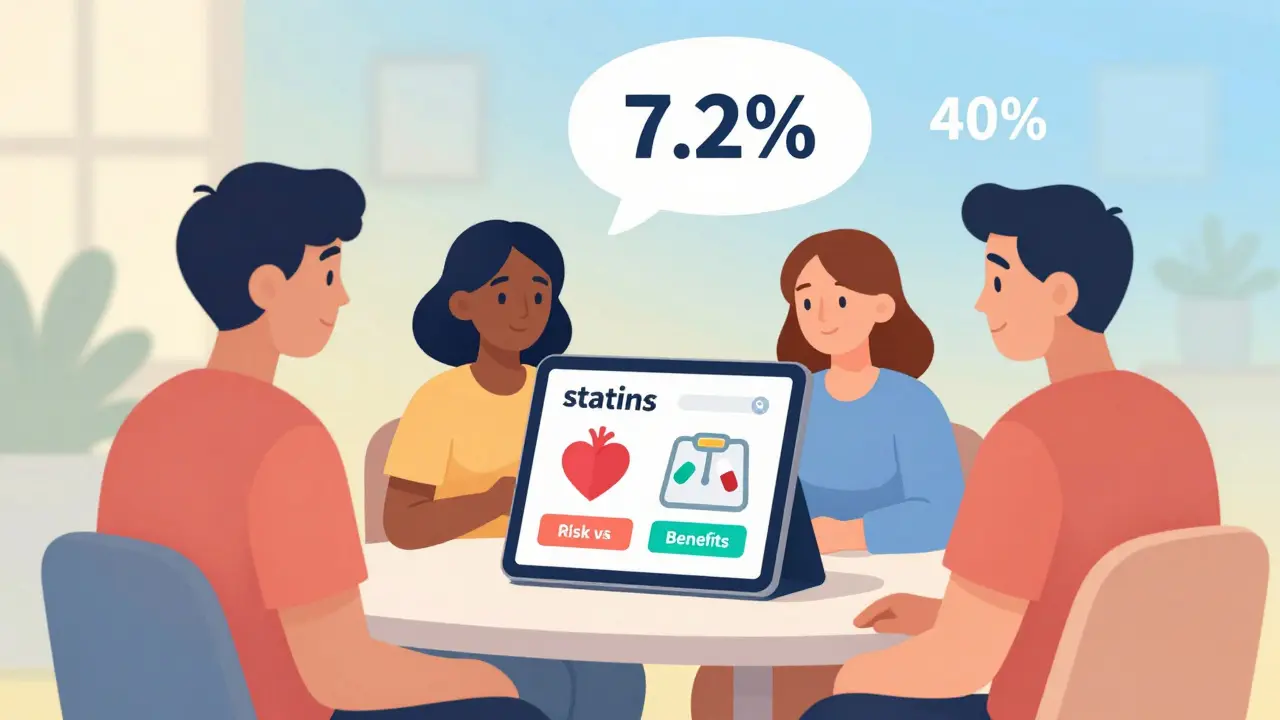
This tool simulates a patient decision aid for statins, based on real research. Just like in the article, you'll see your risk numbers, medication benefits, and side effects. Then, answer how important different factors are to you. Your values will help determine what's the best choice for you.
Every year, millions of people start new medications-some for high blood pressure, others for cholesterol, diabetes, or pain. But how many truly understand why they’re taking it, what the real risks are, or if there’s a better option? Too often, patients nod along during a 10-minute visit, leave with a prescription, and later wonder if they made the right choice. That’s where patient decision aids come in.
What Are Patient Decision Aids?
Patient decision aids (PDAs) aren’t just brochures or websites. They’re structured tools-digital, paper-based, or video-that help people make informed choices about their medications. Unlike generic info sheets, PDAs give you clear facts: what the medicine does, how likely it is to help, what side effects you might face, and what happens if you do nothing. They also ask you questions like: How important is avoiding a heart attack to you versus avoiding daily pills? Or: Would you rather take a chance on a new drug with fewer side effects, or stick with something older and well-tested? These tools were developed from decades of research into shared decision-making. Back in the 1990s, experts realized patients weren’t just passive recipients of care-they wanted to be part of the choice. By 2011, a major Cochrane review confirmed PDAs worked. People who used them knew 13% more about their options than those who just got a verbal explanation. And they felt less conflicted about their decisions.How Do They Actually Improve Medication Safety?
Medication errors aren’t just about wrong doses or mix-ups at the pharmacy. A big part of the problem is patients taking drugs they don’t understand-or not taking them because they’re scared, confused, or didn’t agree with the plan. PDAs cut through that noise. Take statins, for example. Many patients hear “high cholesterol” and assume they need a pill right away. But a decision aid like the “Statin Choice” tool breaks it down: Your 10-year risk of a heart attack is 7.2%. Taking a statin lowers that to 5.8%. That means 100 people like you would need to take it for one to avoid a heart attack. Side effects? Muscle pain in 1 in 10, diabetes risk up slightly in 1 in 50. After using this tool, 35% of patients changed their mind about starting the drug. Some chose to start. Others decided against it. Both were better-informed choices. In diabetes care, PDAs helped patients understand the trade-offs between insulin, metformin, and newer GLP-1 drugs. One study showed that when patients used a decision aid, medication adherence jumped from 58% to 75% six months later. That’s not just better control-it’s fewer hospital visits, fewer complications, fewer emergencies. And it’s not just about taking meds. It’s about stopping them too. Many older adults are on five, six, even ten pills a day. Some are no longer needed. Decision aids help patients and doctors talk about deprescribing-safely reducing or stopping medicines that might do more harm than good.What Makes Them Different From Regular Patient Education?
A pamphlet says: “Take this pill once a day.” A decision aid says: “Here’s what this pill does, what it doesn’t do, what might happen if you skip it, and what else you could do instead. Which matters most to you: living longer, feeling better, avoiding side effects, or not taking pills every day?” The key difference is values clarification. Most educational materials give facts. PDAs make you think about what those facts mean to you. That’s why they’re so powerful. One patient on Reddit shared how a decision aid helped him realize his “high risk” for heart disease wasn’t as scary as his doctor made it sound. He was told he had a 40% chance of a heart attack. The tool showed his actual risk was 7.2%. He didn’t start the statin. He changed his diet. He felt in control. Another patient, deciding between two diabetes drugs, used a tool that showed one had a 1 in 100 chance of causing pancreatitis. She’d never heard that before. She chose the other drug. No panic. No surprise. Just a clear, personal decision.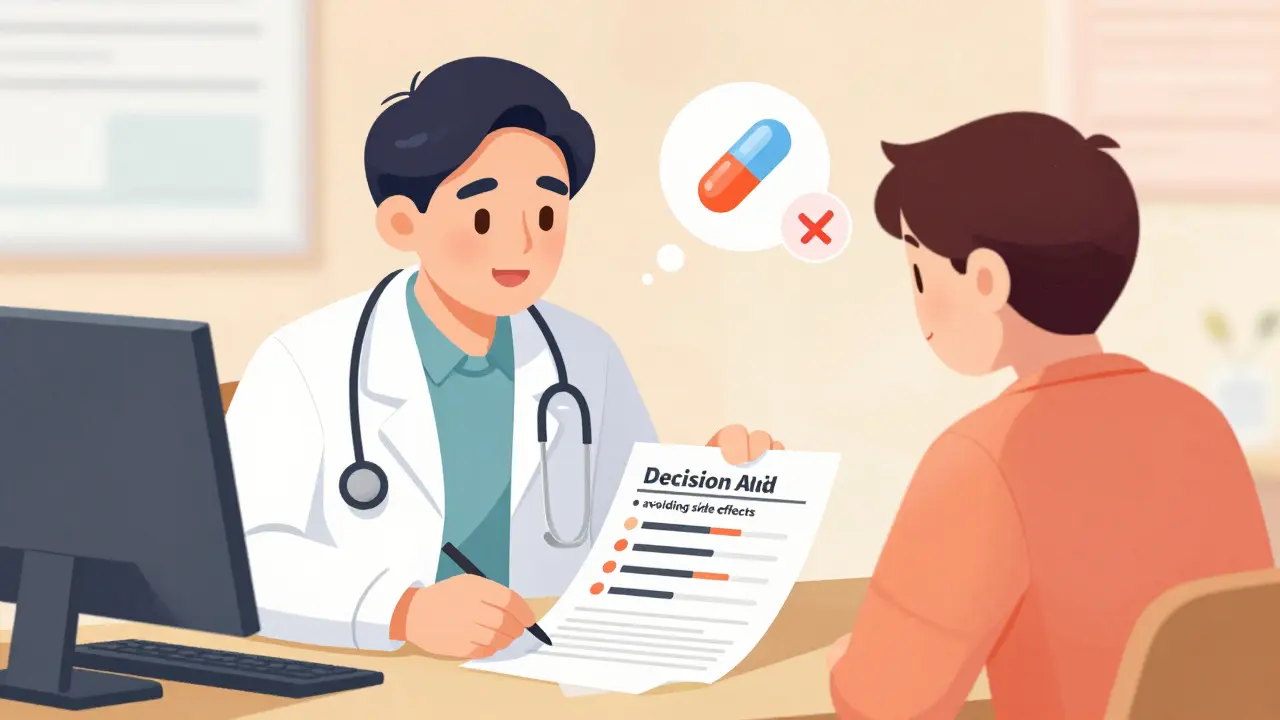
Who Benefits the Most?
PDAs work best for preference-sensitive decisions-where there’s no single “right” answer. That includes:- Starting statins for high cholesterol
- Choosing between insulin and oral meds for type 2 diabetes
- Deciding whether to take blood thinners for atrial fibrillation
- Opting for newer, more expensive drugs vs. older generics
- Considering whether to stop long-term painkillers or antidepressants
Are They Actually Used in Real Clinics?
Yes-and the numbers are growing. In 2015, only 12% of U.S. primary care doctors used decision aids. By 2022, that jumped to 37%. Major health systems like Mayo Clinic, Kaiser Permanente, and the VA now use them routinely in diabetes, heart disease, and cancer care. At Mayo, integrating PDAs into their diabetes pathway didn’t just improve adherence-it cut down on unnecessary prescriptions. One nurse said: “We used to see patients come in scared of insulin. After using the tool, they’d say, ‘I get it now. I’m ready.’” But it’s not easy. Many clinics struggle with time. A typical PDA session adds 3 to 8 minutes to a visit. That’s tough in a 15-minute slot. The solution? Give patients the tool to review before the appointment. Send it via email or patient portal. Let them come in with questions already formed. And reimbursement? Still a problem. Medicare started paying for shared decision-making in 2020, but most insurers don’t cover the time it takes to use these tools. That’s why adoption is faster in integrated systems like the VA or large hospitals-not in solo practices.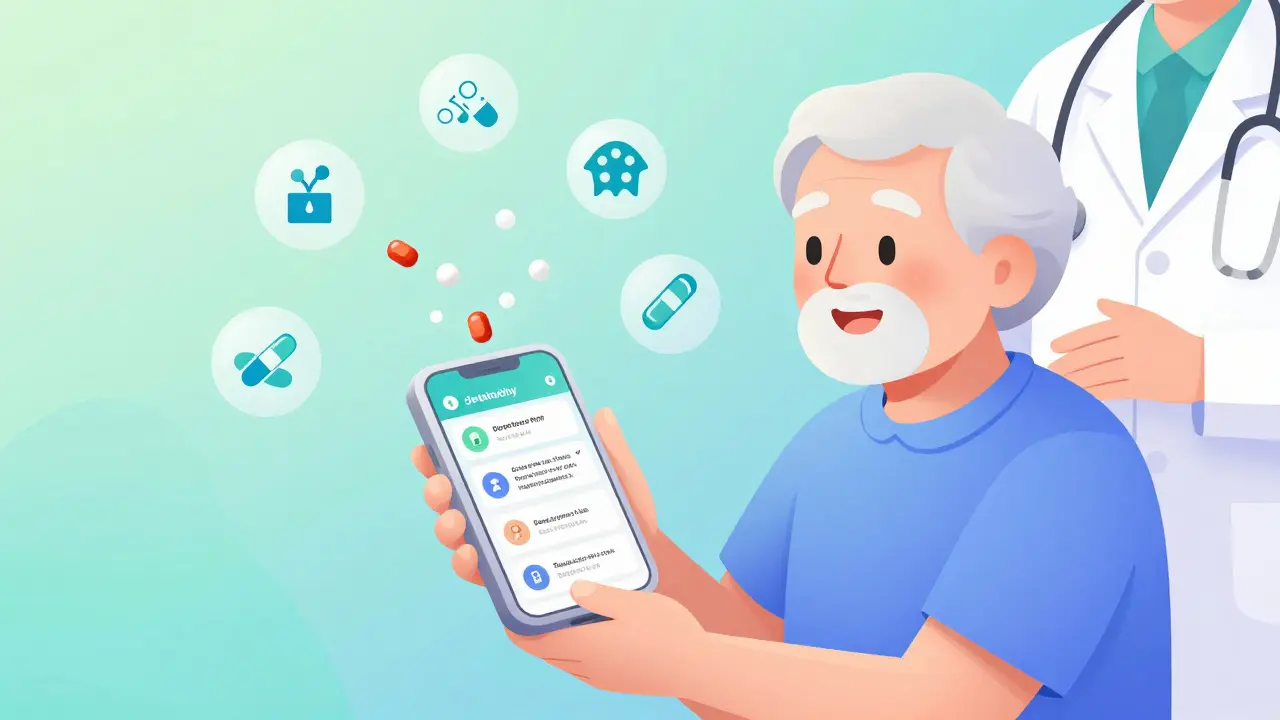
What Do the Experts Say?
Dr. Annette O’Connor, a pioneer in this field, says: “88% of studies show decision aids improve the decision-making process.” That’s not a small win. It’s a revolution in how care is delivered. Dr. Glyn Elwyn, who helped create the main tool used to measure doctor-patient conversations, found that when PDAs are used, patients are 17.3% more likely to stick with their medication six months later. That’s huge. Non-adherence costs the U.S. healthcare system over $300 billion a year. But not everyone is sold. Dr. Michael Barry points out: “We still don’t have solid proof that PDAs reduce hospital stays or deaths.” And he’s right. The biggest benefit isn’t in hard outcomes-it’s in better decisions. Fewer regrets. Fewer mistakes. Fewer people taking drugs they don’t need.How to Get Started With Patient Decision Aids
You don’t need to be a doctor to use them. Here’s how:- Ask your provider: “Do you use decision aids for medication choices?”
- Check out the Ottawa Hospital Decision Aids Library-it’s free, evidence-based, and has over 100 tools in multiple languages.
- Use it before your appointment. Print it, watch the video, fill out the values worksheet.
- Bring your answers to the visit. Say: “I read this and I’m wondering if this option matches what I care about.”
- If your doctor doesn’t use them, ask them to. Demand better.
The Future of Medication Decisions
By 2027, experts predict 75% of high-stakes medication decisions will involve a validated decision aid. Why? Because they work. Because patients demand them. And because regulators are starting to require them. The FDA now recognizes some decision aids as part of drug labeling. Medicare is expanding requirements. AI is being used to personalize them-pulling your lab results, age, and other meds to tailor the advice. But the real win isn’t technology. It’s power. When patients understand their options, they stop being passive. They become partners. And when people are partners in their care, medication errors drop. Adherence rises. Trust grows. This isn’t about replacing doctors. It’s about helping them do their job better. And helping you make choices you won’t regret.Do patient decision aids really reduce medication errors?
Yes. Studies show they reduce errors by improving patient understanding and alignment with personal values. When patients know the risks and benefits of a medication-and understand why it’s being recommended-they’re less likely to take it incorrectly, skip doses, or stop without telling their doctor. One study found decision aids reduced inappropriate statin prescriptions by 35% by helping patients realize their actual risk was lower than they thought.
Are patient decision aids only for complex conditions like diabetes or heart disease?
No. While they’re most commonly used for chronic conditions where multiple options exist, they’re useful for any medication decision where there’s no single right answer. That includes antibiotics for mild infections, pain relievers for back pain, sleep aids, or even deciding whether to start antidepressants. Any time a patient’s values matter-like avoiding side effects, minimizing pills, or preferring natural options-PDAs help.
Can I use a patient decision aid on my own, or do I need a doctor’s help?
You can absolutely use them on your own. Many are designed for self-use before a visit. But they’re most powerful when used with your provider. The tool gives you clarity; your doctor gives you context. Together, you make a decision that’s both medically sound and personally right. Some tools even have built-in questions to bring to your appointment.
Are patient decision aids free to use?
Yes. The most trusted tools, like those from the Ottawa Hospital Research Institute, are free and open to the public. They’re funded by research grants and public health organizations. Avoid commercial tools that push specific brands or require payment. Stick with those labeled as evidence-based and IPDAS-certified.
Do patient decision aids work for elderly or low-literacy patients?
They can, but only if they’re designed for them. High-quality PDAs include large fonts, audio narration, simple language, visuals instead of charts, and teach-back methods. Tools that are too text-heavy or assume high health literacy can overwhelm these groups. Look for aids labeled as “low-literacy friendly” or ask your clinic if they have adapted versions.





Mike Rengifo
December 18, 2025 AT 11:51Been using those Ottawa decision aids before my appointments for a year now. Honestly, it’s like having a cheat code for doctor visits. I walk in already knowing what questions to ask, and they’re never annoyed. Just impressed.
Isabel Rábago
December 19, 2025 AT 21:29It’s not about ‘decision aids’-it’s about doctors finally admitting they don’t have all the answers. That’s the real revolution. Patients aren’t dumb. We just got tired of being talked down to like toddlers with a prescription.
Dev Sawner
December 21, 2025 AT 19:45Statistical literacy is a prerequisite for informed consent. If a patient cannot interpret a 7.2% vs 5.8% risk reduction, then they are not equipped to make medical decisions. This is not empowerment-it is abdication of professional responsibility.
Andrew Kelly
December 23, 2025 AT 02:27Of course they say it works. The pharmaceutical industry funds half these ‘studies.’ Next you’ll tell me the FDA isn’t in bed with Big Pharma. Wake up. They want you taking pills. Always more pills. That’s the business model.
Ashley Bliss
December 24, 2025 AT 09:13I cried the first time I used one. Not because I was scared-but because for the first time in my life, someone asked me what I valued. Not what my lab numbers said. Not what my insurance would cover. What I wanted. I felt seen.
Meenakshi Jaiswal
December 25, 2025 AT 02:50For those in India or low-resource settings: many of these tools are translated into Hindi, Tamil, and Bengali. My clinic uses them with audio versions for elders who can’t read. It’s not magic-it’s dignity. And it’s free. Use them.
holly Sinclair
December 25, 2025 AT 21:35What’s fascinating is how these tools force us to confront the illusion of objectivity in medicine. We pretend there’s a single ‘correct’ choice, but every pill carries a hidden calculus of fear, identity, autonomy, and cultural conditioning. A decision aid doesn’t just inform-it mirrors your soul’s quiet negotiation with mortality. The fact that this is now being codified into clinical practice? That’s the quietest revolution in modern healthcare.
Kelly Mulder
December 27, 2025 AT 16:23These ‘aids’ are just a corporate veneer for cost-cutting. Hospitals don’t care if you understand your meds-they care if you sign the consent form so they can bill Medicare. Don’t be fooled by the pretty infographics. The system still wants you docile and compliant.
Matt Davies
December 27, 2025 AT 20:58Man, I used one for my blood pressure meds last year. Thought I needed the ACE inhibitor. Turns out I was fine with lifestyle changes. My BP’s been stable for 18 months now. No pills. No side effects. Just better sleep, yoga, and less sodium. Who knew? The tool didn’t tell me what to do-it told me what I already knew, but was too scared to admit.
Tim Goodfellow
December 28, 2025 AT 01:08This is the shit that should be mandatory in every ER, every GP office, every damn pharmacy. Not just ‘here’s your script’-but ‘here’s what this does, what it doesn’t, and what you actually care about.’ We’re not robots. We’re humans with fears, values, and weird-ass family histories. Tools like this? They’re not optional. They’re essential.
bhushan telavane
December 29, 2025 AT 17:28In India, many elderly take 8+ pills daily because doctors never ask if they’re needed. My aunt stopped 4 meds after using a simple PDA. Her kidneys improved. She stopped falling. No one told her she could say no. That’s the real tragedy-not the lack of tech, but the lack of permission.
Moses Odumbe
December 31, 2025 AT 12:56Y’all are overthinking this. 😅 Just use the Ottawa tool. It’s free. It’s real. It’s not a conspiracy. It’s not corporate. It’s just… smart. 🤓 I showed my dad. He said, ‘Why didn’t we have this 20 years ago?’ Exactly. 🙏
mark shortus
January 2, 2026 AT 07:04They’re coming for your autonomy. First they give you a ‘tool’-then they’ll require you to use it before prescribing. Then they’ll track your ‘decision score.’ Then they’ll deny coverage if you don’t ‘choose correctly.’ This isn’t empowerment. It’s behavioral control dressed in patient-friendly fonts.
Connie Zehner
January 3, 2026 AT 06:38My doctor laughed when I brought the decision aid. Said, ‘You’re too smart for this.’ I cried. Not because I was hurt-but because I realized he’d never once asked me what I wanted. Just what I needed. And I’ve been paying for that silence ever since.
Anna Sedervay
January 4, 2026 AT 09:54One must question the epistemological foundations of these instruments. Are they truly facilitating autonomy, or merely reifying a neoliberal discourse of individualized responsibility, wherein the burden of medical decision-making is offloaded onto the patient-often without the requisite cognitive or emotional resources to bear it? The rhetoric of ‘empowerment’ masks a structural abandonment of collective care.