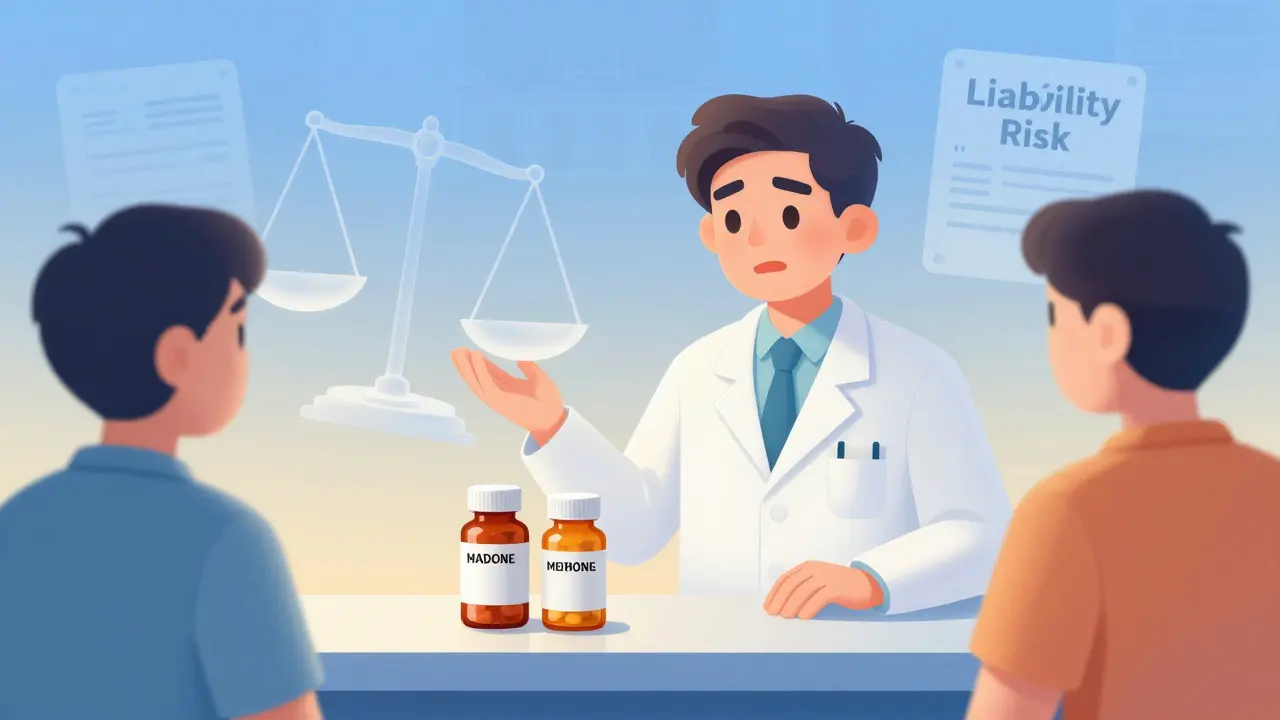
When a pharmacist swaps a brand-name drug for a generic version, they’re not just saving money-they’re stepping into a legal gray zone. In 2026, with over 90% of prescriptions filled as generics in the U.S., this practice is routine. But behind every substitution is a hidden risk: professional liability. A patient could have a bad reaction. A doctor could blame the pharmacist. A court could dismiss the case-even if the generic caused harm-because federal law says generic manufacturers can’t change their labels. And in some states, pharmacists have no legal shield. This isn’t theoretical. It’s happening right now in pharmacies across the country.
Why Generic Substitution Creates Legal Risk
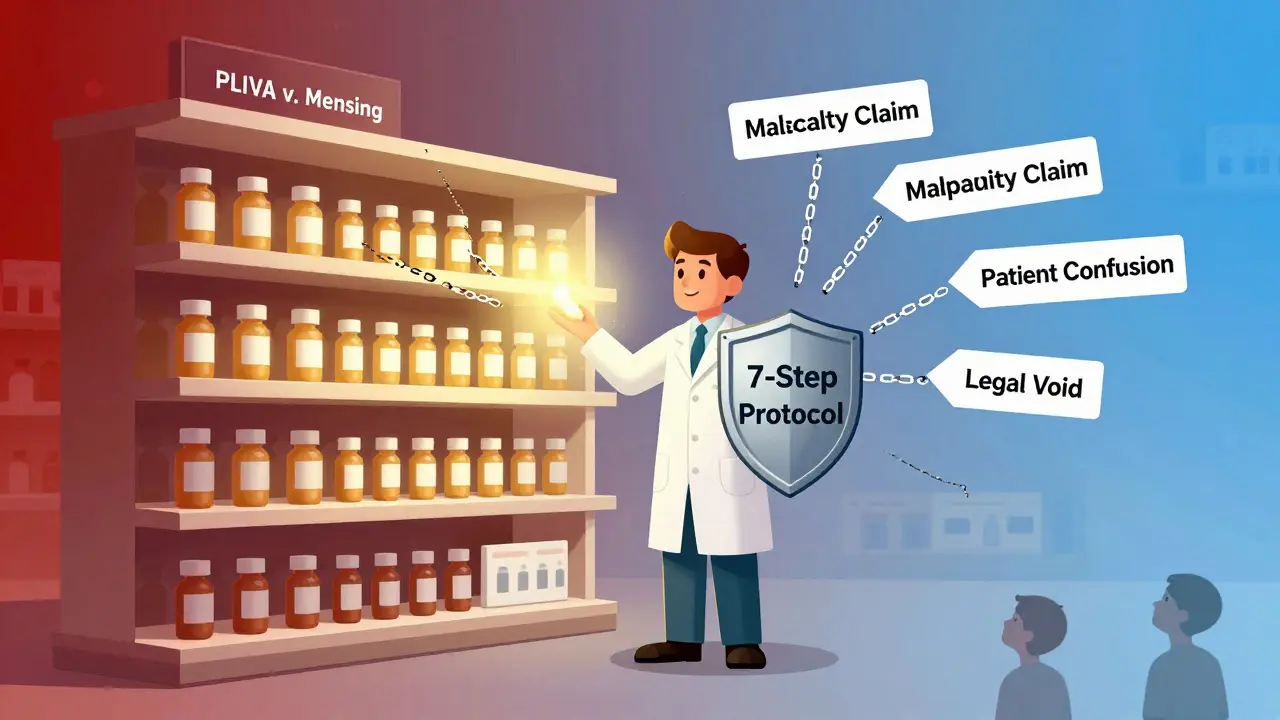
The system was designed to save money. Since the 1984 Hatch-Waxman Act, generic drugs have been approved based on bioequivalence: they must deliver 80% to 125% of the active ingredient as the brand-name version. That sounds precise, but it’s not foolproof. For drugs like warfarin, levothyroxine, and antiepileptics, even small differences in absorption can trigger serious consequences. A 2017 study in Epilepsy & Behavior found that 18.3% of patients had therapeutic failure after switching to a generic antiepileptic. One patient’s seizure frequency tripled. Another developed permanent nerve damage. Here’s the legal trap: the Supreme Court’s 2011 PLIVA v. Mensing ruling said generic manufacturers can’t be sued for inadequate warnings because they’re legally required to copy the brand’s label. That means if a drug causes harm because its side effects weren’t clearly warned about, no one can be held accountable. The brand-name maker isn’t the one making the generic. The generic maker can’t change the label. And the pharmacist? In many states, they’re the only one left who could have intervened.State Laws Vary-And So Does Your Risk
There’s no national rulebook. Each of the 50 states and Washington, D.C., has its own laws about generic substitution. This creates a patchwork that’s impossible to navigate without constant updates.- Twenty-seven states require substitution if the drug is deemed therapeutically equivalent-unless the patient or prescriber says no.
- Twenty-three states only allow substitution, but don’t force it.
- Eighteen states require pharmacists to notify patients directly, not just rely on the package insert.
- Thirty-two states let patients refuse substitution, but only if they’re told they can.
- Twenty-three states offer no liability protection to pharmacists who substitute. In Connecticut, a pharmacist can be held to a higher standard than if they’d dispensed the brand.
Where the Risk Is Highest: Narrow Therapeutic Index Drugs
Not all drugs are created equal. For medications with a wide therapeutic index-like statins or metformin-small differences in absorption don’t matter much. But for drugs with a narrow therapeutic index, the margin for error is razor-thin. A blood level 5% too low or too high can mean the difference between control and crisis. The American Epilepsy Society flagged this in 2018: switching generic antiepileptic drugs led to a 7.9% increase in seizure risk. The FDA’s own data shows that 45 states now have laws allowing substitution of biosimilars-complex biologic drugs-but their liability rules are even more unclear. Pharmacists report the highest anxiety around these drugs. A 2022 survey of 452 pharmacists found that 74% had refused a substitution for a narrow therapeutic index drug-even when state law allowed it-because they feared liability. One pharmacist in Ohio told a patient, “I won’t switch your levothyroxine. I’ve seen too many cases where the generic didn’t work, and I’m not risking your health.” That’s not just good practice. It’s survival.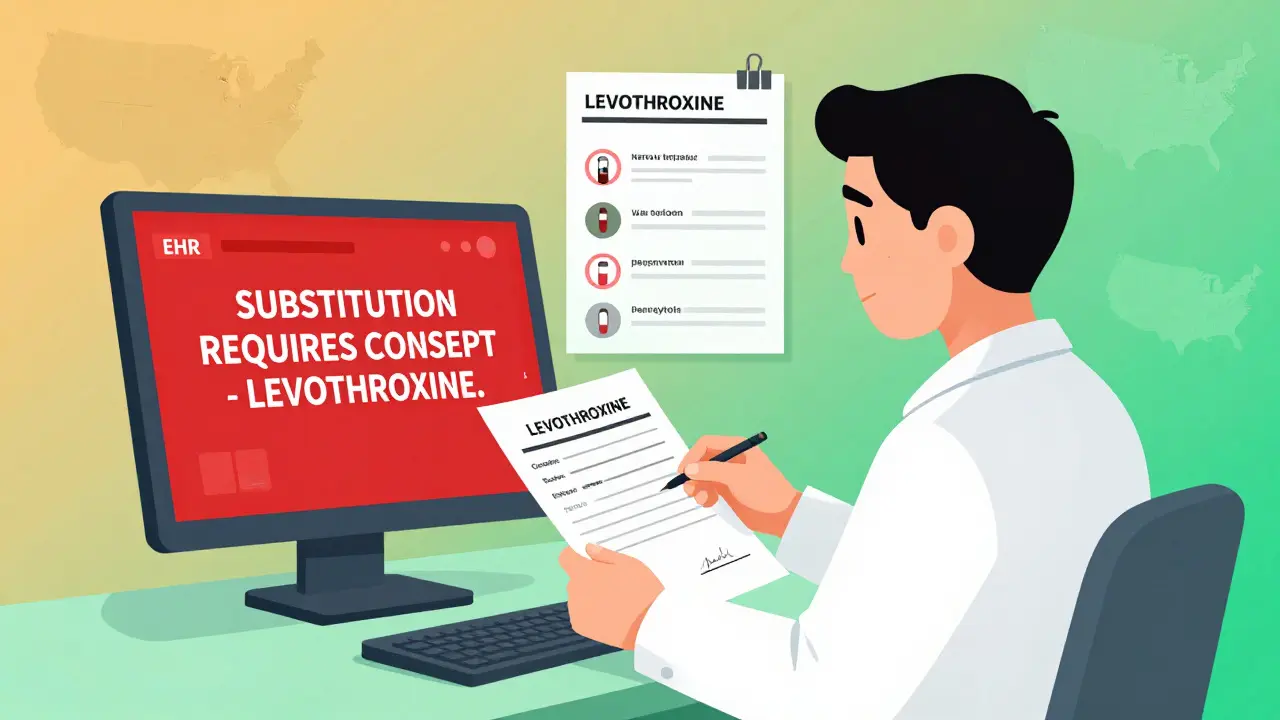
What Patients Don’t Know (And Why It Matters)
Patients assume their pharmacist is just filling the script. They don’t know substitution happened unless they’re told. A 2021 survey by the Patient Advocacy Foundation found that 41% of patients didn’t realize their prescription had been switched until they felt worse. In states without notification laws, pharmacists aren’t required to say a word. One Reddit user from Texas wrote: “I switched to a cheaper generic for my thyroid meds. Two weeks later, I was exhausted, gained 20 pounds, and couldn’t think straight. My doctor said my levels were off. No one told me it was switched.” And when patients don’t know, they blame their doctor. Or the drug. Rarely do they blame the pharmacist-until it’s too late. Then, a lawsuit comes in. And without documentation of consent or notification, the pharmacist is exposed.How to Reduce Risk: A 7-Step Protocol
You can’t eliminate risk. But you can drastically reduce it. The American Society of Health-System Pharmacists laid out a clear path in 2022. Here’s how to follow it:- Check your state’s law every year. Laws change. Use the National Association of Boards of Pharmacy’s Compendium of State Pharmacy Laws. Don’t rely on memory.
- Set up EHR alerts. Flag all narrow therapeutic index drugs in your electronic health record system. If a prescriber orders levothyroxine, warfarin, or phenytoin, the system should prompt you: “Substitution requires patient consent.”
- Get written consent. Use a standardized form. Even if your state doesn’t require it, having a signed note saying “I understand this is a generic and I agree to the substitution” protects you.
- Communicate with prescribers. If a doctor seems unaware of substitution risks (many aren’t), send a quick note: “Patient on levothyroxine. Will not substitute without your approval.”
- Log every substitution. Record the brand name, generic name, manufacturer, and lot number. If a problem arises later, you can trace it.
- Take the liability assessment. The 2021 Journal of the American Pharmacists Association published a 27-point risk checklist. Use it. It’s free.
- Get extra insurance. Standard malpractice policies often exclude substitution-related claims. Ask your insurer for supplemental coverage that includes generic substitution liability.
The Bigger Picture: Is the System Broken?
The cost savings are real. Between 2009 and 2018, generics saved the U.S. healthcare system $1.67 trillion. That’s not trivial. But the legal system is stuck in a paradox: to keep prices low, manufacturers can’t be held liable. But when patients get hurt, there’s no one to hold accountable. Experts like Dr. Aaron Kesselheim at Harvard say it’s unfair. “A patient who takes a brand-name drug and has a reaction can sue. The patient who takes the same drug, but the generic version, has no recourse. That’s not justice. It’s luck.” New proposals are emerging. In 2023, 11 states introduced the “Generic Drug Safety Act,” which would require generic manufacturers to update labels within 60 days of new safety data. The FDA is testing a pilot program to let generics request label changes. But progress is slow. Until then, pharmacists are on the front line.What You Can Do Today
You don’t need to wait for lawmakers. Start now:- Review your state’s substitution law today. Don’t assume you know it.
- Check your EHR. Are there alerts for high-risk drugs?
- Print out a consent form. Use it next time you substitute.
- Call your malpractice insurer. Ask if your policy covers substitution-related claims.
Can a pharmacist be sued for substituting a generic drug?
Yes, but it depends on the state. In 23 states, pharmacists have no legal protection from liability if a substitution causes harm. In 27 states, laws explicitly protect pharmacists from greater liability than if they had dispensed the brand-name drug. However, even in protected states, failure to follow state procedures-like not getting patient consent or not documenting substitution-can still lead to legal action.
Are generic drugs always safe to substitute?
For most drugs, yes. But for medications with a narrow therapeutic index-like warfarin, levothyroxine, and antiepileptic drugs-even small differences in absorption can lead to therapeutic failure or toxicity. Studies show a 7.9% increase in seizure risk with generic antiepileptic substitutions and 18.3% of patients experiencing adverse effects after switching levothyroxine generics. Pharmacists should avoid substitution for these drugs unless the patient consents in writing and the prescriber approves.
Do I need to tell the patient I’m substituting a drug?
In 18 states, you’re legally required to notify the patient directly, beyond just the label. Even in states where it’s not required, best practice is to inform the patient. Many patients don’t realize substitution occurred until they have side effects. A simple statement like, “This is a generic version of your usual medication. It’s FDA-approved and cheaper, but let me know if you feel different,” reduces confusion and builds trust.
What if the patient refuses substitution?
In 32 states, patients have the right to refuse substitution. If a patient says no, you must fill the brand-name prescription as written. Never pressure them. Document their refusal in writing. Some patients refuse because they’ve had bad experiences with generics. Respecting their choice reduces risk and builds patient loyalty.
Why can’t generic manufacturers change their drug labels?
Because of the 2011 Supreme Court ruling in PLIVA v. Mensing. The Court held that federal law preempts state failure-to-warn claims against generic manufacturers because they’re legally required to use the same label as the brand-name drug. This means if a new safety risk emerges, the generic maker can’t update the label unless the brand-name maker does first. This creates a dangerous gap in patient safety and leaves injured patients without legal recourse.
Should I avoid substituting biosimilars?
Proceed with extreme caution. Biosimilars are complex biological drugs, and their substitution rules are still evolving. While 45 states now allow biosimilar substitution, liability protections vary widely. Unlike small-molecule generics, biosimilars may have different excipients or delivery mechanisms that affect absorption. Always check your state’s specific laws and get explicit patient consent before substituting.
How can I protect myself legally?
Follow the 7-step risk-reduction protocol: 1) Know your state’s laws, 2) Use EHR alerts for high-risk drugs, 3) Get written patient consent, 4) Communicate with prescribers, 5) Log all substitutions with batch numbers, 6) Complete the 27-point liability assessment, and 7) Get supplemental malpractice insurance that covers substitution. These steps don’t eliminate risk-but they make you far less vulnerable.