

When a pharmacist sees a brand-name prescription, they don’t just fill it-they evaluate whether a cheaper, equally effective generic version is right for the patient. But getting that generic filled isn’t automatic. It often requires a conversation with the prescriber. These conversations matter. They save money, improve adherence, and reduce hospital visits. Yet many prescribers still hesitate. Why? And how do pharmacists make the case effectively?
Why Generics Are the Default-But Not Always the Outcome
Ninety-seven percent of prescriptions filled in the U.S. are for generic drugs. That’s not a coincidence. It’s the result of decades of science, regulation, and cost-saving policy. The FDA’s Orange Book, updated every year, lists over 12,800 generic products that are therapeutically equivalent to their brand-name counterparts. These generics aren’t knockoffs. They contain the exact same active ingredients, meet the same manufacturing standards, and pass the same bioequivalence tests. In fact, 98.7% of approved generics show bioequivalence within 95%-105% of the brand drug’s performance, far tighter than the FDA’s 80%-125% requirement. Despite this, about 15% of prescriptions still have "dispense as written" (DAW) marked on them. That means the prescriber is asking the pharmacist not to substitute. In two-thirds of those cases, it’s not because the patient had a bad reaction. It’s because the prescriber is uncertain-concerned about effectiveness, worried about side effects, or simply unfamiliar with the data.When Substitution Isn’t Safe-And When It’s Required
Not all drugs are created equal when it comes to substitution. Some have a narrow therapeutic index (NTI), meaning the difference between a helpful dose and a dangerous one is tiny. Drugs like warfarin, levothyroxine, and phenytoin fall into this category. For these, even small variations in absorption can matter. The FDA doesn’t automatically approve generic substitution for NTI drugs. Pharmacists must check the Orange Book’s ratings and often consult with the prescriber before switching. Another hidden risk? Inactive ingredients. Generics must have the same active ingredient-but they can use different fillers, dyes, or preservatives. For about 8.7% of patients with known allergies or sensitivities, this can cause problems. A patient allergic to lactose? A generic might contain it. A patient with celiac disease? A gluten-containing binder could trigger a reaction. Pharmacists flag these cases before dispensing, often calling the prescriber to confirm whether the brand is truly necessary.The Science Behind the Recommendation
The best way to convince a prescriber is with data. A 2018 study of 12.7 million patients found that switching to generics improved medication adherence by 12.4%. That means patients took their meds more consistently. And with better adherence came a 28.6% drop in non-adherence and a 15.2% reduction in hospitalizations for chronic conditions like high blood pressure and diabetes. Pharmacists who cite this kind of evidence get better results. One study showed that when pharmacists included specific bioequivalence numbers-like "this generic’s AUC is 98% of the brand"-prescriber acceptance jumped by 34 percentage points. Generic isn’t just cheaper. It’s proven. And the FDA’s own data backs it up: over 98% of generics pass the same strict bioequivalence tests as the brand.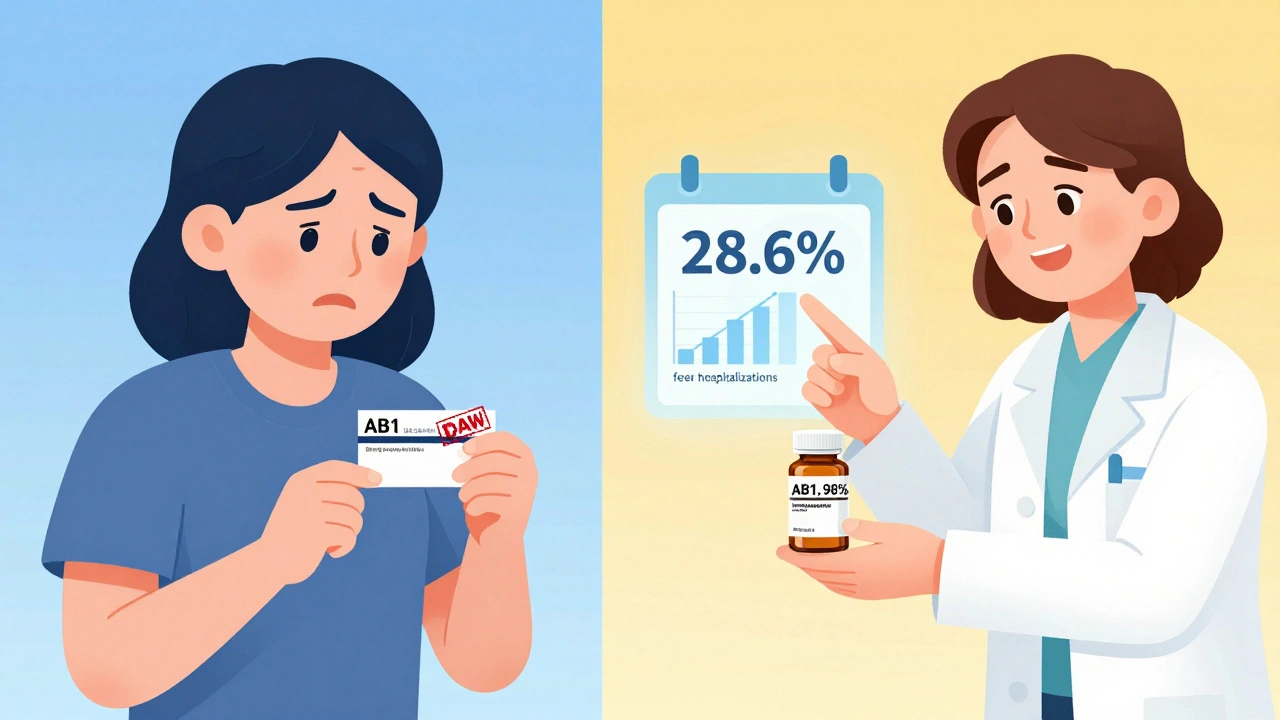
How Pharmacists Actually Talk to Prescribers
It’s not just about calling and saying, "Can I substitute?" Effective communication follows a clear structure:- Call or send a secure message within 24 hours of receiving the prescription.
- Reference the Orange Book’s therapeutic equivalence rating (e.g., "This generic has an AB1 rating.")
- Share the cost difference-often 70-90% lower.
- Document the conversation in the patient’s record.
Barriers Still Exist-And How to Overcome Them
Despite the evidence, many prescribers still resist. A 2023 survey found that 37.6% of prescribers worry about generic efficacy. That number climbs to 42.3% for inhalers and 38.9% for topical creams. These aren’t irrational fears-they’re based on real-world variability. But they’re often exaggerated. Pharmacists combat this by being specific. Instead of saying, "Generics are safe," they say, "This generic for albuterol has the same particle size distribution as the brand, and a 2022 study showed identical lung deposition in 94% of patients." They cite studies, not opinions. Time is another barrier. Pharmacists report having only 2.3 minutes per prescription to verify, counsel, and communicate. That’s not enough to explain complex bioequivalence data. That’s why tools like PharmAI’s Generic Substitution Assistant are growing fast. Adopted by nearly 30% of chain pharmacies, these AI tools analyze the prescription, pull equivalence data, and suggest the best message to send-cutting communication time by 42% and boosting recommendation accuracy to over 94%.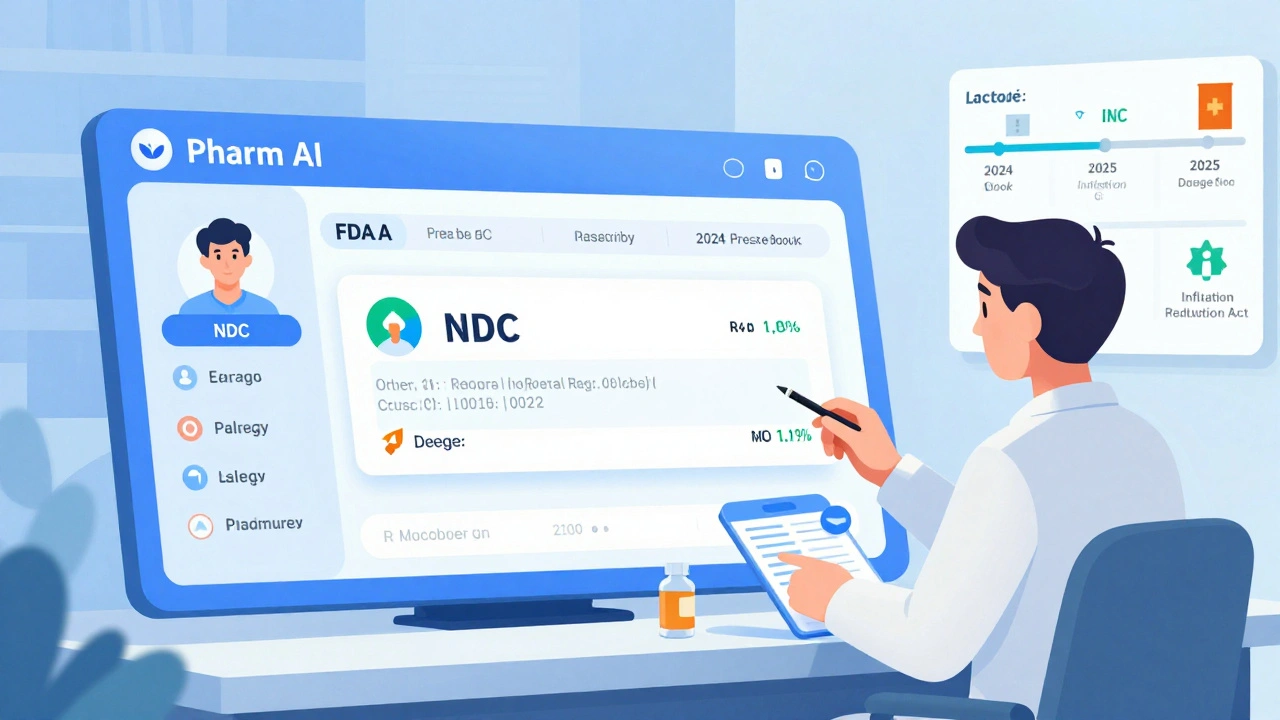
What’s Changing in 2025 and Beyond
The Inflation Reduction Act, effective January 2025, expands pharmacists’ role in Medicare Part D. More patients will have access to pharmacist-led medication therapy management (MTM), including generic optimization. That means more opportunities to recommend generics-and more pressure to document those recommendations properly. The FDA is also updating the Orange Book in 2024 to include real-world data on how generics perform outside clinical trials. That’s a big deal. It means pharmacists will soon be able to say, "In 12,000 Medicare patients, this generic had the same hospitalization rate as the brand." Meanwhile, the CDC is launching a Generic Medication Safety Network in late 2024. It will track adverse events linked to generics in near real time-giving pharmacists live data to back up their recommendations.Documentation Isn’t Optional-It’s the Law
Every time a pharmacist substitutes a generic, they must document it. The Centers for Medicare & Medicaid Services (CMS) requires recording the generic product, manufacturer, NDC code, and any prescriber communication. Pharmacies using EHR-integrated systems hit 98.7% compliance. Those using paper or basic systems? Only 76.4%. The American Medical Association and American Pharmacists Association agree on what good documentation looks like:- Date and time of communication
- Method used (phone, secure message, etc.)
- Prescriber’s name and credentials
- Specific recommendation and reason
- Outcome (approved, denied, pending)
Final Thought: It’s Not About Substitution-It’s About Care
Pharmacists don’t push generics because they want to save money. They push them because they want patients to take their meds. And they know that when patients can afford their drugs, they’re more likely to stick with them. A $5 generic instead of a $150 brand isn’t just a cost savings-it’s a lifeline. The science is clear. The data is solid. The tools are here. The only thing left is communication. And when pharmacists speak up-with facts, with care, and with precision-they don’t just change prescriptions. They change outcomes.Can pharmacists automatically substitute generics without talking to the prescriber?
In 49 states, pharmacists can substitute a therapeutically equivalent generic unless the prescriber writes "dispense as written" or "do not substitute." In 17 states, they also need patient consent. Five states (Connecticut, Massachusetts, New York, Texas, and Virginia) restrict substitution to only those generics listed in their state formulary. Always check your state’s laws.
Are generics really as effective as brand-name drugs?
Yes. The FDA requires generics to have the same active ingredient, strength, dosage form, and route of administration. They must also prove bioequivalence-meaning they deliver the same amount of drug into the bloodstream at the same rate as the brand. Studies show 98.7% of approved generics meet this standard within 95%-105% of the brand’s performance. Large studies of millions of patients show no difference in effectiveness or safety for most medications.
Why do some prescribers refuse generic substitution?
Common reasons include concerns about therapeutic equivalence (58.3% of prescribers), fear of altered patient response (47.6%), and lack of time to review substitution requests (62.1%). Some also worry about complex formulations like inhalers or topical creams, where small differences in delivery can matter. Pharmacists address these concerns with specific data from the FDA’s Product-Specific Guidances and published studies.
What’s the difference between an "A" and "B" rating in the FDA Orange Book?
An "A" rating means the generic is therapeutically equivalent to the brand-name drug and can be substituted. A "B" rating means it is not considered equivalent-either because it hasn’t been proven bioequivalent or because it’s a special case like an NTI drug. About 92.7% of generics in the Orange Book have an "A" rating.
Do generics have different side effects than brand-name drugs?
The active ingredient is identical, so the core side effects are the same. However, inactive ingredients (like dyes, fillers, or preservatives) can differ. In about 8.7% of cases, these differences cause reactions in patients with allergies or sensitivities-like lactose intolerance or celiac disease. Pharmacists check for these before substituting and consult the prescriber if needed.
How does AI help pharmacists recommend generics?
AI tools like PharmAI’s Generic Substitution Assistant analyze prescriptions, pull equivalence data from the FDA’s Orange Book, suggest cost comparisons, and auto-generate messages to prescribers. These tools reduce communication time by 42% and increase recommendation accuracy from 76% to over 94%. They help pharmacists act faster and more confidently, especially when time is limited.

Kristen Yates
December 1, 2025 AT 22:12Generics aren’t just cheaper-they’re the backbone of sustainable care. I’ve seen patients stop meds because of cost, then end up in the ER. Switching to a $5 generic isn’t a compromise. It’s the difference between taking something daily and not taking it at all.
Saurabh Tiwari
December 1, 2025 AT 23:06bro the FDA data is wild 😎 98.7% of generics match brand performance and yet docs still act like they’re snake oil 🤷♂️
Carolyn Woodard
December 2, 2025 AT 23:04The real issue isn’t bioequivalence-it’s epistemological. Prescribers operate within a paradigm shaped by pharmaceutical marketing and anecdotal experience, not population-level outcomes. The pharmacists’ role, then, becomes not just clinical but epistemic: they must reconstruct the prescriber’s model of therapeutic equivalence through data, not persuasion. The Orange Book isn’t just a reference-it’s a counter-narrative to institutional inertia.
Allan maniero
December 4, 2025 AT 04:00I’ve worked in community pharmacies for 22 years, and I’ve seen this play out over and over. The most effective pharmacists aren’t the ones who shout the loudest-they’re the ones who send a quiet, precise message with the exact AB rating, the cost difference, and a line like, 'Patient is on fixed income, this switch could mean the difference between adherence and discontinuation.' That’s not just protocol. That’s humanity wrapped in data.
Anthony Breakspear
December 4, 2025 AT 17:14Let’s be real-pharmacists are the unsung heroes of the healthcare system. You got a doc who’s never heard of the Orange Book? No problem. You got a patient who can’t afford their med? Done. You got a 72-year-old grandma on warfarin? You don’t just swap- you call, you cite, you document, you follow up. That’s not just job duty. That’s clinical badassery. And yeah, AI tools help, but nothing replaces a pharmacist who actually gives a damn.
Zoe Bray
December 5, 2025 AT 02:11It is imperative to underscore the regulatory and procedural rigor required in the substitution of generic pharmaceuticals. Compliance with CMS mandates, adherence to the American Pharmacists Association’s documentation standards, and the integration of EHR systems are not optional best practices-they constitute the foundational pillars of legally defensible, patient-centered pharmaceutical care. Failure to maintain accurate, timestamped records of prescriber communication constitutes a material breach of fiduciary duty.
Girish Padia
December 5, 2025 AT 21:17why do we even bother? doctors dont care. they get paid the same whether you give em brand or generic. they just wanna avoid one more phone call. generics are fine until something goes wrong and then its always the pharmacists fault
Saket Modi
December 6, 2025 AT 03:48lol at the AI tools saving 42% time. meanwhile my pharmacist spends 8 mins arguing with my doc about a $3 generic. the system is broken