
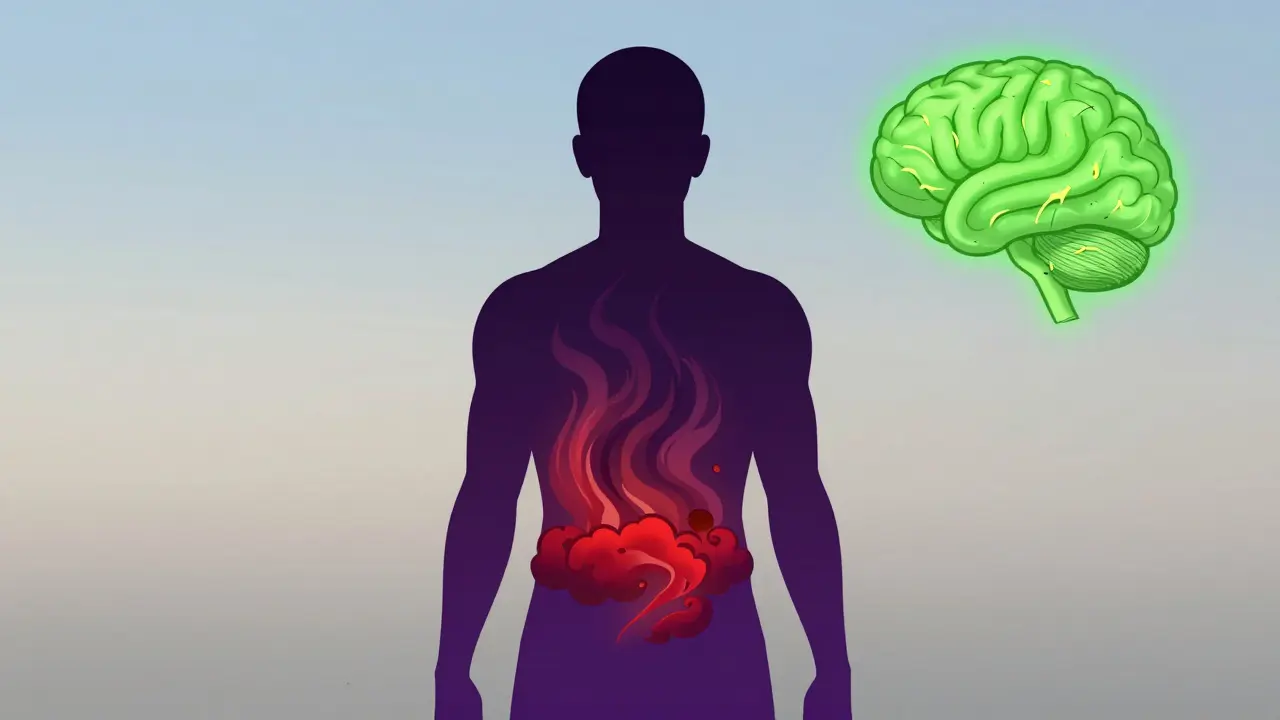
When your kidneys stop working, your body doesn’t just slow down-it starts to poison itself. The waste products that should be flushed out begin to build up, and that’s when uremic symptoms show up. Nausea, intense itching, fatigue, and a metallic taste in your mouth aren’t just annoying-they’re warning signs your body can’t handle the load anymore. For many people with advanced kidney disease, these symptoms are the signal that dialysis isn’t just an option anymore-it’s a necessity.
What Exactly Is Uremia?
Uremia isn’t a disease. It’s the result of kidney failure. When your kidneys can’t filter blood properly, toxins like urea, creatinine, and other waste molecules pile up. This isn’t just about high numbers on a lab report. It’s about how those toxins affect your brain, skin, stomach, and heart. The term comes from the Greek word for urine, and it’s been recognized since the 1800s. But today, we know more than ever about how these toxins actually make you feel sick.
Most people don’t notice anything until their eGFR drops below 15 mL/min/1.73m². That’s when the kidneys are functioning at less than 15% of normal capacity. But symptoms can start creeping in even before that. Nausea often appears when blood urea nitrogen (BUN) hits 70-80 mg/dL. Itchiness? That can show up when creatinine climbs past 8 mg/dL. And by the time you’re at 10 mg/dL or higher, you’re likely dealing with multiple symptoms at once.
Why Do You Feel Nauseous?
Imagine your brain’s nausea center-the part that triggers vomiting-being constantly bombarded by toxins. That’s what happens in uremia. Chemicals like p-cresyl sulfate and indoxyl sulfate, which healthy kidneys remove, build up and irritate the area postrema in your brainstem. Research from UC San Francisco shows a direct link: the higher these toxins rise, the worse the nausea gets (r=0.78). It’s not just a mild stomach upset. Many patients describe it as constant, unrelenting queasiness that makes eating feel impossible.
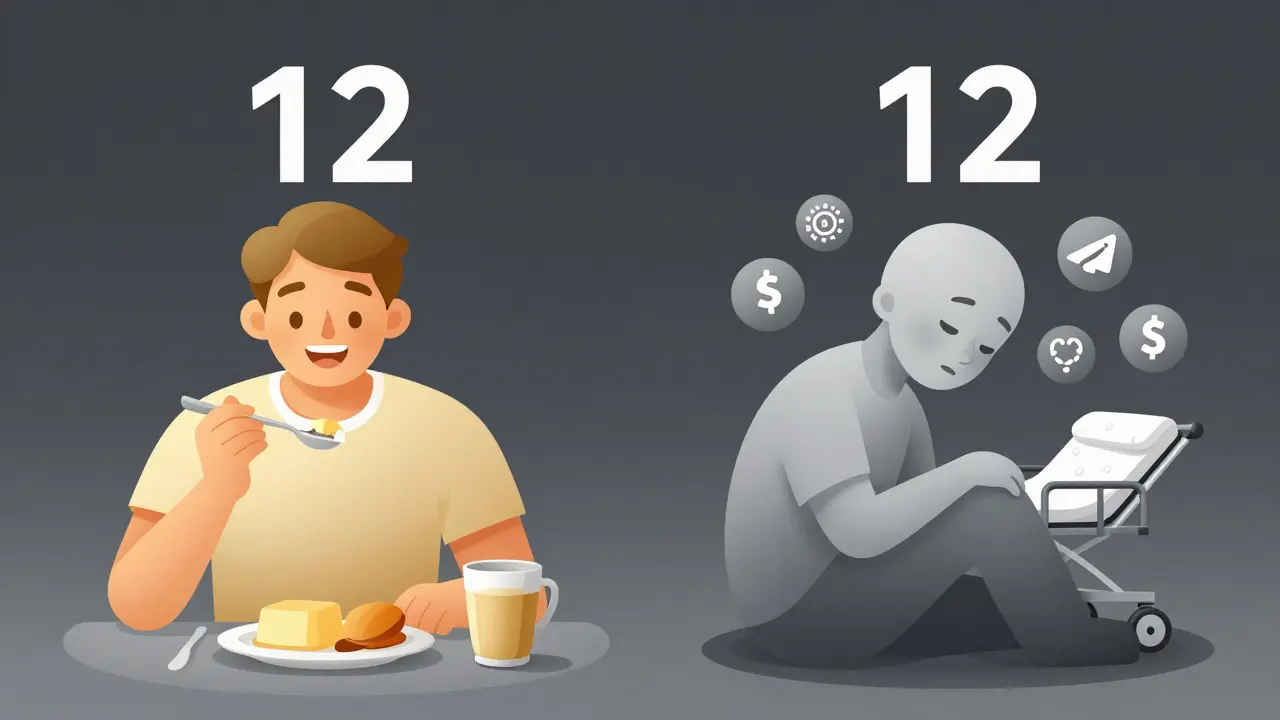
One patient on a kidney forum shared, "I lost 18 pounds in two months because food tasted like sand." That’s not exaggeration. Uremia alters taste perception. Food that used to be comforting becomes repulsive. Appetite drops. Weight loss follows. And when you’re already weak from kidney disease, losing muscle mass speeds up your decline.
Doctors use ondansetron or domperidone to help, but they only work if the root cause is addressed. If dialysis doesn’t come soon enough, even strong anti-nausea meds won’t fully help. The only real fix? Removing those toxins from your blood.
The Itch That Won’t Go Away
If you’ve ever had a rash that made you scratch until your skin bled, you know how bad itching can be. Now imagine that-but without a rash. No bumps. No redness. Just pure, relentless itch, especially at night. This is uremic pruritus, or CKD-associated pruritus (CKD-aP).
It affects nearly 7 out of 10 people on hemodialysis. And it’s not just about skin. Studies show patients with severe itching have CRP levels over 12 mg/L-nearly three times higher than those without it. That means inflammation is running wild inside their bodies. The itch isn’t coming from dry skin. It’s coming from toxins, nerve changes, and immune system overdrive.
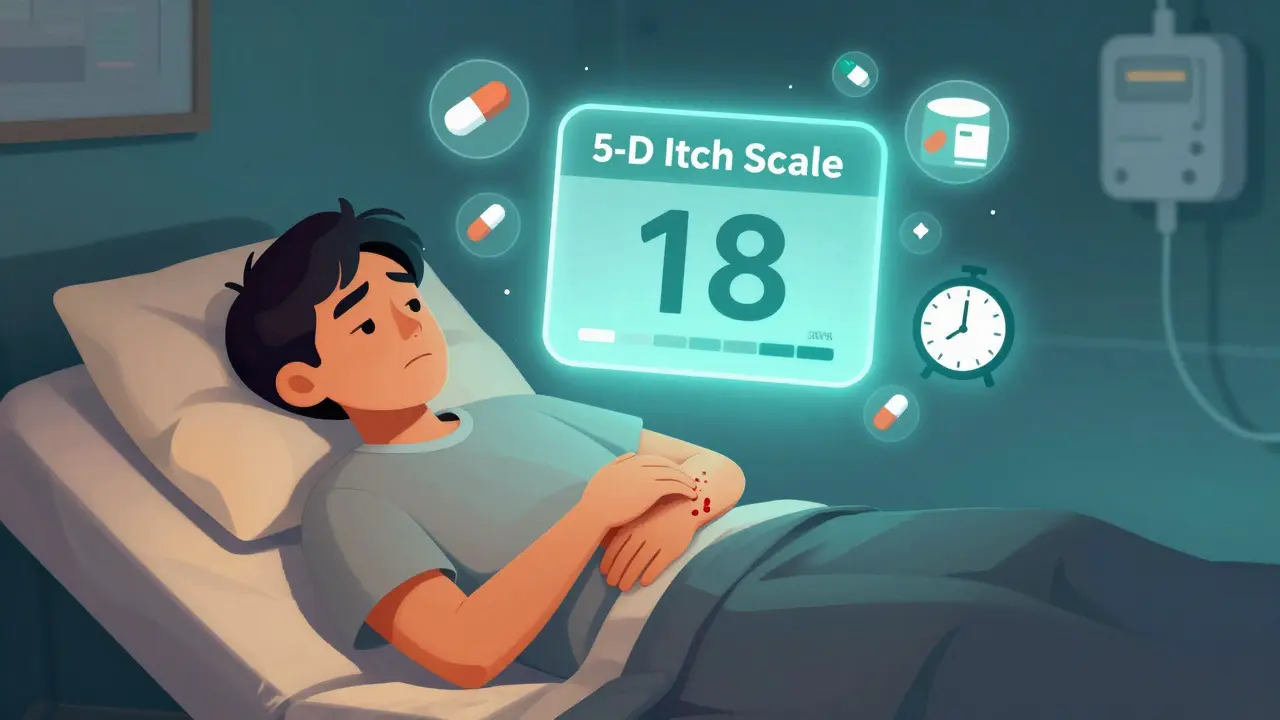
The 5-D Itch Scale is used by specialists to measure it: Duration, Degree, Direction, Disability, and Distribution. A score over 12 means it’s severe. Over 15? That’s when doctors start talking about dialysis as the next step. One patient wrote, "I scratched until I bled. My Fitbit sleep score dropped from 85 to 42. I hadn’t slept through the night in three years. Then dialysis started-and I slept for six hours straight."
Standard treatments include gabapentin, but it’s not always enough. New drugs like difelikefalin (Korsuva) and nalfurafine are now approved specifically for this. Difelikefalin cuts itch scores by over 30% in just a few days. But access is uneven. In Europe, 92% of dialysis centers use formal itch assessments. In the U.S., it’s only 67%.
When Should You Start Dialysis?
This is the biggest question. And the answer isn’t just about numbers.
Twenty years ago, doctors waited until patients were near death before starting dialysis. Now, we know better. But the old idea that "earlier is always better" has also been challenged.
The IDEAL trial, published in the New England Journal of Medicine, compared starting dialysis at eGFR 10-14 vs. 5-7. There was no difference in survival. But patients who waited until symptoms appeared had better quality of life-as long as their symptoms were managed.
So what triggers dialysis today? The 2023 KDOQI guidelines say: when symptoms can’t be controlled. That means:
- Nausea so bad you’ve lost 5% of your body weight in 3 months
- Itch that scores over 15 on the 5-D scale and doesn’t respond to gabapentin or antihistamines
- Signs of uremic pericarditis (fluid around the heart) seen on an echocardiogram
- High phosphate levels (>5.5 mg/dL) with calcium-phosphorus product over 55
Some experts, like Dr. Ravindra Mehta, argue for earlier initiation-at eGFR 12-15-to prevent complications. Others, like Dr. Adeera Levin, say it’s about the patient’s experience, not the number on the chart. The truth? It’s personal. Two people with the same eGFR can have wildly different symptoms. One might feel fine. The other can’t sleep, eat, or function.
What Happens If You Wait Too Long?
Delaying dialysis isn’t just uncomfortable-it’s dangerous. A 2022 study in Health Affairs found Black patients waited an average of 3.2 months longer than White patients before starting dialysis. That delay led to 18% more hospitalizations.
When toxins build up too long, they don’t just cause nausea and itch. They can lead to:
- Pericarditis (inflammation of the heart lining)
- Neuropathy (numbness, tingling, burning in hands and feet)
- Confusion or seizures from brain swelling
- Bleeding problems due to platelet dysfunction
- Fluid overload causing shortness of breath or heart failure
And once these complications set in, recovery is harder. Hospital stays get longer. Recovery takes more time. The risk of death rises.
One patient in a Reddit thread wrote: "I waited because I was scared of needles. I ended up in the ER with fluid in my lungs. They put me on dialysis right away. I was lucky I made it."
How Is It Managed Before Dialysis?
Dialysis isn’t the only tool. Before it starts-or while you’re waiting-doctors use a tiered approach:
- Optimize dialysis if already on it: Target Kt/V ≥1.4 (this measures how well toxins are being removed).
- Medications: Gabapentin (100-300mg three times daily) for itch. Ondansetron (4mg three times daily) for nausea. Domperidone is used if ondansetron fails-but watch for heart rhythm risks.
- New drugs: Difelikefalin (IV) or nalfurafine (oral) for severe pruritus. These target the brain’s itch receptors directly.
- Diet and fluid control: Limiting phosphorus, potassium, and sodium helps reduce toxin buildup.
- Regular monitoring: Blood tests every 2-4 weeks for BUN, creatinine, phosphate, calcium, and CRP.
But here’s the catch: most primary care doctors don’t know how to manage uremic symptoms. A 2022 University of Michigan poll found 41% of patients saw three or more doctors before being told they had kidney failure. That delay? It cost them months of suffering.
What’s Changing in 2025?
The next big shift is coming. The 2024 KDIGO guidelines will likely include patient-reported outcomes as official triggers for dialysis. That means if you report severe itch, nausea, or fatigue on validated scales-like the PROMIS-Itch tool-you might qualify for dialysis even if your eGFR is 13.
That’s a huge change. It puts the patient’s experience at the center. No more waiting until you’re near death. No more ignoring your symptoms because "your numbers aren’t bad enough."
The future is about quality of life, not just survival.
What Should You Do?
If you have kidney disease and you’re feeling nauseous, itchy, or exhausted, don’t wait. Don’t assume it’s "just part of aging." Don’t be told to "just tough it out."
- Track your symptoms: Use a journal. Note when nausea hits, how bad the itch is, if you’re losing weight, if you can’t sleep.
- Ask for a 5-D Itch Scale or PROMIS-Itch assessment. Most nephrology clinics have it.
- Request a full toxin panel: BUN, creatinine, phosphate, calcium, CRP, PTH.
- Speak up if your symptoms aren’t being taken seriously. You deserve to feel better.
Dialysis isn’t a failure. It’s a rescue. And starting it when you need it-not when a number says so-can mean the difference between surviving… and living.
Can uremic symptoms go away without dialysis?
In rare cases, yes-if kidney function improves temporarily, such as after treating an infection or reversing dehydration. But for people with permanent kidney damage (stage 5 CKD), symptoms won’t resolve without dialysis or transplant. Medications can ease symptoms, but they don’t remove the toxins. Without dialysis, symptoms will worsen over time.
Is itching always a sign of kidney failure?
No. Itching can come from dry skin, allergies, liver disease, thyroid problems, or even anxiety. But if you have known kidney disease and have persistent, widespread itching-especially at night-with no rash or other cause, it’s very likely uremic pruritus. A doctor should rule out other causes before confirming it’s related to kidney failure.
How long after symptoms start should dialysis begin?
There’s no fixed timeline, but most patients start dialysis within 6-12 weeks of noticeable symptoms like nausea, weight loss, or severe itching. Waiting longer than 3 months increases the risk of complications like heart problems or hospitalization. The goal is to start before your body starts shutting down-not after.
Can diet alone control uremic symptoms?
Diet helps, but it can’t replace dialysis. Limiting phosphorus, potassium, and protein reduces toxin buildup, but it doesn’t remove the middle molecules that cause itching and nausea. Even the strictest diet won’t lower BUN enough to stop symptoms in advanced kidney failure. Diet is a support tool-not a cure.
Are there alternatives to dialysis for uremic symptoms?
For people who can’t or won’t do dialysis, conservative management with symptom control is an option. This includes medications, diet, fluid restriction, and palliative care. But it doesn’t stop the progression of toxin buildup. Over time, symptoms worsen, and life expectancy is significantly shorter. Transplant is the only true alternative, but it requires a donor and long-term waiting.
Uremic symptoms aren’t something you should ignore. They’re your body screaming for help. And dialysis isn’t the end-it’s the beginning of a better, clearer, more comfortable life.




Tim Schulz
March 14, 2026 AT 12:41Jinesh Jain
March 16, 2026 AT 01:15Katherine Rodriguez
March 17, 2026 AT 20:34Devin Ersoy
March 18, 2026 AT 05:45Scott Smith
March 19, 2026 AT 21:40Sally Lloyd
March 21, 2026 AT 03:42tamilan Nadar
March 21, 2026 AT 17:33Adam M
March 23, 2026 AT 08:31Rosemary Chude-Sokei
March 24, 2026 AT 16:19Noluthando Devour Mamabolo
March 25, 2026 AT 14:28Leah Dobbin
March 26, 2026 AT 23:11Ali Hughey
March 27, 2026 AT 05:25Alex MC
March 27, 2026 AT 20:53rakesh sabharwal
March 29, 2026 AT 09:52