
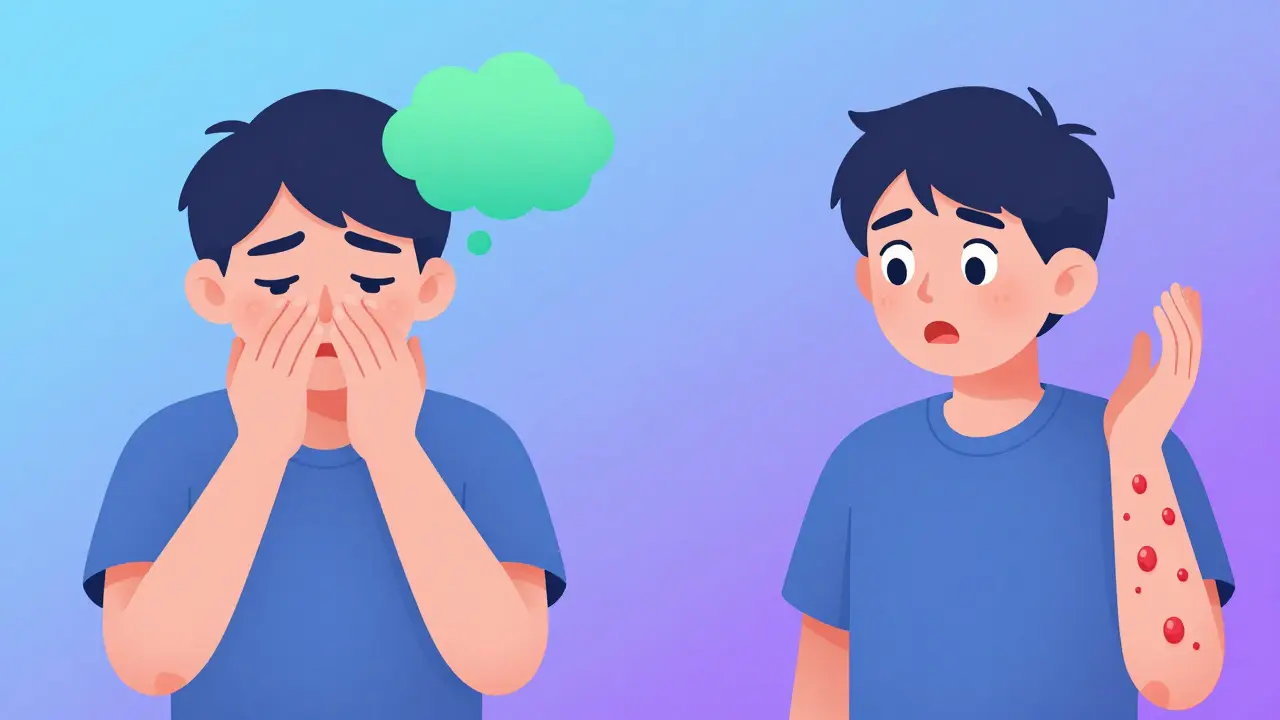
A Drug Allergy is an immune system reaction where the body mistakenly identifies a normally harmless substance in a medication as a threat. It is crucial to distinguish this from a side effect. If a drug makes you feel nauseous or gives you a headache, that is a side effect. If your body triggers an immune response-like hives, swelling, or difficulty breathing-that is an allergy. Understanding this difference is the first step toward getting the right treatment.
Is It a True Allergy or Just a Side Effect?
Most people aren't actually allergic to their medications. According to data from the Cleveland Clinic, non-allergic side effects make up more than 90% of all adverse drug reactions. Only about 10% are true immune-mediated allergies. This gap exists because many of us remember a rash from childhood and assume it was an allergy, when it might have been a viral exanthem or a mild sensitivity that we've since outgrown.
True allergies are often driven by IgE-mediated reactions. This is when your immune system produces Immunoglobulin E antibodies that trigger the release of histamine. This can lead to anything from a mild itchy rash to Anaphylaxis, a severe, life-threatening reaction that crashes your blood pressure and closes your airways. Because the stakes are so high, the goal isn't just to avoid drugs, but to accurately identify which ones are truly dangerous.
How to Document Your Allergy History Correctly
When you tell a doctor "I'm allergic to penicillin," they often just check a box in your file. This is where the system breaks down. To get a precise diagnosis and find safe alternatives, you need to provide a detailed map of your reaction. The National Institute for Health and Care Excellence (NICE) suggests tracking seven specific data points to avoid misdiagnosis.
If you are documenting your history, try to gather the following details:
- Drug Name: Both the brand name and the generic name (e.g., Amoxicillin).
- Dosage: The strength and formulation (tablet, liquid, injection).
- The Reaction: What exactly happened? Was it a rash, swelling, or shortness of breath?
- Timing: Exactly when did the reaction start after taking the dose?
- Frequency: How many doses did you take before the reaction happened?
- Indication: What were you treating at the time?
- Route: Was the medicine swallowed, applied to the skin, or injected?
Having this information ready prevents "allergy drift," where a vague childhood memory becomes a permanent medical restriction. Carrying a wallet card with these details can be a lifesaver in emergency situations where you can't communicate with staff.
Testing and Clearing Your Allergy Label
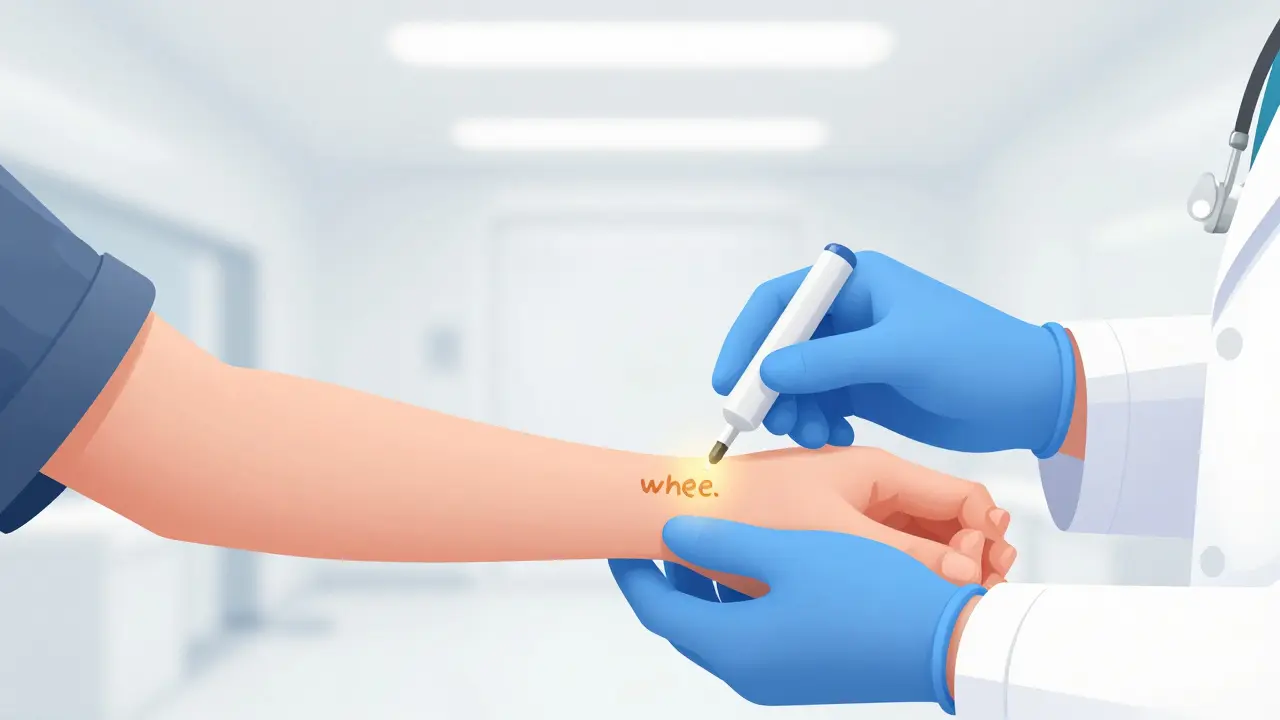
If you suspect your allergy label might be wrong, you can undergo formal testing. This is typically handled by an allergist and involves a tiered approach to ensure safety. One common method is skin testing, where a tiny amount of the drug is injected or placed on the skin to see if a wheal (a small bump) forms. For penicillin, specialists might use specific determinants like benzylpenicilloyl polylysine to trigger a response.
If the skin test is negative, the next step is often an "oral challenge." This involves taking a small dose of the medication under strict medical supervision to see if a reaction occurs. The success rate for this is incredibly high; one study of 1,000 patients found that over 95% tolerated the drug without any issues. Clearing a false allergy means you can move away from broad-spectrum antibiotics, which are often more expensive and increase the risk of Clostridium difficile (C. diff) infections.

Finding Safe Alternatives and Managing Cross-Reactivity
When a drug is truly unsafe, you need an alternative. However, not all alternatives are created equal. Many people fear "cross-reactivity," where being allergic to one drug means you'll react to another similar one. This is common with Beta-lactam antibiotics, a group that includes both penicillins and cephalosporins.
For a long time, doctors assumed that if you were allergic to penicillin, you should avoid all cephalosporins. Recent data from the CDC suggests this is too cautious. The risk of cross-reactivity with third-generation cephalosporins, such as ceftriaxone, is actually quite low. This opens up safer and more effective treatment options for many patients.
| Alternative Class | Examples | Common Uses | Trade-off/Consideration |
|---|---|---|---|
| Macrolides | Azithromycin, Clarithromycin | Respiratory infections | Often more expensive than penicillin |
| Fluoroquinolones | Levofloxacin, Moxifloxacin | Severe bacterial infections | Higher risk of antibiotic resistance |
| Tetracyclines | Doxycycline | Skin infections, Lyme disease | Sensitivity to sunlight (photosensitivity) |
The Last Resort: Drug Desensitization
What happens if you have a life-threatening allergy but the only drug that can save you is the one you're allergic to? This happens in cases of neurosyphilis or certain high-risk pregnancies. In these scenarios, doctors use a process called Drug Desensitization.
Desensitization isn't a cure for the allergy; it's a temporary "trick" for the immune system. A specialist administers an incredibly small dose of the medication, then gradually increases the dose every 15 to 30 minutes over several hours or days. This slowly acclimates the body to the drug, preventing a massive histamine release. This process is highly effective-with success rates over 80% for penicillin-but it must only be done in a hospital setting equipped to handle a full-blown anaphylactic shock.
Acute Reaction Recovery and First Aid
If you accidentally take a medication you're allergic to, the first step is immediate: stop taking the drug. The treatment then depends on the severity of the reaction. For mild symptoms like itching or a few hives, antihistamines like diphenhydramine (Benadryl) are typically used to block the histamine response. For more moderate reactions, corticosteroids may be administered to reduce inflammation.
In the case of anaphylaxis, the only first-line treatment is Epinephrine. Epinephrine works quickly to tighten blood vessels and open airways, keeping the patient alive until they can receive emergency hospital care. If you have a history of severe reactions, always keep an auto-injector nearby and ensure your family knows how to use it.
Can I outgrow a medication allergy?
Yes, it is very common to outgrow drug allergies over time. Many people who had a reaction to penicillin as a child find that they can tolerate it as adults. Because of this, medical professionals recommend re-evaluating old allergy labels through skin testing or oral challenges to see if the drug is now safe to use.
What is the difference between a side effect and an allergy?
A side effect is an unwanted but predictable reaction caused by the drug's mechanism (like nausea or drowsiness) and does not involve the immune system. An allergy is an immune response where your body attacks the drug, causing symptoms like hives, swelling, or respiratory distress. Side effects are common; true allergies are relatively rare.
Is it safe to take a different kind of penicillin if I'm allergic to one type?
Not necessarily. Penicillins belong to the same class of Beta-lactam antibiotics. If you have a true IgE-mediated allergy to one, there is a high chance you will react to others in the same family. However, the risk of reacting to related classes like third-generation cephalosporins is much lower. Always consult an allergist before trying a related drug.
How do I know if I'm having an anaphylactic reaction?
Anaphylaxis is a medical emergency. Warning signs include sudden swelling of the tongue or throat, difficulty breathing, a sharp drop in blood pressure (feeling faint or dizzy), and widespread hives. If these symptoms appear after taking a medication, use an epinephrine auto-injector immediately and call emergency services.
Why does my doctor want to test my allergy instead of just giving me an alternative?
Alternative antibiotics are often broader-spectrum, which means they kill more types of bacteria. This can lead to a higher risk of antibiotic resistance and secondary infections like C. diff. Additionally, alternatives are often more expensive and may have more severe side effects. Testing ensures you get the most precise and effective treatment for your specific infection.
Next Steps for Patients
If you have a documented allergy that is limiting your treatment options, don't just accept it as a fact. Start by reviewing your medical records to see if the reaction was ever properly documented using the seven-point criteria. If the notes are vague, schedule an appointment with a board-certified allergist to discuss skin testing or an oral challenge.
For those who have confirmed severe allergies, the priority is safety. Ensure your electronic health records are updated across all clinics you visit, as fragmented records are a leading cause of accidental re-exposure. Keep a detailed list of your reactions and the specific drug classes you must avoid, and share this list with every new provider you encounter.


dwight koyner
April 5, 2026 AT 05:54It is highly advisable for patients to maintain a personal medication log. Many clinicians appreciate having a concise summary of reactions, as it allows for a more efficient triage process and ensures that the most appropriate antimicrobial stewardship is practiced to avoid the aforementioned C. diff risks.
Ethan Davis
April 5, 2026 AT 14:54Typical pharma propaganda trying to get us to take more of their "safe" drugs. They just want us in a cycle of testing and "challenges" so they can push more products into our systems. Wake up people, once you're in their database as a test subject, you're just a number to them.
Brady Davis
April 6, 2026 AT 12:03Oh sure, because nothing says "relaxing afternoon" like an oral challenge where you basically gamble with anaphylaxis just to save a few bucks on a generic antibiotic. Absolutely thrilling.
Jamar Taylor
April 6, 2026 AT 19:01Keep pushing for those answers! It is so empowering to take control of your own medical records and not just let a checkbox define your healthcare. You've got this!
jack hunter
April 8, 2026 AT 02:51why do we even care about labels when the whole concpt of medicine is just a social construct anyway
its funny how people think a a list of seven points will solve the existential dread of being sick
most of these tests are probaly just placebos to make us feel like we have agency in a broken system
the idea of a "true" allergy is just a way for doctors to feel like they've categorized the chaos of biology
maybe the rash was just the body trying to tell us that the very idea of curing a cold is a fallacy
i mean look at the way we trust these things blindly
its almost poetic how we fight the immune system to save the body
totaly absurd if you think about it for more than two seconds
most people just want a pill to make the problem go away without thinking about the void
the void doesn't care about your penicillin allergy
nor does it care about your skin wheal tests
we are all just walking sacks of chemicals waiting to react
why bother documenting anything when everything is transient
just take the expensive drug and accept the side effects as a metaphor for life
nothing is ever really safe anyway
Stephen Luce
April 9, 2026 AT 12:49I can totally relate to that fear of a childhood memory dictating your adult health. It's really stressful when you're not sure if you're actually in danger or just following an old rule.
Jitesh Mohun
April 10, 2026 AT 13:54stop following blindly just because a doctor said so years ago go get the tests and fix your records now
shelley wales
April 10, 2026 AT 17:51It's wonderful to see more information like this becoming available. It really helps people feel more confident when talking to their doctors about these options.
Srikanth Makineni
April 11, 2026 AT 06:59just get the skin test done
Dhriti Chhabra
April 11, 2026 AT 19:23I believe it is of utmost importance that patients approach these clinical evaluations with a spirit of cooperation and openness toward their healthcare providers to ensure the most harmonious outcome.
Danielle Kelley
April 11, 2026 AT 20:11Exactly! They want you to think "cross-reactivity" is low just so they can switch you to another drug that probably has the same hidden ingredients. It's all about the bottom line for these clinics!
charles mcbride
April 13, 2026 AT 11:41This is such a great reminder to stay proactive. It is truly inspiring to see how much medical science has evolved to give us more precise options.