
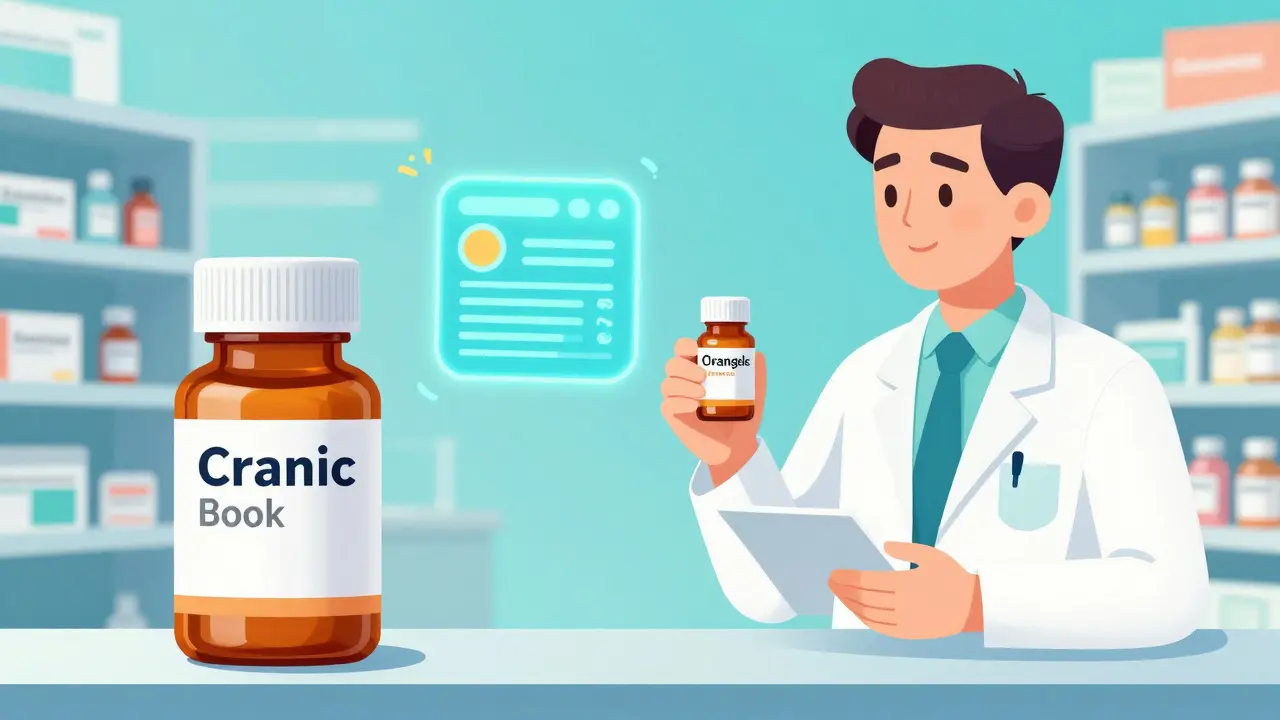
Formally titled "Approved Drug Products With Therapeutic Equivalence Evaluations," the Orange Book is the official FDA registry of drug products approved as safe and effective under the Federal Food, Drug, and Cosmetic Act. It serves as the gold standard for identifying which small-molecule drugs are on the market and, more importantly, which generic versions are therapeutically equivalent to the brand-name original.
What Actually Goes Into the Orange Book?
If you open the Electronic Orange Book, you won't find a simple directory. It's a complex dataset that balances patient safety with corporate intellectual property. The database is built around four core pillars of information:
- Drug Listings: This includes the brand name, the generic name, the dosage form (like a tablet or injection), and the specific application number (NDA or ANDA).
- Patent Listings: This is where it gets legal. The book lists the patent numbers and their expiration dates. This tells the world exactly how long a company has exclusive rights to sell the drug.
- Regulatory Exclusivity: Sometimes a drug has protection even without a patent. For example, a New Chemical Entity (NCE) usually gets 5 years of exclusivity.
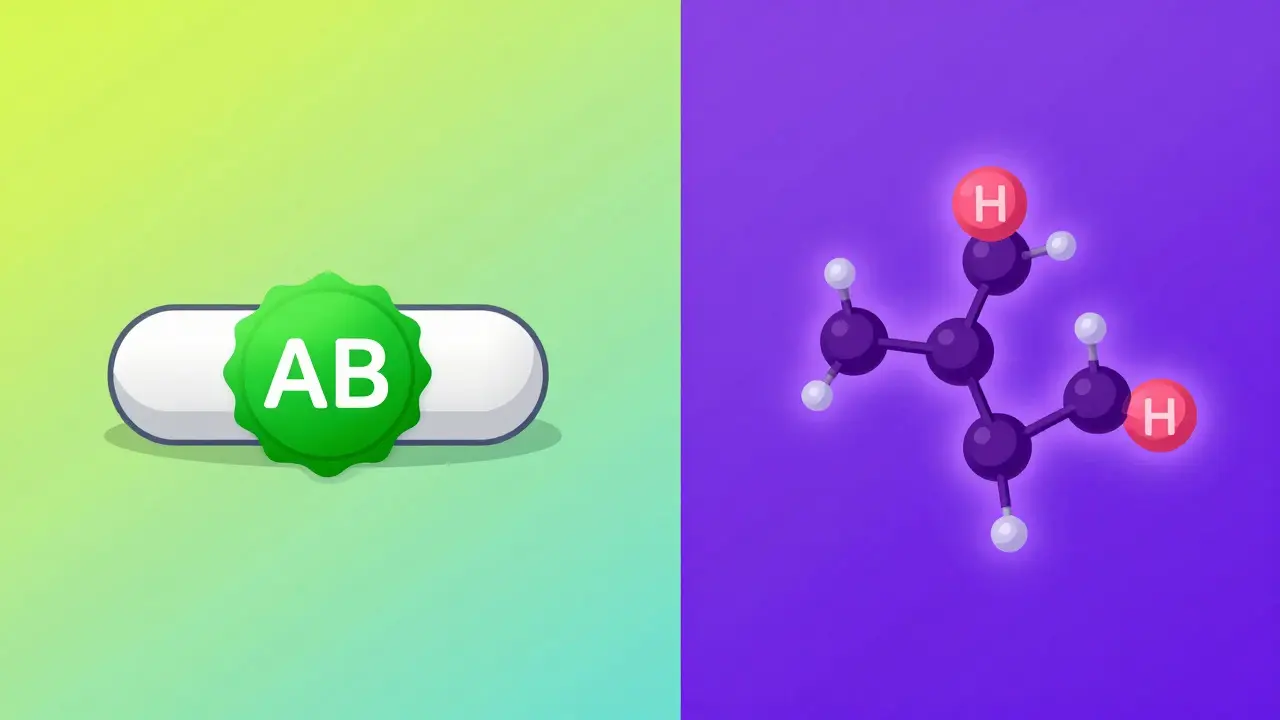
- Therapeutic Equivalence (TE) Codes: These are the shorthand codes pharmacists use to determine if a generic can be swapped for a brand name without a new prescription.
It is vital to understand that the Orange Book only covers nonbiologic, small-molecule drugs. If you're looking for complex biological products-like vaccines or monoclonal antibodies-you're in the wrong place. Those are tracked in the Purple Book, which operates under a different set of rules and regulatory pathways.
The Legal Engine: How the Hatch-Waxman Act Works
The Orange Book wouldn't exist without the Hatch-Waxman Act, passed in 1984. Before this law, generic companies had to repeat expensive clinical trials to prove a drug worked. Hatch-Waxman changed the game by creating the Abbreviated New Drug Application (ANDA) process.
Here is how the system functions in the real world: a brand-name company gets a drug approved and lists its patents in the Orange Book. A generic manufacturer then monitors the database. When they see a patent is about to expire, they file an ANDA. They must essentially "certify" that their generic version doesn't infringe on the patents listed in the book. If they challenge a patent and win, they can enter the market early. If they wait until the expiration date, they can enter automatically.
This framework creates a predictable timeline for the entire industry. For instance, with the blood thinner apixaban (Eliquis), generic firms used this data to prepare for 2026 expirations, a move estimated to save the U.S. healthcare system roughly $12 billion annually.
Decoding Therapeutic Equivalence: Which Code Matters?
For a pharmacist, the most important part of the database is the TE code. This tells them if two drugs are "bioequivalent," meaning they deliver the same amount of active ingredient to the bloodstream at the same rate.
| Rating | Meaning | Pharmacist Action |
|---|---|---|
| AA | Highest certainty of equivalence | Safe to substitute without consult |
| AB | Therapeutically equivalent | Standard generic substitution |
| BX | Not rated as equivalent | Requires physician approval |
| NP | Not rated (insufficient data) | Cannot substitute generically |
If a pharmacist sees an "AB" rating, they can confidently swap the brand for the generic. If they see a "BX" or "NP," they have to pick up the phone and call the doctor, because the drugs aren't interchangeable.
The Controversy: "Evergreening" and Patent Thickets
While the system sounds fair, it isn't without critics. Many legal experts and academics, including some from Harvard Medical School, have pointed out a loophole called "evergreening." This is when a pharmaceutical company makes a tiny, insignificant change to a drug-like changing it from a tablet to a capsule-and files a new patent.
By listing these secondary patents in the Orange Book, companies can create a "patent thicket." This makes it incredibly risky and expensive for generic companies to enter the market, even if the original main patent has expired. This practice can keep drug prices artificially high for years longer than intended.
To combat this, the FDA began implementing new rules in 2024 requiring more specific patent details and shorter update timelines. The goal is to stop companies from listing "questionable" patents just to scare off competition.
Practical Tips for Navigating the Database
You don't need to be a lawyer to use the Electronic Orange Book, but you do need to know where to look. The database is available for free via the FDA's website (accessdata.fda.gov).
If you are a consumer or healthcare provider, keep these tips in mind:
- Check the Daily Updates: The electronic version is updated daily. If a patent settlement was reached yesterday, it might show up today.
- Look for the TE Code first: If you're wondering about a generic swap, skip the patent section and go straight to the therapeutic equivalence rating.
- Verify the Dosage Form: A generic might be equivalent for the 20mg tablet but not for the 40mg tablet. Always check the specific strength.
- Don't confuse it with the Purple Book: If you're searching for a biologic (like Humira), you won't find it here. Switch to the Purple Book.
For professional analysts, the FDA has launched a beta API that processes millions of queries daily. This allows software to automatically track patent expirations without someone having to manually search for every single drug.
Is the Orange Book only for pharmacists?
No. While pharmacists use it for drug substitution, it is primarily used by generic drug manufacturers to plan their market entry and by legal teams to challenge patents. Even patients now use the public portal to see when a cheaper version of their medication might become available.
What is the difference between a patent and exclusivity in the Orange Book?
A patent is a legal right granted by the U.S. Patent and Trademark Office based on the invention's novelty. Exclusivity is a regulatory period granted by the FDA (like NCE or Orphan Drug exclusivity) regardless of whether a patent exists. Both prevent generics from entering the market, but they come from different legal sources.
Why are some drugs listed as "Not Rated" (NP)?
An "NP" rating usually means the FDA hasn't had enough data to determine if the generic is therapeutically equivalent to the brand. This could be because the drug is too new or the generic manufacturer didn't provide sufficient bioequivalence studies.
Can a drug be removed from the Orange Book?
Yes. Drugs can be removed if they are withdrawn from the market or if the FDA determines they are no longer approved for safety and effectiveness. Additionally, patent listings can be removed if a court rules the patent is invalid.
Does the Orange Book cover compounded medications?
No. The Orange Book only lists FDA-approved drug products. Compounded medications, which are customized mixtures created by pharmacists, do not go through the formal FDA approval process and therefore are not listed.
Next Steps and Troubleshooting
Depending on who you are, your next move with this data will differ:
- For Patients: If your medication is too expensive, search the Orange Book for your drug's generic name. If you see an "AB" rated equivalent, ask your doctor if they can switch your prescription to that generic.
- For Pharmacists: If you encounter a new drug with an unfamiliar TE code, refer to the FDA's explanatory guide or the monthly Cumulative Supplement for detailed updated justifications.
- For Legal Professionals: If you suspect a patent is being used for "evergreening," review the patent use codes (A, B, or C) to see if the patent actually covers the drug's approved use or just a minor modification.
Del Bourne
April 5, 2026 AT 15:05This is a great breakdown of a really complex system. A lot of people don't realize that the "AB" rating is the gold standard for switching to generics without needing to worry about efficacy differences.
Brady Davis
April 6, 2026 AT 14:32Oh, absolutely shocking! Big Pharma is actually using loopholes to keep prices high? I'm stunned. Truly. My jaw is on the floor. 🙄
Srikanth Makineni
April 7, 2026 AT 20:14evergreening is a scam plain and simple
Stephen Luce
April 9, 2026 AT 10:25It's honestly so stressful when you're at the pharmacy and the price jumps because the generic isn't "equivalent" yet. Thanks for explaining why that happens.
Victoria Gregory
April 11, 2026 AT 05:55Wow!!! I never knew about the Purple Book!! 💜 It's so wild how different the rules are for biologics... makes you think about how we define "medicine" in the first place!! ✨
Laurie Iten
April 12, 2026 AT 05:30the tension between corporate profit and public health is a fundamental flaw in our current social contract
dwight koyner
April 13, 2026 AT 21:17From a regulatory standpoint, the distinction between the Orange Book and the Purple Book is critical. Biologics are significantly more complex to manufacture and replicate, which is why the biosimilarity pathway differs from the bioequivalence standard used for small-molecule drugs.
Kathleen Painter
April 15, 2026 AT 11:42I think it's really important to remember that while the system is flawed, the transition to ANDAs was a huge leap forward for accessibility. Before the 80s, the cost of proving safety over and over again just meant that generics barely existed, and that's a world I'm glad we don't live in anymore, even if we're still fighting the patent thicket battles today.
Windy Phillips
April 16, 2026 AT 18:11Of course, the FDA is "implementing new rules" in 2024... as if a few policy tweaks will actually stop the greed of multi-billion dollar corporations!!! It's almost cute that they think this will work!!!
Michael Flückiger
April 17, 2026 AT 23:29This info is so empowering!!! Everyone should check the database before paying full price for a brand name!!! Let's all save some money!!!
Dhriti Chhabra
April 19, 2026 AT 14:57It is most commendable that the FDA provides a public portal for this information. Ensuring transparency in the pharmaceutical market is a noble pursuit that benefits all stakeholders involved.
Jamar Taylor
April 20, 2026 AT 15:05Keep pushing for those generics! If you see an AB rating, don't be afraid to talk to your doc about it. You've got this! Get that healthcare cost down!
It's all about taking control of your own health and your own wallet. Just a simple conversation with your provider can save you thousands over a year. Stay motivated and keep digging into these resources. The more we know, the better we can advocate for ourselves. Don't let the complex terminology scare you off. You can navigate this database just like anyone else. It's just a matter of taking it one step at a time and asking the right questions. The power is in the information. Let's make sure everyone gets the affordable meds they deserve. Keep it up everyone!