
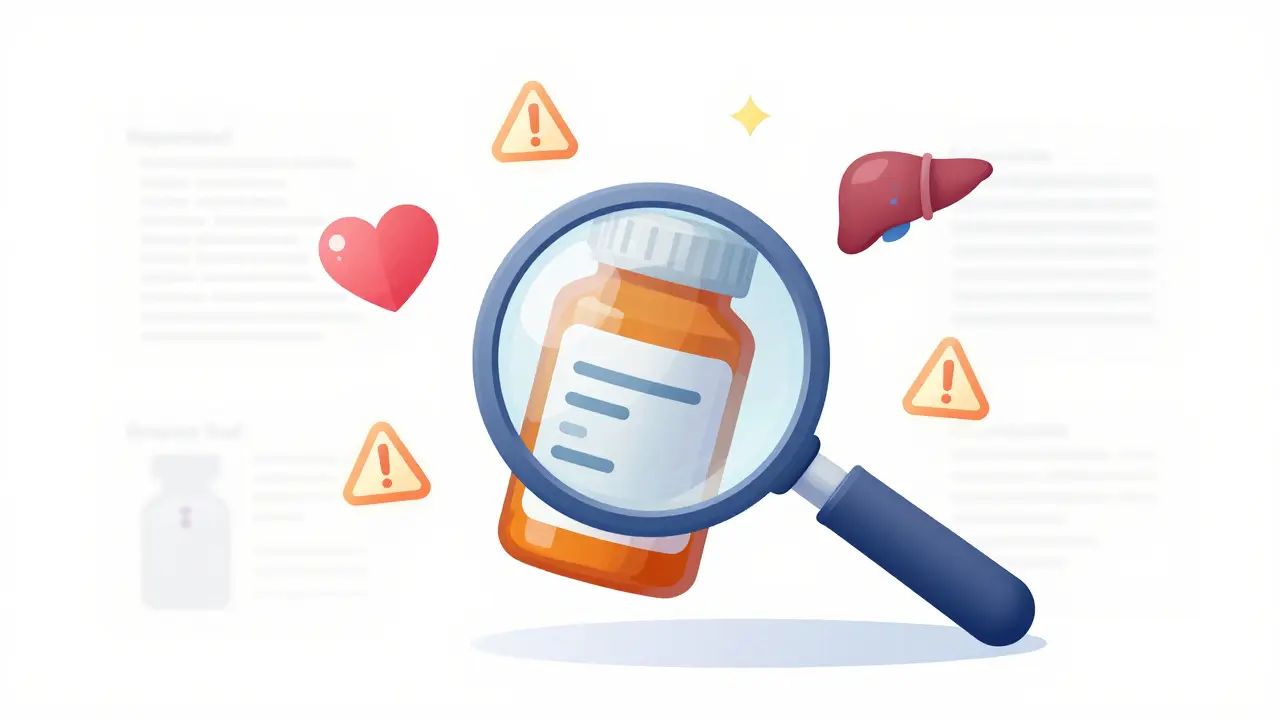
Postmarketing Experience Phrase Decoder
Understand What the Language Means
Many drug labels use phrases like "isolated reports" or "some patients" to describe side effects. This tool helps you understand what these terms actually mean in real-world safety data.
Select a Phrase to Learn More
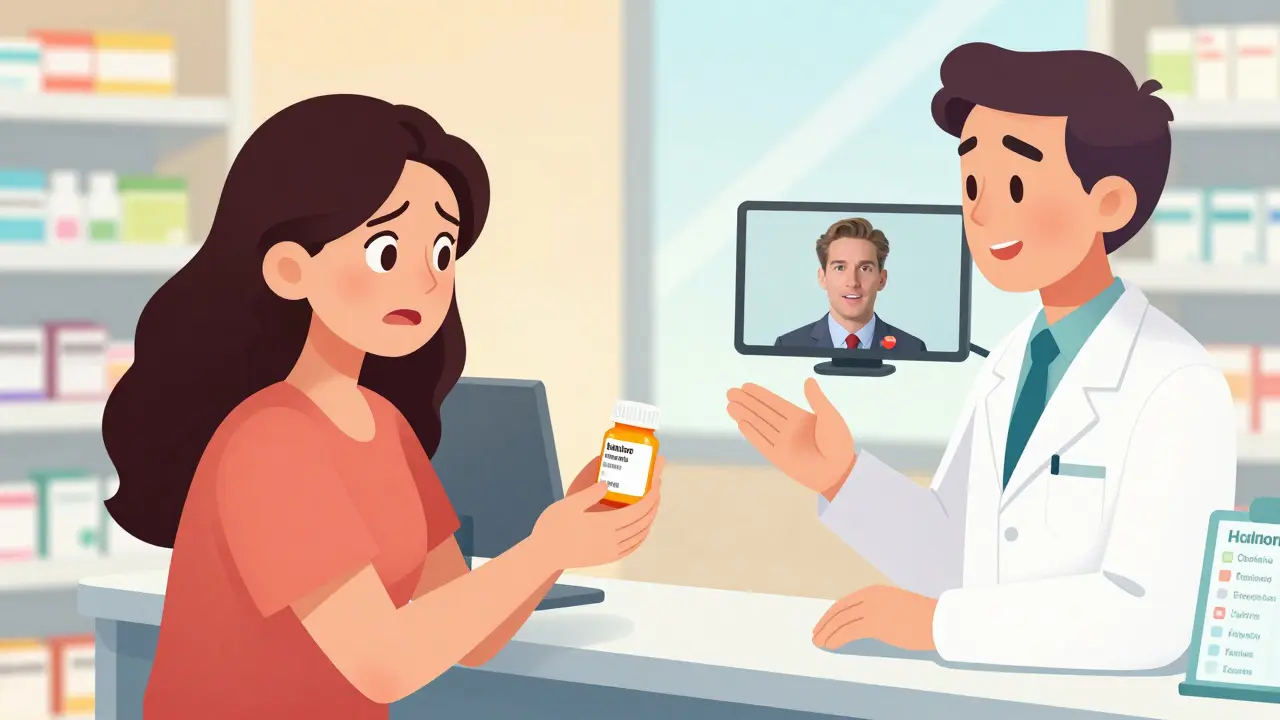
Isolated reports
Frequency: 1 in 10,000+This means only a very small number of people reported this side effect. It's too rare to have a precise frequency estimate. However, these are often serious reactions that were not seen in clinical trials. The FDA requires these to be reported because they represent important safety information, even if they're uncommon.
"Rare cases of severe liver injury have been reported." This doesn't mean the side effect is rare, but rather that it occurred in a small number of patients after the drug was approved.
When you pick up a new prescription, the tiny print on the prescribing information can feel overwhelming. But one section-Section 6, titled Postmarketing Experience-holds critical clues about real-world risks that clinical trials never caught. This isn’t filler text. It’s the FDA’s way of telling doctors and patients: we’ve seen this happen after millions of people started using the drug.
What Exactly Is Postmarketing Experience?
Postmarketing experience refers to adverse reactions reported after a drug has been approved and is being used by the general public. Think of it as the real-world follow-up to clinical trials. During trials, a drug might be tested on a few thousand people over months or a couple of years. But once it’s on the market, hundreds of thousands-or even millions-of people take it. Different ages, other health conditions, different medications, different lifestyles. That’s when rare or unexpected side effects show up.
The FDA requires drugmakers to report any serious or unexpected adverse reactions within 15 days of learning about them. These reports go into the FDA’s Adverse Event Reporting System (FAERS), which holds over 35 million entries as of 2023. That data gets reviewed, analyzed, and if a pattern emerges, it’s added to the drug’s labeling under Section 6.
Why It’s Not the Same as Clinical Trial Data
Section 6 is not the same as Section 5, which lists side effects seen in clinical trials. Section 5 has numbers: “Nausea occurred in 12% of patients.” Section 6 doesn’t. It says things like “isolated reports of liver injury” or “cases of severe skin rash have been reported.”
That’s not because those reactions are unimportant. It’s because they’re rare. Clinical trials usually only catch reactions that happen in 1 out of every 100 people. Postmarketing data can spot reactions that happen in 1 out of 1,000, or even 1 out of 10,000. The Institute for Safe Medication Practices found that 62% of serious drug reactions first identified between 2010 and 2020 were only discovered after the drug hit the market.
Here’s the catch: just because a side effect appears only in Section 6 doesn’t mean it’s mild. A fatal heart rhythm disturbance might be listed here as “a few cases reported.” That doesn’t mean it’s harmless-it means it’s rare. But if you have a genetic condition or take another drug that affects your heart, that rare risk could become your reality.
How to Read the Language
The wording in Section 6 is carefully chosen-and easily misunderstood. Terms like “reported cases,” “isolated reports,” or “some patients” don’t mean “not serious.” They mean “we don’t have enough data to say how often it happens.”
Dr. Dina Demner-Fushman from the NIH points out that many clinicians mistakenly think “isolated reports” means “not a big deal.” But in reality, it often means “we only know about a few cases so far, but they were serious.” A 2022 case on the ASHP forum involved a new anticoagulant where 17 fatal bleeding events were initially labeled as “isolated reports.” Only after more reports came in did the label get updated to reflect a clear pattern.
Another common confusion: the same side effect might appear in both Section 5 and Section 6-but with different wording. One might say “headache in 8% of patients,” while the other says “headache reported in postmarketing experience.” That doesn’t mean one is wrong. It means the drugmaker is showing you both the trial data and the real-world data. Sometimes, the real-world data shows the side effect is more common than they thought.
What’s Missing Matters Too
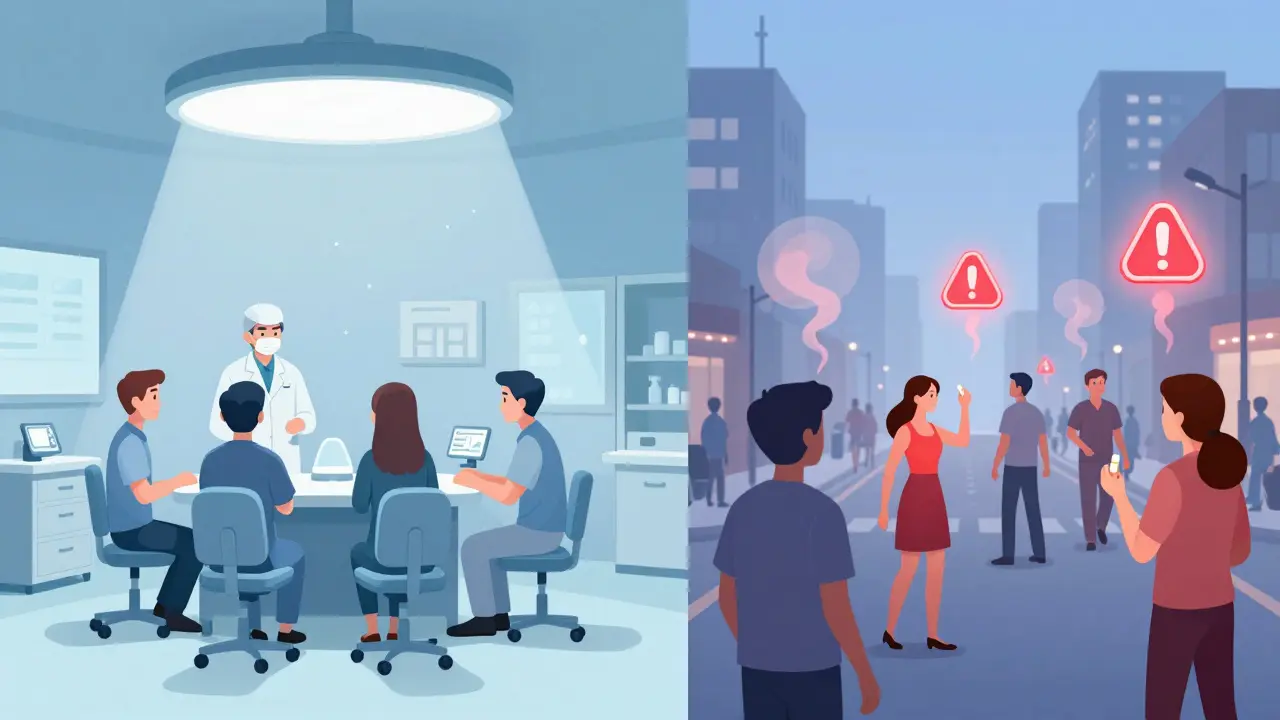
Just because a side effect isn’t listed in Section 6 doesn’t mean it can’t happen. The FDA explicitly states in all drug labels since 2016: “The absence of an adverse reaction in the postmarketing experience section does not mean the drug does not cause it.”
Why? Because reporting is voluntary. Not every doctor reports every side effect. Some patients don’t connect their symptoms to the drug. Others don’t report it at all. If only five people out of a million had a rare reaction and none reported it, it won’t show up. That’s why doctors don’t rely on Section 6 alone. They use it as one piece of a bigger puzzle.
How Doctors Use This Information
Good clinicians don’t just scan Section 6 for scary words. They ask four key questions:
- Did the symptom happen after starting the drug? Timing matters. If the rash started three days after the first pill, that’s a red flag.
- Is there a biological reason this could happen? Does the drug affect the liver? Then liver injury is plausible. If it doesn’t, the link might be coincidence.
- Did the symptom go away when the drug was stopped? That’s called a “dechallenge.” If it did, and came back when the drug was restarted (a “rechallenge”), that’s strong evidence it’s caused by the drug.
- Has this happened with similar drugs? If other drugs in the same class caused the same reaction, it’s more likely this one will too.
A 2021 study in the Journal of General Internal Medicine found that it takes doctors about 18 months of practice to interpret Section 6 accurately. Specialists like cardiologists and pharmacists are 23% more accurate than general practitioners-not because they’re smarter, but because they’ve seen more cases.
The Bigger Picture: Why This System Exists
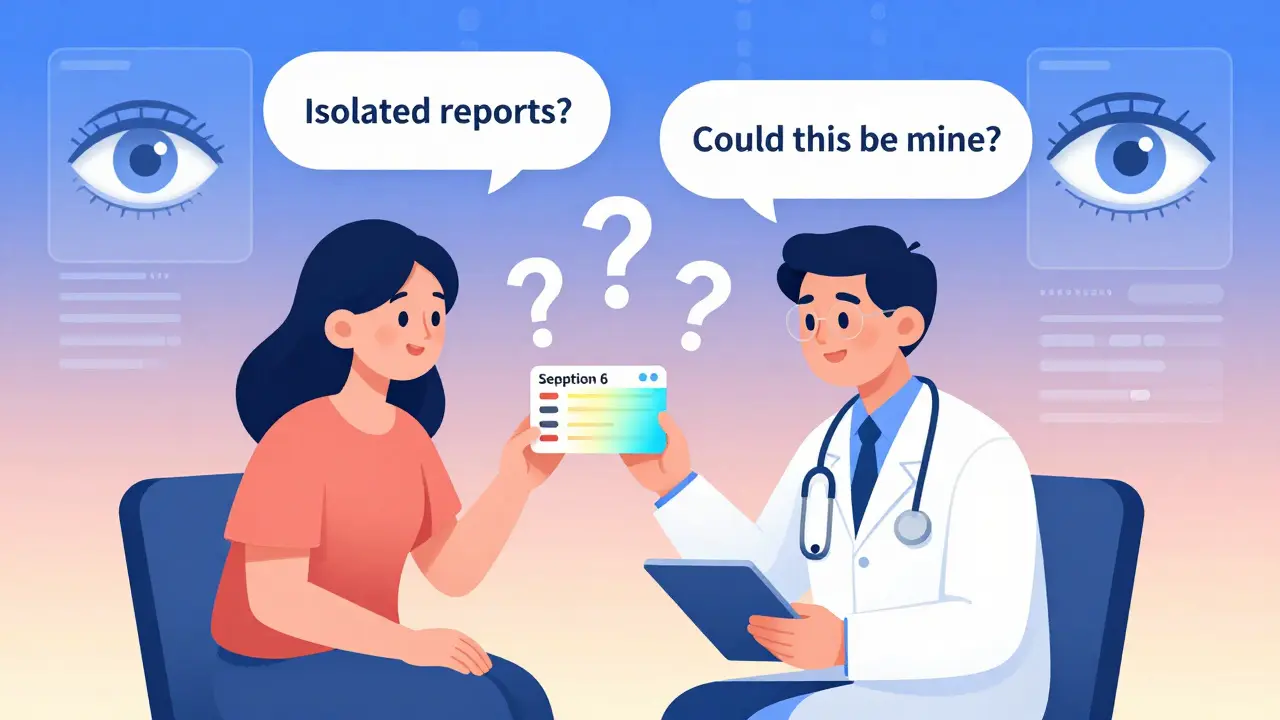
This isn’t just paperwork. It’s a safety net. The global pharmacovigilance market-meaning the entire industry built to track drug safety-was worth $6.8 billion in 2023 and is growing fast. Why? Because drugs can be dangerous in ways we can’t predict.
The FDA’s Sentinel Initiative now monitors health data from over 300 million patients across 17 networks. In 2022 alone, it generated over 1,200 active safety alerts. The European Medicines Agency has similar rules, and 89% of big drug companies now use the same reporting systems for both the U.S. and EU markets.
And it’s getting smarter. Starting in January 2025, drugmakers must submit postmarketing data in a machine-readable format called SPL-ESD. That means AI can scan reports faster, spot patterns earlier, and update labels in near real-time. The FDA’s pilot programs show AI can predict label changes with 83% accuracy-months before humans would catch them.
What You Should Do
If you’re taking a new medication:
- Don’t panic if you see rare side effects listed. They’re rare for a reason.
- Do pay attention to reactions that are serious-like chest pain, trouble breathing, swelling, or unusual bleeding-even if they’re listed as “isolated reports.”
- Report anything unusual to your doctor. If you’re unsure whether it’s related, write down when it started, what you were doing, and what else you’re taking.
- Use the MedWatch form (Form 3500) to report side effects directly to the FDA. You don’t need a doctor’s help. Just go to fda.gov/medwatch.
And if you’re a caregiver or family member helping someone manage medications, ask: “Is this side effect listed in the postmarketing section? Does that mean it’s rare-or just not well understood?”
The Bottom Line
Postmarketing experience sections aren’t warnings. They’re early signals. They’re the FDA’s way of saying: “We’re still watching. We’re still learning.”
These sections exist because drugs are powerful. And sometimes, the most dangerous side effects are the ones we didn’t see coming. But now, thanks to millions of real-world reports, we’re getting better at catching them before they hurt more people.
Knowing what these sections mean doesn’t just help you understand your prescription. It helps you speak up-when something feels wrong, when something doesn’t add up, when a rare reaction might be yours.
Are side effects in the postmarketing section less serious than those in clinical trials?
No. Side effects listed only in the postmarketing section are often rare, not less serious. For example, a fatal liver injury might appear here because it only happened in 1 out of 10,000 patients. Clinical trials usually miss these rare events. The label uses phrases like “isolated reports” to indicate low frequency, not low severity.
Why are some side effects listed in both Section 5 and Section 6?
This happens when a side effect was seen in clinical trials but also confirmed or found to be more common in real-world use. Section 5 gives you the trial data with percentages. Section 6 adds real-world context-sometimes showing the reaction is more frequent or occurs in different patient groups than originally thought.
If a side effect isn’t listed in Section 6, does that mean it won’t happen to me?
No. The FDA explicitly states that the absence of a side effect in the postmarketing section doesn’t mean the drug can’t cause it. Reporting is voluntary, and many reactions go unreported. Just because it’s not listed doesn’t mean it’s impossible-it means there isn’t enough evidence yet to include it.
How often are drug labels updated based on postmarketing data?
Between 2007 and 2017, 38% of all drug label updates were due to new safety information from postmarketing experience. The FDA aims to increase this to 45% by 2027, using real-world data from health records and AI analysis. Labels are updated continuously as new reports come in.
Can I report a side effect myself?
Yes. Anyone can report a side effect to the FDA through MedWatch, Form 3500. You don’t need a doctor’s note. Go to fda.gov/medwatch and fill out the form. Your report helps improve drug safety for everyone. In 2022, over 42,000 unexpected serious adverse events were reported-many by patients and caregivers.

David Chase
December 30, 2025 AT 19:19Sharleen Luciano
December 31, 2025 AT 13:37Lisa Dore
January 1, 2026 AT 19:36Joe Kwon
January 3, 2026 AT 12:08Himanshu Singh
January 4, 2026 AT 21:20Greg Quinn
January 6, 2026 AT 10:34Tamar Dunlop
January 7, 2026 AT 04:29Manan Pandya
January 7, 2026 AT 20:10Jasmine Yule
January 8, 2026 AT 07:08Teresa Rodriguez leon
January 8, 2026 AT 09:25Emma Duquemin
January 10, 2026 AT 08:14Nisha Marwaha
January 12, 2026 AT 02:35