

When a fungal infection turns serious, it’s not something you can treat with an over-the-counter cream. Systemic fungal infections - like invasive candidiasis or aspergillosis - can be deadly if not treated fast and right. That’s where antifungal medications like azoles and echinocandins come in. These aren’t just pills you pop; they’re powerful drugs with complex rules, serious side effects, and major interactions. Knowing how they work - and how to use them safely - can make the difference between recovery and crisis.
How Azoles Fight Fungal Infections
Azoles are the workhorses of antifungal therapy. This group includes fluconazole, itraconazole, voriconazole, and posaconazole. They all do the same basic thing: block a key enzyme in fungi called lanosterol 14-alpha-demethylase. Without this enzyme, fungi can’t build their cell membranes properly. Their walls get weak, leaky, and eventually fall apart.
What makes azoles so widely used? They come in pills and IVs. Fluconazole, for example, is absorbed almost perfectly through the gut - 90% of the pill makes it into your bloodstream. That’s why it’s often the first choice for outpatient treatment of yeast infections, even in people with HIV or diabetes. Voriconazole is stronger against molds like Aspergillus, and it’s the go-to for serious lung infections. But it’s not simple. Voriconazole can cause blurry vision in nearly 40% of patients. It’s temporary, but scary if you’re driving or operating machinery.
And then there’s the cost. A 7-day course of fluconazole runs about $150. Posaconazole? Around $5,000. That’s not just a price difference - it’s a barrier. In community hospitals, doctors often start with fluconazole because it’s affordable. In big academic centers, they’re more likely to jump straight to voriconazole or posaconazole for high-risk patients.
Echinocandins: The IV-Only Powerhouse
Echinocandins - caspofungin, micafungin, anidulafungin - work completely differently. Instead of attacking the cell membrane, they smash the cell wall. They block an enzyme called beta-(1,3)-D-glucan synthase. Fungi need that glucan to stay strong. Without it, they literally burst under their own pressure.
But here’s the catch: echinocandins can’t be taken by mouth. They’re only given through an IV. That means you need to be in a hospital or have a home infusion nurse. That’s why they’re usually reserved for the sickest patients - those in the ICU with sepsis, organ failure, or who’ve already failed other treatments.
They’re also safer for your kidneys. Azoles can cause acute kidney injury in up to 8.4% of patients. Echinocandins? Just 1.2%. That’s why the Infectious Diseases Society of America (IDSA) says: if you’re critically ill with candidemia, start with an echinocandin. Not because it’s stronger - but because it’s gentler on the body when things are already falling apart.
Cost is a factor here too. A week of caspofungin costs around $1,250. Micafungin? Similar. That’s why you won’t see them used for a simple yeast infection. But in the ICU, the price is worth it - especially when you’re avoiding dialysis or liver failure.
Drug Interactions: The Hidden Danger
Azoles don’t just fight fungi. They fight your other medications too. They block liver enzymes - especially CYP3A4 and CYP2C9 - that break down a huge list of drugs. That means your blood levels of other meds can spike dangerously.
Take warfarin. If you’re on fluconazole and start bleeding easily, it’s not a coincidence. Fluconazole can double your INR. Same with statins - simvastatin and lovastatin can cause muscle damage when mixed with azoles. Even common things like certain anti-seizure drugs (phenytoin, carbamazepine) or immunosuppressants (tacrolimus, cyclosporine) can become toxic.
One clinician on Reddit described three cases where voriconazole doubled phenytoin levels within 48 hours. The patient had seizures. The dose had to be cut in half. That’s not rare. A 2022 study found azoles have over 500 severe drug interactions. Echinocandins? Only about 180. That’s a huge safety advantage.
And it’s not just pills. Azoles can mess with heart rhythms. Posaconazole has been linked to QT prolongation - a dangerous heart rhythm problem - especially when taken with macrolide antibiotics like azithromycin. The FDA issued a safety alert in 2023 after 37 cases of QT intervals over 500ms were reported. That’s a red flag. If you’re on an azole, you may need a baseline ECG.

Safety First: Monitoring and Side Effects
With azoles, your liver is the main concern. About 12% of people on fluconazole develop elevated liver enzymes. That’s why the FDA requires quarterly liver tests for anyone on long-term azole therapy. If your ALT or AST levels hit five times the normal limit? Stop the drug. Immediate.
Common side effects? Nausea, vomiting, stomach pain. One survey of over 1,200 patients found nearly 70% of azole users had mild GI issues. That’s why some people stop taking them - even if they’re working. Echinocandins? Fewer stomach problems. But they can cause redness or swelling at the IV site. Some patients say it feels like a bad burn.
And then there’s the long-term stuff. Voriconazole can cause skin cancer with prolonged use - especially in transplant patients. The FDA added a warning in 2020. If you’re on it for months, get regular skin checks. Azoles are also Pregnancy Category D. That means they’ve been shown to harm babies. If you’re pregnant or trying to get pregnant, talk to your doctor before starting.
For echinocandins, liver issues are rare. But they can still happen, especially in people with advanced liver disease. Micafungin needs a dose cut in half if your liver is severely damaged. Anidulafungin? It’s broken down differently and doesn’t need dose changes - a small but important advantage.
Resistance Is Growing - And It’s a Crisis
Antifungal resistance isn’t just a lab curiosity. It’s real. In agricultural areas, triazole fungicides used on crops are the same chemicals as medical azoles. That’s creating resistant strains of Aspergillus fumigatus. In 2012, less than 2% of cases were resistant. By 2022, it was over 8%. In some parts of Europe, it’s over 20%.
This is why doctors are starting to use combination therapy - like echinocandins with azoles - in severe cases. It’s not standard yet, but it’s happening more often. And new drugs are coming. Rezafungin, a new echinocandin approved in March 2023, only needs one shot a week. That’s a game-changer for long-term care.
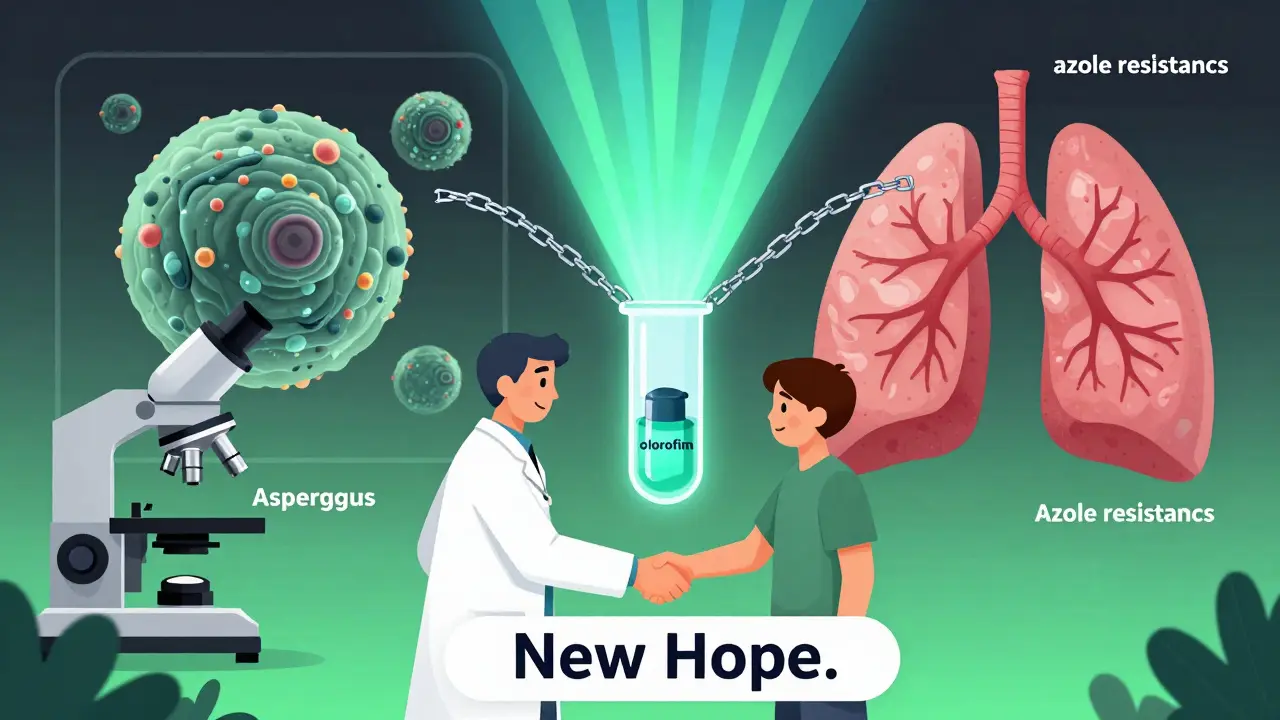
Then there’s olorofim, a brand-new class of antifungal. The FDA gave it breakthrough status in 2023 because it works against azole-resistant Aspergillus. In trials, it helped 56% of patients who had no other options. It’s not on the market yet, but it’s the first real hope in years.
What’s the Best Choice for You?
There’s no one-size-fits-all answer. It depends on:
- Where you are - ICU? Outpatient?
- What fungus you have - Candida? Aspergillus?
- What other meds you’re on
- Your liver and kidney health
- Cost and access
If you’re healthy with a yeast infection? Fluconazole is perfect. Cheap, effective, oral.
If you’re in the hospital with sepsis? Start with caspofungin or micafungin. Lower risk of kidney damage. Better survival.
If you have a lung infection from mold? Voriconazole is still the gold standard - but you need blood tests to make sure the dose is right. Too low? The infection won’t clear. Too high? You’ll get vision problems or liver damage.
And if you’re on multiple medications? Ask your pharmacist. Run a drug interaction check. Don’t assume your doctor knows every pill you take. Many patients don’t even mention supplements or over-the-counter painkillers - and those can interact too.
What’s Next?
The antifungal world is changing. New drugs are on the horizon. Better dosing. Fewer side effects. But for now, the tools we have are powerful - and dangerous if misused.
The biggest takeaway? These aren’t simple drugs. They require monitoring, planning, and communication. If you’re prescribed an azole or echinocandin, ask: What am I being treated for? What are the risks? What else am I taking? And what signs should I watch for?
Fungal infections are silent killers. But with the right drug - and the right care - they’re beatable.
Are azoles safe for long-term use?
Azoles can be used long-term, but they require careful monitoring. Liver function tests should be done every 3 months. Long-term use increases the risk of liver damage, skin cancer (especially with voriconazole), and drug interactions. Patients on azoles for more than 6 months should have regular check-ups with their doctor and pharmacist to review all medications and watch for side effects.
Can I take echinocandins at home?
Yes, but only under supervision. Echinocandins must be given intravenously, so they’re typically administered in hospitals. However, home infusion services are available for patients who need long-term treatment - like those with recurrent candidemia or who are immunocompromised. A trained nurse will come to your home to give the infusion. This requires coordination with your care team and insurance approval.
Why is voriconazole used for aspergillosis but not for candida?
Voriconazole is highly effective against Aspergillus molds because it penetrates lung tissue well and has strong antifungal activity against them. But for Candida, other azoles like fluconazole or echinocandins work just as well - and with fewer side effects. Voriconazole’s high cost, visual disturbances, and drug interactions make it overkill for most Candida infections. It’s reserved for cases where mold is the real threat.
Do echinocandins work against all types of fungi?
No. Echinocandins are only effective against certain fungi, mainly Candida and some forms of Aspergillus. They don’t work against Cryptococcus, Mucorales (like black mold), or dermatophytes (which cause athlete’s foot). That’s why doctors must identify the exact fungus before choosing treatment. Using an echinocandin for the wrong infection can delay recovery and lead to worse outcomes.
Is there a difference between brand-name and generic azoles?
For most azoles, generics are just as effective and safe as brand names. Fluconazole, itraconazole, and voriconazole generics are widely used and meet FDA standards. But with posaconazole, the delayed-release tablet (brand: Noxafil) has different absorption than the older suspension. Generics for the tablet form aren’t available yet, so switching between formulations can change blood levels. Always check with your pharmacist before switching.
What should I do if I miss a dose of my antifungal?
For oral azoles, take the missed dose as soon as you remember - unless it’s almost time for the next one. Don’t double up. For IV echinocandins, missing a dose can be risky because levels drop quickly. Call your provider immediately. They may advise you to take the missed dose right away or reschedule your infusion. Never skip doses without talking to your doctor - it can lead to treatment failure and resistance.
Can I drink alcohol while taking antifungal meds?
It’s best to avoid alcohol. Both azoles and echinocandins are processed by the liver. Alcohol adds stress to your liver, which can increase the risk of liver damage - especially with azoles. Even moderate drinking can raise your chances of side effects like nausea, dizziness, or elevated liver enzymes. If you’re on these drugs for more than a few days, skip the alcohol until you’re done.
How do I know if my antifungal is working?
Symptoms like fever, chest pain, or skin lesions should improve within a few days to a week. But for serious infections, doctors rely on lab tests. Blood cultures should turn negative. Imaging (like CT scans) may show shrinking lung lesions. For azoles like voriconazole and posaconazole, therapeutic drug monitoring checks your blood levels to make sure they’re in the right range. If levels are too low, the infection may not clear. If too high, side effects increase.






Gary Mitts
February 3, 2026 AT 01:52So basically azoles are the ‘do everything but also mess up your liver and vision’ option.
Nick Flake
February 3, 2026 AT 03:10Man, this post is like a symphony of medical chaos 🎻💥
One minute you’re saving lives with echinocandins, next you’re dodging drug interactions like a ninja. And don’t even get me started on posaconazole’s price tag - that’s not a drug, that’s a luxury SUV for your immune system.
Solomon Ahonsi
February 3, 2026 AT 13:09Why do we even bother with all this? Just give people bleach and hope. It’s cheaper and 70% as effective.
clarissa sulio
February 5, 2026 AT 06:24I work in ICU and we use echinocandins daily. The only thing worse than a fungal infection? The paperwork when someone’s INR spikes because they took fluconazole with warfarin. Always check the med list. Always.
Matt W
February 6, 2026 AT 13:59My uncle was on voriconazole for 8 months after a lung transplant. He started seeing double, then got a rash that looked like he’d been sprayed with red paint. We had to switch meds. The docs didn’t warn us about the skin cancer risk until it was almost too late.
Doctors forget patients aren’t lab rats.
larry keenan
February 8, 2026 AT 04:43The pharmacokinetics of azoles are fascinating from a clinical pharmacology standpoint. Their inhibition of CYP450 isoforms creates a complex polypharmacy landscape, particularly in immunocompromised cohorts where polypharmacy is the norm rather than the exception.
Therapeutic drug monitoring remains underutilized in community settings despite robust evidence supporting its utility in optimizing efficacy and minimizing toxicity.
Sandeep Kumar
February 9, 2026 AT 07:35Why are we still using old drugs when we have tech? In India we just use fluconazole for everything. If it doesn’t work then the patient dies. Simple. No fancy blood tests. No IVs. No drama.
Anthony Massirman
February 10, 2026 AT 07:20Rezafungin is the future. One shot a week? That’s the kind of innovation we need. Stop making patients come in every day like it’s 1998.
Also why is no one talking about olorofim? That thing’s a miracle drug waiting to go mainstream.
Bridget Molokomme
February 11, 2026 AT 02:03So let me get this straight - we have a drug that costs $5000, causes blindness, and interacts with 500 other meds… and we call it ‘standard of care’?
Someone’s making bank on this.
George Firican
February 12, 2026 AT 10:36It’s ironic isn’t it? We spend billions developing drugs to kill fungi - organisms that have existed for hundreds of millions of years - while our own arrogance grows faster than resistant Aspergillus in a greenhouse of agricultural azoles.
Perhaps the real infection isn’t in the lungs… it’s in the way we think we can control nature with chemistry alone.
We treat the symptom, not the system. We fix the patient, not the planet.
And still we marvel when the fungus outsmarts us.
It’s not magic. It’s evolution. And it’s patient.
Maybe we should be listening.
Vatsal Srivastava
February 12, 2026 AT 17:12Fluconazole is fine for yeast but if you have aspergillus you’re already dead so why waste time
Chinmoy Kumar
February 13, 2026 AT 10:29Really helpful post! I’m a med student in India and this made so much sense. I never realized how much cost affects treatment choices - in our hospital we use fluconazole for everything because we just can’t afford the others. But now I see why docs sometimes pick echinocandins even if it’s expensive - safety matters more than we think. Also the part about alcohol? Yeah my roommate drank while on it and got super sick. Lesson learned. Thanks for writing this!