
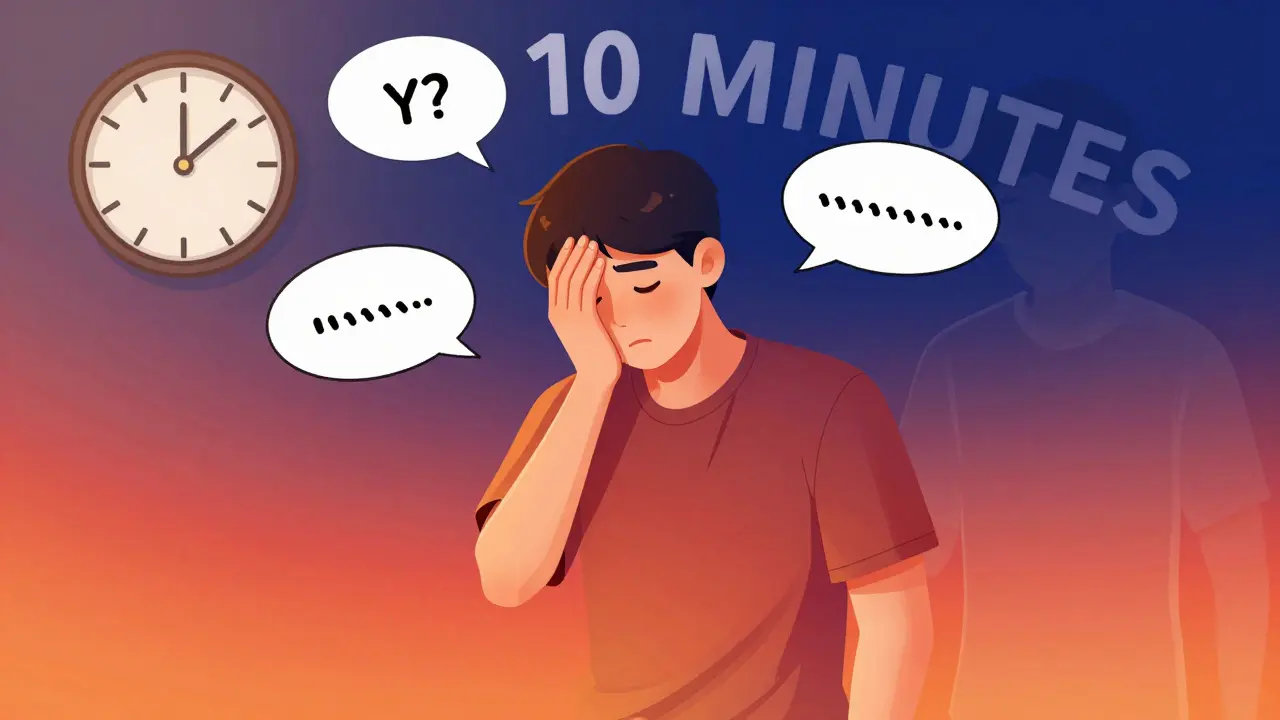
When someone suddenly loses balance, slurs their words, or can’t raise one arm, most people think it’s a stroke. But what if those symptoms vanish in 10 minutes? Many assume it’s nothing-just a passing dizzy spell. That’s dangerous thinking. A transient ischemic attack, or TIA, looks exactly like a stroke… and then it disappears. But it’s not a warning. It’s a TIA-and it’s your body screaming for help before the real thing hits.
What Exactly Is a TIA?
A TIA, often wrongly called a "mini-stroke," is a brief interruption of blood flow to part of the brain. Unlike a stroke, it doesn’t leave permanent damage. But here’s the catch: modern medicine no longer defines it by how long symptoms last. Back in the day, if symptoms faded within 24 hours, it was labeled a TIA. Now, doctors look at brain scans. If there’s no sign of dead brain tissue (infarction) on an MRI, it’s a TIA. If there is-even if symptoms vanished in 5 minutes-it’s a minor stroke.That’s why 35% of people who think they had a TIA are later found to have had a small stroke. The damage was there all along, hidden on the scan. The symptoms went away, but the injury didn’t. That’s why calling it a "mini-stroke" is misleading. It’s not minor. It’s a red flag.
How to Spot a TIA or Stroke-The BE FAST Rule
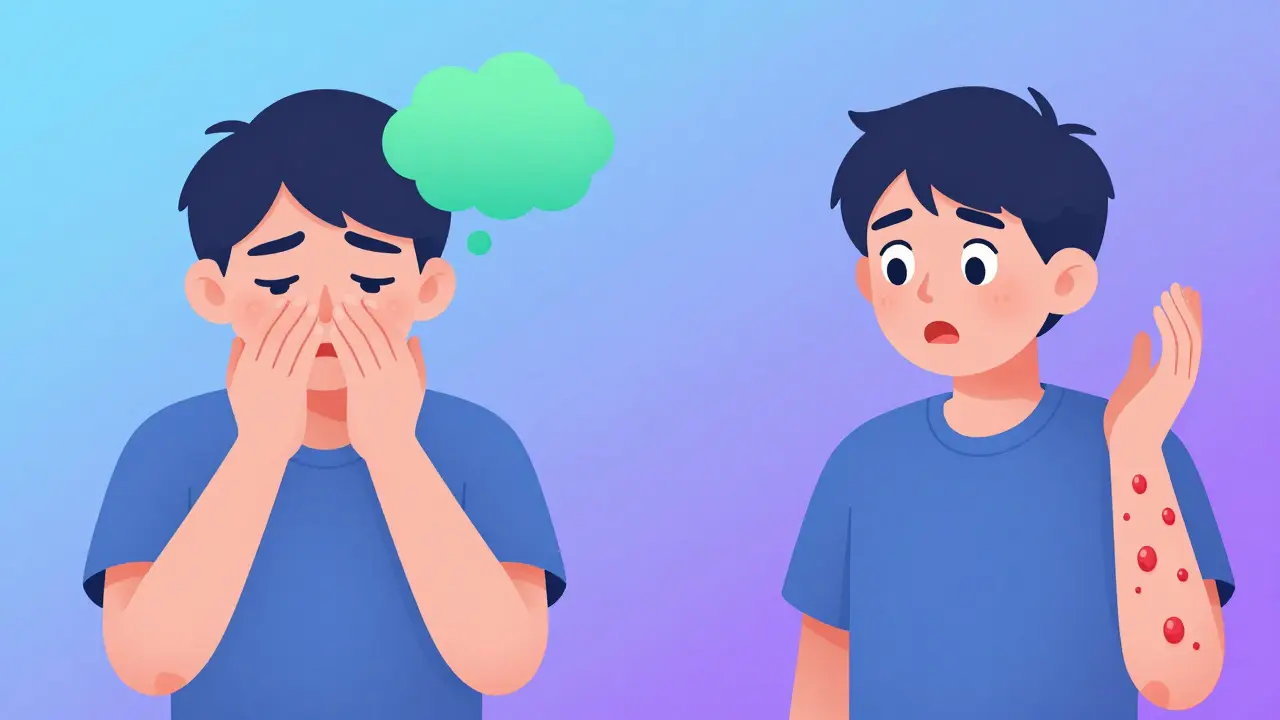
You don’t need to be a doctor to recognize the signs. Use BE FAST:- Balance: Sudden loss of balance or coordination. No dizziness from spinning, just unsteadiness.
- Eyes: Blurry, double, or lost vision in one or both eyes. Not a migraine aura-this comes out of nowhere.
- Face: One side of the face droops. Ask the person to smile. Is it uneven?
- Arm: One arm drifts down when raised. Weakness or numbness on one side.
- Speech: Slurred, strange, or impossible to understand. Can’t repeat a simple sentence like "The sky is blue."
- Time: Call 911 immediately. Even if symptoms disappear.
These signs are identical for TIA and stroke. The only difference? Time. With a stroke, they don’t go away. With a TIA, they fade-often within 10 to 60 minutes. But that doesn’t mean you can wait. If you see any of these, call emergency services right away. Don’t wait to see if it comes back. Don’t drive yourself. Don’t call your doctor tomorrow. Call 911 now.
Why a TIA Is More Dangerous Than It Looks
The biggest myth about TIA is that it’s harmless because "it went away." That’s like saying a smoke alarm going off isn’t serious because the fire didn’t spread. A TIA is your brain’s emergency flare.One in five people who have a TIA will have a full stroke within 90 days. And half of those strokes happen within the first two days. The highest risk? The first 48 hours. If you ignore a TIA, you’re gambling with your life.
Studies show that people who get evaluated within 24 hours cut their stroke risk by 80%. Those who wait? Their chance of having a stroke in the next month jumps from 2% to over 10%. And strokes aren’t just scary-they’re expensive. The average cost of a single stroke is over $21,000. A TIA evaluation? Around $2,850. That’s not a cost. That’s a bargain.
What Happens in the Emergency Room?
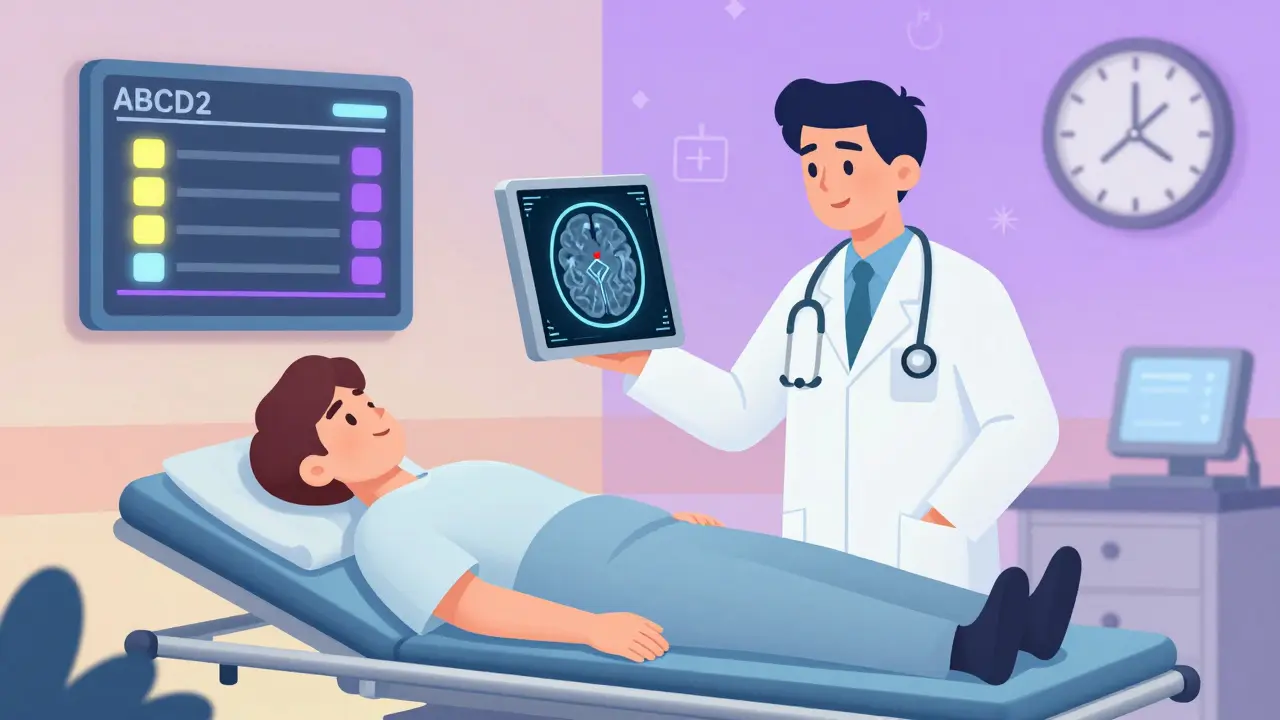
When you arrive at the hospital with TIA symptoms-even if they’re gone-the clock starts ticking. Doctors don’t wait. They use a scoring system called ABCD2 to measure your risk:- Age: 60 or older = 1 point
- Blood pressure: Over 140/90 = 1 point
- Clinical features: Weakness on one side = 2 points; speech trouble without weakness = 1 point
- Duration: Symptoms over 60 minutes = 2 points; 10-59 minutes = 1 point
- Diabetes: Present = 1 point
A score of 4 or higher means you’re at high risk. You’ll likely be admitted. Lower scores? You might still need urgent imaging and follow-up within 24 hours.
First, they’ll do a non-contrast CT scan to rule out bleeding. Then, within 24 hours, you’ll get an MRI with diffusion-weighted imaging. This is the gold standard-it catches tiny areas of brain damage that CT misses. If the MRI shows no damage, it’s a TIA. If it shows even a small spot of dead tissue, it’s a minor stroke.
Immediate Treatment After a TIA
Time is brain. And the best treatment starts within hours.Within 24 hours, you’ll likely get:
- Aspirin 325 mg: Reduces stroke risk by 60% if taken early.
- Dual antiplatelet therapy: Aspirin + clopidogrel for 21-30 days. This combo cuts stroke risk by 80% in the first week.
- High-intensity statin: Atorvastatin 80 mg daily. Lowers cholesterol and stabilizes artery plaques.
- Blood pressure control: Target under 140/90. Even if you’re not hypertensive, lowering it helps.
Some hospitals now use telemedicine TIA clinics. You get a video consult with a neurologist within an hour. Others use AI tools that analyze your scan and predict your stroke risk with 92% accuracy. These aren’t sci-fi-they’re happening now.
Why People Delay-And Why That’s Deadly
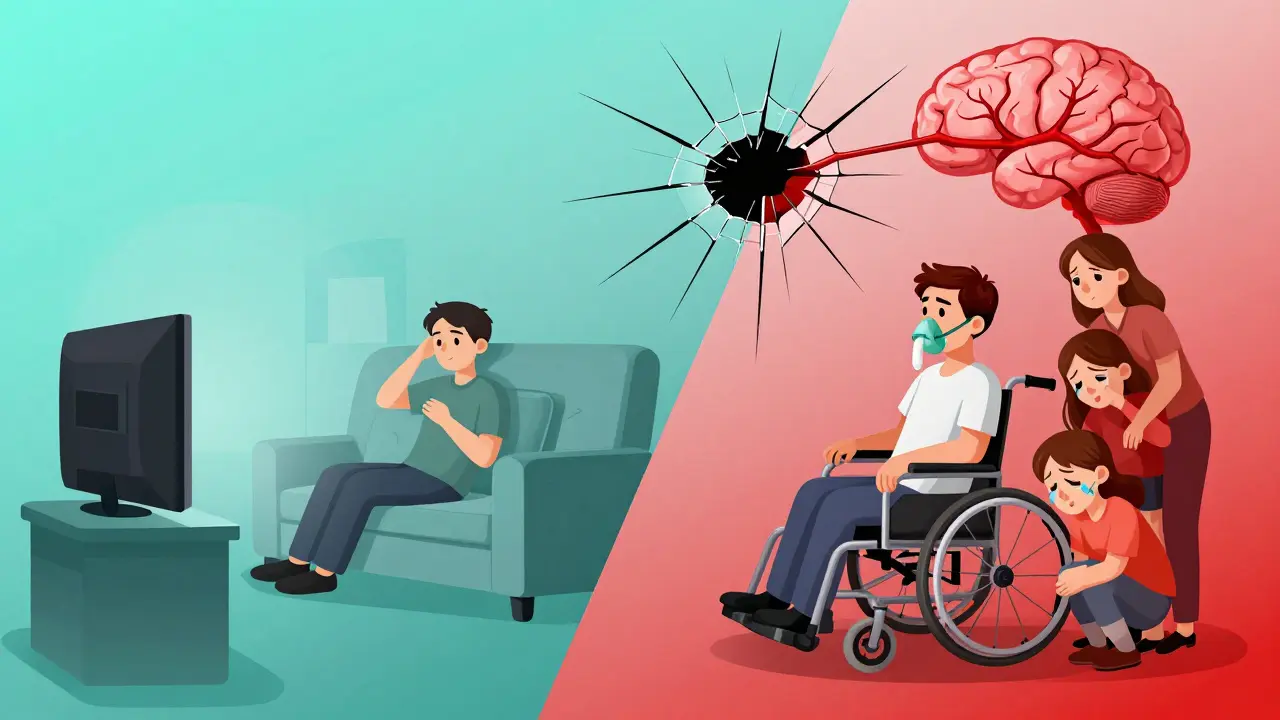
The biggest barrier to survival? Misunderstanding.Thirty-one percent of people who have a TIA wait more than 24 hours to get help. Why? Because "it went away." They think, "If I feel fine, I don’t need to go." But that’s like ignoring a cracked windshield because the car still drives.
Doctors see this all the time. A 68-year-old man feels his arm go numb. He shakes it off. Watches TV. Calls his wife. She says, "It’s probably just stress." He waits until the next morning. By then, he’s had a stroke. He’s paralyzed on one side. He needs rehab. He loses his independence.
That’s preventable. Every second counts. If you’ve had a TIA, you’re now in the highest-risk group for stroke. You need a plan. You need medication. You need follow-up.
What Happens After the Emergency?
A TIA isn’t a one-time event. It’s a diagnosis that changes your life.You’ll need:
- Regular blood pressure checks
- Cholesterol monitoring
- Diabetes screening if you haven’t had it
- Carotid ultrasound to check for artery blockage
- Heart monitoring for atrial fibrillation (a common hidden cause)
- Lifestyle changes: Quit smoking, eat less salt, move daily, lose weight if needed
Many people don’t realize a TIA is a sign of widespread artery disease. It’s not just your brain. It’s your heart, your legs, your kidneys. Treating it means treating your whole body.
Hospitals with dedicated TIA programs-like the SOS-TIA protocol at Massachusetts General-get 95% of patients seen the same day. Their 90-day stroke rate? Just 1.2%. Without it? Over 10%.
What’s Next for TIA Care?
The future is faster. Researchers are testing a simple blood test for GFAP-a protein released when brain cells are stressed. In 15 minutes, it could tell if you’ve had brain injury, even if symptoms are gone. By 2026, this test could be in ERs nationwide.And insurance? Medicare and Medicaid now penalize hospitals if more than 20% of TIA patients have a stroke within 30 days. That means hospitals are racing to get you seen, scanned, and treated-fast.
What’s clear? A TIA isn’t a warning. It’s the first strike. And the only way to survive the second is to act now.
Can a TIA happen without symptoms?
No, a true TIA always causes noticeable symptoms-like weakness, speech trouble, or vision loss. But some people mistake mild symptoms for something else, like a migraine or fatigue. If you had a sudden, brief change in how your body works, even if it was subtle, it’s worth checking out.
If my symptoms are gone, do I still need to go to the hospital?
Yes. Absolutely. A TIA is a medical emergency even if you feel fine now. Up to 5% of people have a stroke within 48 hours. The damage may not be visible yet, but the risk is real. Calling 911 and getting evaluated within 24 hours cuts your stroke risk by 80%.
Is a TIA the same as a stroke?
They start the same-with blocked blood flow to the brain. The difference is damage. A stroke leaves permanent brain injury. A TIA doesn’t. But modern scans show that many people thought to have a TIA actually had a small stroke. So, if your symptoms went away, you still need an MRI to know for sure.
Can I take aspirin at home after a TIA?
Only if a doctor tells you to. While aspirin reduces stroke risk, it’s not safe for everyone. If you have bleeding disorders, ulcers, or are on blood thinners, aspirin could harm you. Never self-treat. Get evaluated first.
How long do TIA symptoms usually last?
Most TIA symptoms last 10 to 60 minutes. About half go away in under 20 minutes. But duration doesn’t determine severity. Even a 5-minute episode needs urgent evaluation. The key isn’t how long it lasted-it’s that it happened at all.
What’s the chance of a second stroke after a TIA?
About 20% of people have a stroke within 90 days after a TIA. The highest risk is in the first two days-up to 5%. But with prompt treatment-medication, lifestyle changes, and follow-up-this risk drops to under 2%.
Can I drive after a TIA?
No-not immediately. In Australia and most countries, you must stop driving for at least one month after a TIA. You’ll need clearance from your doctor before getting behind the wheel again. Driving too soon risks not just your life, but others’.
Are TIAs more common in older adults?
Yes. The average age for a TIA is 69, and risk increases after 55. But they’re not rare in younger people-especially with obesity, diabetes, smoking, or heart conditions. Anyone can have one. Age isn’t a shield.
Nilesh Khedekar
January 15, 2026 AT 00:34So let me get this straight-your brain screams for help, you ignore it, and now you’re surprised you’re paralyzed? Wow. Just wow. I’ve seen people wait till their arm falls off before calling 911. And then they wonder why insurance won’t cover rehab. TIA isn’t a warning-it’s the universe hitting the snooze button before the alarm goes off. Don’t be that guy.
Jami Reynolds
January 15, 2026 AT 22:16Have you considered that TIA diagnoses are being inflated to justify MRI overuse and pharmaceutical profits? The FDA has been quietly pressured by Big Pharma to redefine stroke thresholds since 2018. The real danger isn’t the TIA-it’s the $2,850 diagnostic treadmill designed to funnel you into lifelong statin dependency. Your ‘brain flare’ is a corporate marketing campaign.
RUTH DE OLIVEIRA ALVES
January 16, 2026 AT 04:31It is imperative to underscore the clinical precision now embedded in the diagnostic criteria for transient ischemic events. The paradigm shift from temporal duration to neuroimaging confirmation represents a monumental advancement in cerebrovascular medicine. Failure to pursue immediate neuroimaging constitutes a significant deviation from evidence-based protocols, and may result in preventable morbidity. This is not merely a suggestion-it is a standard of care.
Nat Young
January 17, 2026 AT 10:07Let’s be real-80% risk reduction? That’s a number cooked up by a hospital admin trying to hit KPIs. I’ve seen patients get aspirin and sent home with a pamphlet. The real stats? 1 in 3 get misdiagnosed because radiologists are overworked and CTs miss micro-infarcts. And don’t get me started on dual antiplatelet therapy-those guidelines were written by guys who’ve never seen a real patient. This is medicine by committee, not science.
Niki Van den Bossche
January 18, 2026 AT 16:29There’s something profoundly poetic about the brain’s whisper before the scream-like a sonnet written in ischemia, each silenced neuron a metaphor for our collective denial of mortality. We treat TIAs like glitches in a software update, when they’re really the soul’s last gasp before the system crashes. We don’t need protocols-we need a reckoning. What does it mean to live, if we refuse to hear the silence between heartbeats?
Tom Doan
January 20, 2026 AT 13:32Interesting. So you’re saying that if symptoms vanish, it’s still a stroke? But then why do we even call it a TIA? It feels like we’re just renaming things to make people feel better about the fact that we’re overdiagnosing. And yet-people still die waiting. So maybe the overdiagnosis is the lesser evil. Irony: the system’s flawed, but the panic saves lives.
Sohan Jindal
January 22, 2026 AT 07:05This is why America is falling apart. People get a little dizzy and they call 911 like it’s Uber. Back in my day, we toughed it out. You don’t need an MRI to know if you’re sick. Just go to the clinic. Stop coddling people with fancy scans and aspirin. This is weakness. And now they’re telling me I can’t drive for a month because I felt weird once? No way. This is socialism for your brain.
Annie Choi
January 22, 2026 AT 17:29OMG I had this happen to me last year!! I thought it was just stress but then I googled BE FAST and literally screamed at my husband to call 911. They did the MRI and it was clean-TIA! But I started walking 10k steps a day, cut out sugar, and now I feel like a superhero. If you’re reading this-you can turn this around. Your brain is a muscle. Train it. Love it. Don’t ignore it!!
Ayush Pareek
January 23, 2026 AT 17:15My uncle had a TIA in Jaipur-he ignored it for three days. By the time he went to the hospital, he lost speech. But after rehab, he walks again. He says: 'Don’t wait for the storm. When the wind picks up, go inside.' This post? It’s that wind. Listen. Act. Don’t wait.
Nicholas Urmaza
January 25, 2026 AT 14:45Time is brain. That’s not a slogan. It’s a law. If you’re reading this and you’ve ever brushed off numbness or slurred speech-you owe it to yourself to get scanned. The cost of waiting isn’t money. It’s your future. And you don’t get a do-over. Get checked. Now.
Sarah Mailloux
January 26, 2026 AT 15:28I’m a nurse and I’ve seen this too many times. Someone says ‘I felt weird but I’m fine now’ and then they’re in rehab six weeks later. Just call 911. Seriously. Even if you’re embarrassed. Even if you think you’re overreacting. You’re not. Your brain doesn’t care if you’re ‘being dramatic.’ It just wants you to live.
Amy Ehinger
January 28, 2026 AT 00:02I had a TIA last summer and honestly? I thought it was just my coffee being too strong. I was sitting on the couch, couldn’t lift my left hand for like 12 minutes, and figured I fell asleep weird. My dog started barking at me like I was possessed, so I finally called my sister. She freaked out and dragged me to urgent care. MRI showed nothing. But they still gave me aspirin and said ‘come back if it happens again.’ I’m still alive, but now I check my blood pressure every morning. And I don’t drink coffee after 2pm. Small changes. Big difference.
Crystel Ann
January 28, 2026 AT 15:24My mom had a TIA on Christmas Eve. We thought it was indigestion. She didn’t want to ruin the holiday. By the time we got her to the hospital, it was too late. She’s fine now, but she lost her balance for six months. I just want to say-if you feel even a little off, don’t wait. Don’t wait for the perfect time. Don’t wait for someone else to decide. Your body knows before your mind does.