
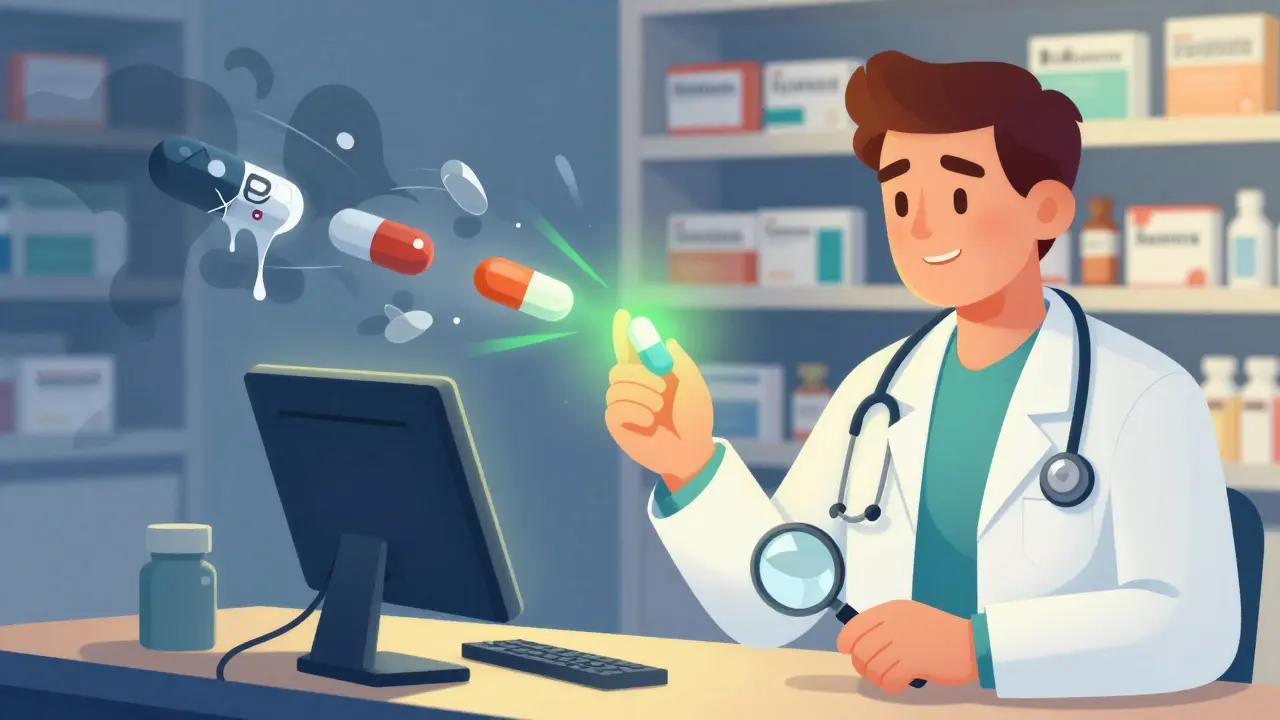
Every year, millions of fake pills, contaminated injections, and mislabeled vaccines slip into the global drug supply. In 2024 alone, law enforcement agencies uncovered 6,424 incidents of pharmaceutical counterfeiting across 136 countries. These aren’t just risky-they’re deadly. A single counterfeit dose of cancer medication or insulin can kill. And while police and customs seize tens of millions of fake drugs each year, the real frontline defense isn’t at the border-it’s in the pharmacy. Pharmacists are the last line of defense. No one else checks the pill before it hits the patient’s hand. No one else has the training, the access, or the responsibility to spot the difference between real and fake. But training hasn’t kept up with the threat-until now. Modern pharmacist education on counterfeit detection isn’t about memorizing brochures or watching boring videos. It’s about building real skills, using real tools, and thinking like a detective.
Why Pharmacists Must Know How to Spot Fakes
Counterfeit drugs don’t look like they used to. Ten years ago, fakes were obvious: misspelled labels, blurry printing, mismatched colors. Today, criminals use high-quality printers, real packaging, and even fake batch numbers that match manufacturer records. A fake opioid pill can be indistinguishable from the real thing-even under a magnifying glass. The stakes? Life or death. In 2025, Interpol’s Operation Pangea XVI shut down 13,000 illegal online pharmacies and seized over 50 million counterfeit doses. Many of those pills were meant for chronic conditions: diabetes, epilepsy, heart disease. Patients taking fake versions aren’t just wasting money-they’re risking organ failure, seizures, or sudden death. The U.S. has the Drug Supply Chain Security Act (DSCSA), which requires tracking drugs from manufacturer to pharmacy. But most countries don’t have that system. In sub-Saharan Africa, Southeast Asia, and parts of Latin America, counterfeit drugs make up as much as 30% of the market. Pharmacists there aren’t just filling prescriptions-they’re playing Russian roulette with every bottle.What Modern Training Looks Like
Gone are the days of calling manufacturer hotlines or comparing paper inserts. Today’s training combines three key elements: knowledge, tools, and mindset. Knowledge comes from structured curricula like the one developed by the World Health Organization (WHO) and the International Pharmaceutical Federation (FIP). In 2021, they launched a bilingual (English/French) competency-based program piloted with 355 pharmacy students in Cameroon, Senegal, and Tanzania. After the training, students improved their ability to identify counterfeit drugs by 68%. The curriculum covers:- How counterfeit drugs are made and distributed
- Common red flags: packaging inconsistencies, unusual dosages, odd tablet shapes
- How to verify authorized distributors using manufacturer websites
- Recognizing fake specialty drugs like biologics and oncology treatments
How Training Programs Compare
Not all training is created equal. Here’s how the leading approaches stack up:| Program | Format | Key Features | Best For | Limitations |
|---|---|---|---|---|
| WHO/FIP Curriculum | Academic, 40-hour course | Comprehensive theory, case studies, global standards | Pharmacy students, new graduates | Doesn’t teach hands-on verification |
| RxAll Technology Platform | On-site device + online portal | AI scanning, real-time results, pharmacist forum | Community pharmacies, hospital pharmacists | Requires investment in hardware |
| TrainingNow.com FWA Course | Online, 45-minute | Medicare compliance, mobile-friendly, CEU credit | U.S. pharmacists needing regulatory training | Focuses on fraud, not counterfeit detection |
| PowerPak CE Course | Online, 1-hour | Overview of global prevalence, U.S. trends | Continuing education requirements | Lacks practical verification skills |
What’s Missing in Most Programs
Many training programs still treat counterfeit detection as a side topic. It’s tucked into a module on ethics or compliance. But it’s not a side issue-it’s a core patient safety skill. Here’s what’s often left out:- Training on counterfeit biologics (like insulin or monoclonal antibodies)-these are harder to fake but more dangerous when they are
- How to spot repurposed packaging-fake drugs often reuse real boxes from expired lots
- What to do when you find a fake-reporting channels vary by country
- How to talk to patients who bought drugs online-many don’t realize they’re at risk
Global Gaps and Local Realities
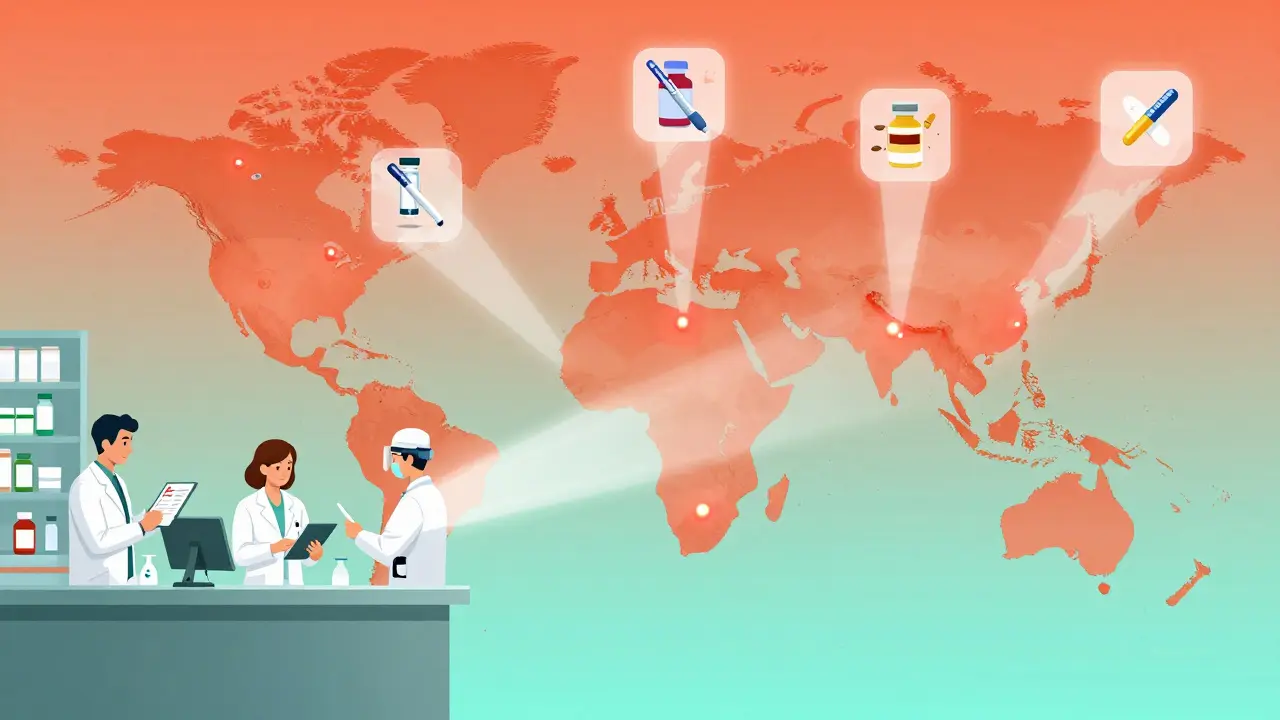
The U.S. has the most advanced tracking system in the world. But in countries without barcode scanning, supply chain audits, or digital verification, pharmacists are on their own. In India, fake COVID vaccines were sold online in 2020. In Nigeria, counterfeit antibiotics are sold in street markets. In Brazil, fake erectile dysfunction pills contain toxic chemicals. In Australia, we’ve seen fake testosterone creams and insulin pens. Pharmacists in low-resource settings need training that works offline, on phones, with minimal equipment. WHO’s new toolkit will include SMS-based alerts and low-tech visual guides for these areas. Meanwhile, in wealthier countries, the threat is shifting online. More people are buying drugs from Instagram, Facebook, or dark web marketplaces. Pharmacists need to know how to spot these sales, even if they’re not the ones selling them.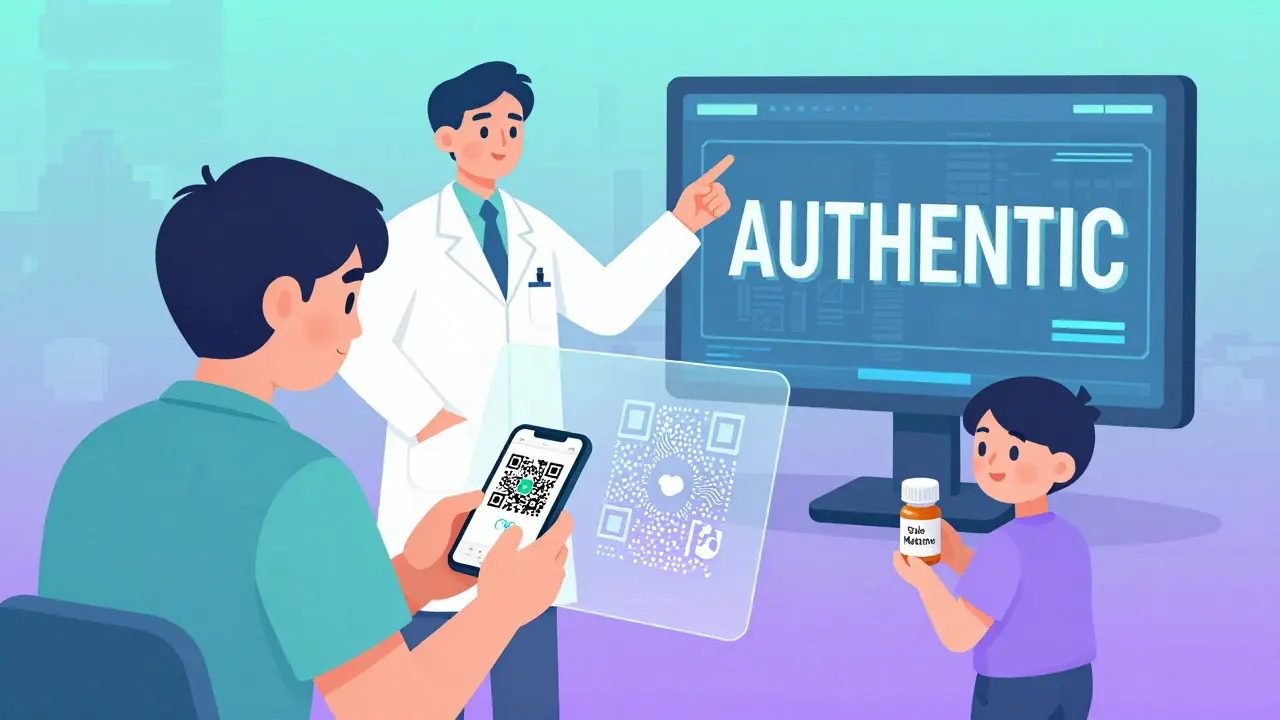
What Comes Next
The future of counterfeit detection is AI-powered, mobile, and integrated. By 2027, handheld scanners will be standard in community pharmacies. AI will predict which drugs are most likely to be counterfeited based on global supply trends. Pharmacists will get automated alerts if a batch from a supplier has been flagged in another country. Patient education is also expanding. RxAll now gives patients a QR code to scan their own pills. If the result says “not authentic,” they can walk into the pharmacy and ask questions. And the training? It’s becoming mandatory. In the U.S., some states now require counterfeit detection as part of continuing education. In the EU, it’s being added to national pharmacy licensing exams. The goal isn’t just to catch fakes. It’s to make them irrelevant. When every pharmacist can verify a drug in seconds, when every patient knows how to check their meds, and when every supplier knows they’ll be caught-counterfeiters lose.Frequently Asked Questions
Can pharmacists really tell if a drug is fake just by looking at it?
Sometimes-but not reliably anymore. Counterfeiters now use real packaging, correct fonts, and even holograms. Subtle differences-like a slightly different tablet shape, inconsistent ink, or a mismatched batch number-are hard to spot without tools. Training now focuses on using technology, not just visual inspection.
Is counterfeit drug training required by law?
In the U.S., pharmacists must complete Fraud, Waste, and Abuse (FWA) training within 90 days of hire, but this doesn’t cover counterfeit detection. Some states now require it as part of continuing education. In the EU and Australia, it’s being added to licensing exams. Globally, it’s not yet mandatory everywhere-but it’s becoming expected.
What should I do if I find a counterfeit drug in my pharmacy?
Do not return it to the supplier. Quarantine the batch, document the details (batch number, packaging photos, supplier info), and report it immediately. In the U.S., contact the FDA’s MedWatch program. In Australia, report to the TGA. In other countries, contact your national drug regulatory authority. Also notify the manufacturer-they often track global counterfeit trends.
Are online courses enough to train pharmacists?
Online courses are a good start-they teach recognition and policy. But they’re not enough. Real skills come from hands-on practice with verification tools, reviewing real cases, and learning from peers. The best programs combine online learning with in-person or simulated verification exercises.
How can I get access to counterfeit detection tools like RxAll?
RxAll and similar platforms are available through pharmacy supply distributors or directly via their website. Many hospital systems and large pharmacy chains now fund these devices as part of patient safety initiatives. Smaller pharmacies can apply for grants through public health organizations or partner with local universities that offer training programs.
Daniel Dover
February 15, 2026 AT 17:39Finally, someone’s talking about this properly. Pharmacists are the real gatekeepers. If we don’t step up, who will?
Betty Kirby
February 17, 2026 AT 17:27Let’s be honest - most continuing ed courses are just checkbox exercises. This is the first time I’ve seen a training framework that actually treats pharmacists like professionals with skin in the game.
The WHO/FIP curriculum is the only one that doesn’t treat counterfeit detection like an afterthought. It’s not about compliance - it’s about competence.
And don’t get me started on how TrainingNow.com confuses fraud with counterfeiting. One’s a billing scam. The other kills people. They’re not interchangeable.
I’ve seen pharmacists in rural clinics hand out fake insulin because they had no tools and no training. That’s not negligence - it’s systemic abandonment.
RxAll’s device isn’t a luxury. It’s a lifeline. If your pharmacy can’t afford one, your community shouldn’t trust you with prescriptions.
The real win? When patients start scanning their own pills. That’s when the market shifts. Counterfeiters don’t fear regulators - they fear informed consumers.
And yes, biologics are the next frontier. A fake monoclonal antibody doesn’t just fail to work - it triggers immune collapse. We’re not talking about sugar pills anymore.
Stop calling this ‘specialized training.’ It’s core clinical practice. If you can’t verify a drug, you shouldn’t be dispensing it.
The EU is right to make this mandatory. The U.S. is still pretending this is optional. That’s not innovation - it’s negligence.
Every pharmacist needs to know: if you’re guessing, you’re killing.
Joe Grushkin
February 19, 2026 AT 12:32Wow. So now we’re turning pharmacists into forensic chemists? Next they’ll want us to test every pill with a mass spectrometer before breakfast.
Let’s not pretend this is about patient safety. It’s about liability. Hospitals and insurers want to offload risk to the pharmacist because they’re the cheapest target.
Real solution? Ban online drug sales. Not more training. Not more devices. Just shut down the entire dark web pharmacy ecosystem.
Why are we letting criminals dictate our professional standards?
Virginia Kimball
February 21, 2026 AT 07:28This gave me chills. I’ve worked in a community pharmacy for 12 years and I’ve seen too many close calls.
One time, a sweet elderly woman came in with a bottle of ‘metformin’ that cost $5. She said her grandson ordered it from a Facebook ad. I scanned it - fake. She cried because she’d skipped meals to afford it.
We need tools. We need training. But more than anything, we need to stop treating pharmacists like order-fillers.
Every pharmacist deserves to walk into work knowing they have the power to protect someone’s life - not just count pills.
Please, if your pharmacy hasn’t invested in verification tech yet - do it. Your patients are counting on you.
And yes, biologics are terrifying. I’ve held a fake insulin vial. It looked perfect. It felt perfect. But the patient’s glucose spiked within hours. That’s the nightmare.
Let’s make this mandatory. Not because it’s trendy - because it’s ethical.
Michael Page
February 22, 2026 AT 20:03The assumption here is that pharmacists are the bottleneck. But what if the bottleneck is the supply chain itself? Why are we putting the burden on the last person in line instead of fixing the flow?
Counterfeits exist because the system is broken. Regulatory gaps. Profit-driven distribution. Lack of transparency.
Training a pharmacist to detect a fake pill is like teaching a firefighter to spot arson - noble, but why not stop the arsonist before they strike?
Technology helps. But systemic change? That’s the real solution.
And yet, we keep treating symptoms instead of causes.
Josiah Demara
February 23, 2026 AT 22:31Oh please. You think this ‘WHO curriculum’ is going to save lives? It’s a PowerPoint slide deck wrapped in jargon.
Let’s look at the data: 30% counterfeit drugs in sub-Saharan Africa. Did the WHO fix that? No. They published a PDF.
Meanwhile, RxAll’s device works. It’s real. It’s fast. It’s accurate. But you’re spending 10 paragraphs on theory and 2 sentences on the only thing that matters - the scanner.
Stop romanticizing training. Start funding hardware.
If your pharmacy can’t afford a $2,000 device, you shouldn’t be in business.
And don’t get me started on ‘SMS-based alerts’ for rural clinics. That’s not innovation - it’s a Band-Aid on a hemorrhage.
This whole article reads like a grant proposal. Not a solution.
Chiruvella Pardha Krishna
February 24, 2026 AT 19:16In India, we’ve been fighting this for over a decade. Fake antibiotics in village markets. Counterfeit insulin sold as ‘premium’ in metro pharmacies.
Training is important - yes. But what good is it if the government doesn’t enforce supply chain laws? If customs doesn’t scan shipments? If police don’t prosecute?
One pharmacist in Lucknow found 17 fake insulin vials last month. She reported it. The supplier? Still operating. No charges. No raid.
Technology helps. But without accountability, it’s just a luxury for urban clinics.
We need political will. Not just PowerPoint slides.
Kapil Verma
February 25, 2026 AT 00:00Why are we letting Western organizations dictate how Indian pharmacists should train? WHO’s curriculum is designed for American hospitals - not our realities.
We don’t have scanners. We don’t have internet. We have trained hands and sharp eyes.
Our pharmacists learn by watching, by experience, by trust - not by scanning QR codes.
Stop treating us like we’re behind. We’re adapting. We’re surviving.
What we need is not your tech - it’s fair access to real medicine at fair prices.
Stop exporting your problems as ‘training solutions’.
Mandeep Singh
February 26, 2026 AT 08:05Let me tell you what’s really happening - pharmaceutical companies are using this as a cover to raise prices. ‘Oh, we need scanners, we need training, we need compliance’ - all while their profits hit record highs.
Meanwhile, in rural India, a single vial of insulin costs 30% of a worker’s monthly wage. No scanner can fix that.
This isn’t about detection. It’s about control. The same corporations that make the drugs are the ones funding the ‘solutions’.
They want pharmacists distracted by tech so we stop asking why the drugs cost so much in the first place.
Counterfeit drugs? Yes, they’re deadly. But so is the system that makes them necessary.
Fix the pricing. Fix the access. Then we can talk about scanning pills.
And don’t pretend this is about patient safety. It’s about corporate PR.
Real change? Break the patents. Lower the prices. Let people afford real medicine.
Scanners won’t do that.
Mike Hammer
February 28, 2026 AT 00:54just saw a post on r/Pharmacy where a guy in texas scanned a fake adderall and it was laced with fentanyl. no joke. his kid almost died.
we need this. like, yesterday.
Sarah Barrett
February 28, 2026 AT 05:47It is imperative that we recognize the gravity of this issue. The role of the pharmacist has evolved beyond dispensing to safeguarding.
The integration of technological tools with evidence-based curricula represents not merely an advancement, but a moral imperative.
Pharmacists must be equipped not only to detect, but to act - with authority, with clarity, and with institutional support.
Training must be standardized, mandatory, and universally accessible.
Failure to do so constitutes a breach of professional duty.
Erica Banatao Darilag
February 28, 2026 AT 22:33i just started my pharma job last month and we got this rxall device last week. i was so nervous i’d mess up. but scanning a pill felt like magic. like, it just told me ‘real’ or ‘fake’.
my first scan caught a fake metformin from a new supplier. i held it. called the rep. they were shocked.
now i feel like i actually know what i’m doing.
Kaye Alcaraz
March 1, 2026 AT 07:41Every pharmacist should be required to complete this training before their first prescription is dispensed.
This isn’t optional. It’s foundational.
Patients trust us with their lives. We owe them nothing less than excellence.
Let’s make this standard. Not next year. Now.
Charlotte Dacre
March 2, 2026 AT 17:55Oh wow, so now pharmacists are going to be drug detectives? Next they’ll be wearing trench coats and carrying magnifying glasses.
Let’s just make it illegal to sell pills online. Problem solved. No need for fancy scanners or ‘mindset training’.
Also, why is the WHO involved again? They’re the same people who told us hydroxychloroquine worked.
Joe Grushkin
March 3, 2026 AT 03:31And yet, the only thing that actually works is shutting down the online sellers. Training won’t stop a fentanyl-laced fake from being mailed to someone’s door.
Fix the source. Not the symptom.