
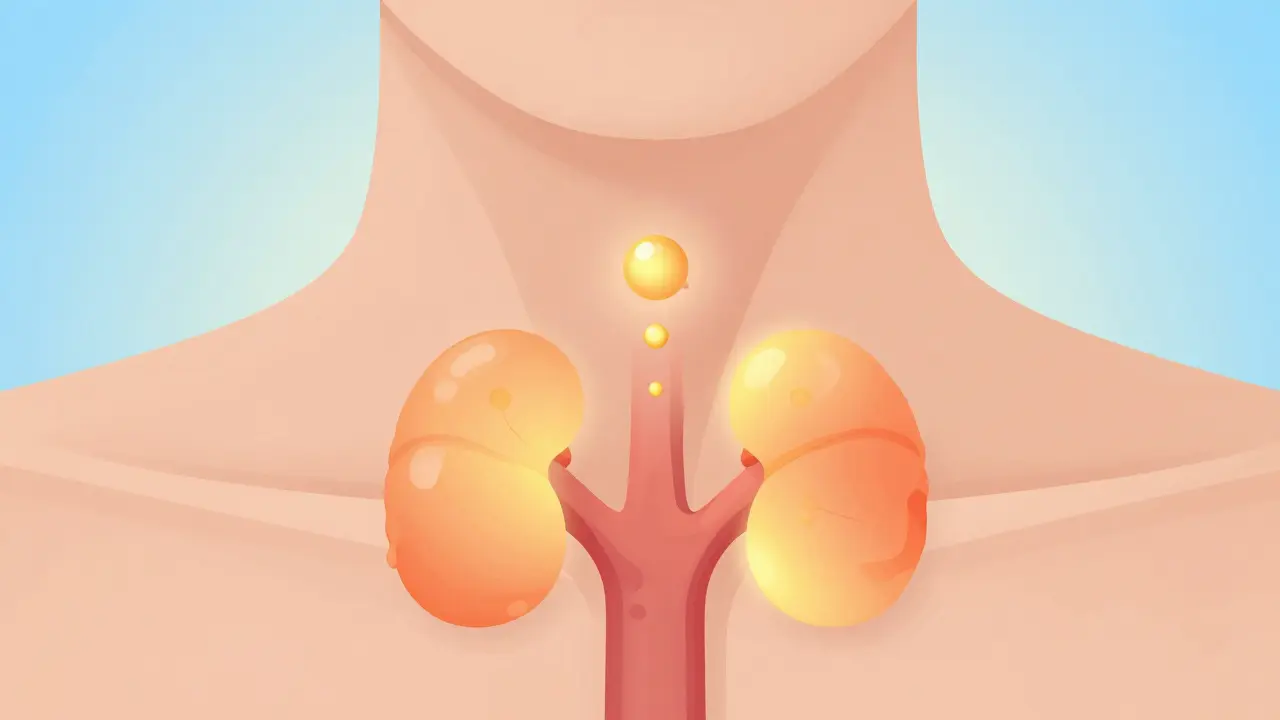
Hyperparathyroidism is a condition where the parathyroid glands produce too much hormone, leading to dangerously high calcium levels in your blood. This isn't just a minor issue-it can cause bone loss, kidney stones, fatigue, and brain fog. According to the Endocrine Society's 2023 guidelines, about 100,000 Americans develop primary hyperparathyroidism each year, with women being three times more likely to be affected than men. While some people have no symptoms, others experience severe complications requiring urgent treatment.
What is Hyperparathyroidism?
Hyperparathyroidism comes in three types, each with distinct causes and treatments. The most common is primary hyperparathyroidism, where one or more parathyroid glands become overactive on their own. This happens in 80-85% of cases and usually stems from a benign tumor (adenoma) in a single gland. Less common are secondary and tertiary forms, which develop as responses to other health issues.
| Type | Primary Cause | Blood Calcium Level | PTH Level | Common Conditions |
|---|---|---|---|---|
| Primary | Overactive parathyroid gland(s) | ≥10.5 mg/dL | Elevated or normal but inappropriate for high calcium | Single adenoma (85% of cases), multigland hyperplasia (15%) |
| Secondary | Response to low calcium (e.g., kidney disease) | Normal or low | Elevated | Chronic kidney disease, vitamin D deficiency |
| Tertiary | Autonomous PTH secretion after kidney transplant | Elevated | Elevated | Long-term kidney transplant recipients (30-50% develop it) |
When the parathyroid glands malfunction, they disrupt calcium balance in your body. Calcium is crucial for bones, nerves, and muscles, so too much in your blood can cause widespread damage. Primary hyperparathyroidism occurs when glands produce excess parathyroid hormone (PTH) without any underlying cause. This leads to calcium being pulled from your bones, increasing your risk of fractures. Secondary hyperparathyroidism happens when your body tries to compensate for low calcium due to kidney disease or vitamin D deficiency. Tertiary hyperparathyroidism develops after kidney transplant when the glands keep overproducing PTH even after calcium levels normalize.
Symptoms and Effects on Your Body
Many people with hyperparathyroidism feel tired, weak, or irritable. Some notice kidney stones, frequent urination, or bone pain. Others experience brain fog, depression, or nausea. These symptoms often get worse over time if left untreated.
High calcium levels directly weaken bones. Research shows bone mineral density drops by 2-4% every year in untreated hyperparathyroidism. This makes fractures 30-50% more likely compared to people without the condition. A 2022 study from the National Institute of Diabetes and Digestive and Kidney Diseases (NIDDK) found that hip fractures in hyperparathyroidism patients occurred 2.5 times more often than in healthy peers of the same age.
One patient shared their experience on EndocrineWeb: "After 7 years of misdiagnosed depression and chronic kidney stones, my calcium was 11.8 and PTH 142. Parathyroidectomy at age 52 eliminated all symptoms within 3 months-it felt like someone turned my brain back on." This highlights how severe the impact can be, but also how effective surgery can be.
How is it Diagnosed?
Diagnosis starts with simple blood tests. Doctors check your calcium and parathyroid hormone (PTH) levels. A calcium level above 10.5 mg/dL combined with PTH above 65 pg/mL confirms primary hyperparathyroidism in most cases. But sometimes PTH levels are "normal" for the high calcium, which still indicates the condition. Two elevated calcium tests at least a week apart are needed to rule out temporary spikes.
Imaging helps locate the overactive gland. Sestamibi scans detect about 90% of single adenomas, while ultrasound finds 85% of cases. For complex cases, 4D-CT scans have 95% accuracy. These tests guide surgeons to the exact location before surgery. The American Association of Endocrine Surgeons recommends imaging for all surgical candidates to ensure precise treatment.
Surgical Treatment Options
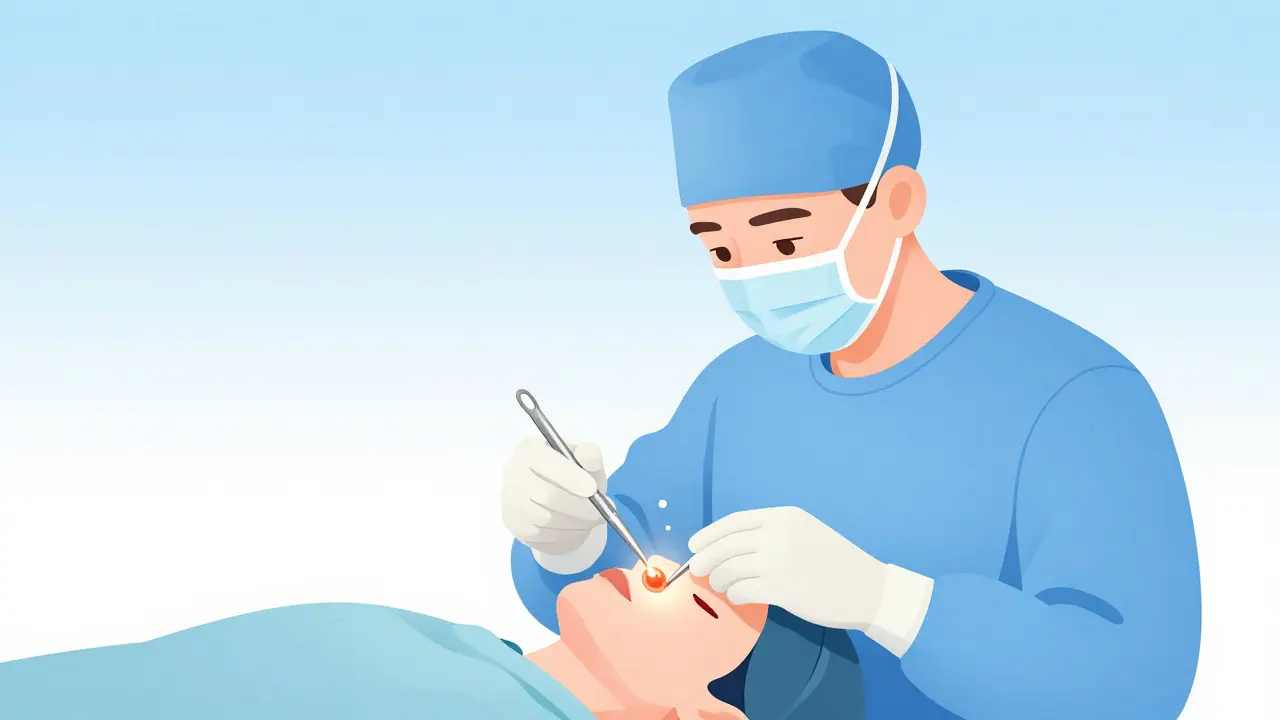
Parathyroidectomy-the surgical removal of the problematic gland-is the only cure for primary hyperparathyroidism. Modern techniques make this procedure minimally invasive. Surgeons make a small incision (about 1-2 inches), remove the abnormal gland, and close the wound. Most patients go home the same day.
Success rates are high. For single-gland disease (which accounts for 85% of cases), minimally invasive surgery cures 95-98% of patients. Multigland disease requires more extensive surgery, with success rates around 85-90%. A 2022 Mayo Clinic study of 1,200 patients showed that 92% saw reduced kidney stones, 88% less bone pain, and 75% resolution of fatigue within 6 months after surgery.
Complications are rare but possible. Temporary low calcium (hypocalcemia) affects 30-40% of patients post-surgery, requiring calcium supplements for a few weeks. Permanent voice changes due to nerve damage occur in less than 1% of cases when performed by experienced surgeons. The American Association of Endocrine Surgeons states that centers performing over 50 parathyroidectomies yearly achieve 98% cure rates with minimal complications.
What to Expect After Surgery
Recovery is quick. Most people return to work in 3-7 days. You'll need calcium supplements for 2-8 weeks as your body adjusts. Doctors monitor your calcium levels closely in the first few days after surgery to prevent complications.
Bone health improves significantly after surgery. DXA scans show 3-5% bone density recovery in the first year and 5-8% within two years. This reverses the annual 2-4% bone loss seen before surgery. A 2022 study in the Journal of Bone and Mineral Research confirmed that patients with osteoporosis before surgery saw substantial bone density gains post-operation, reducing fracture risk long-term.
Long-term monitoring is essential. Patients with multigland disease need annual calcium checks due to 5-10% recurrence risk. Single-gland disease has only 2-3% recurrence. Lifestyle changes like getting enough vitamin D (600-800 IU daily), weight-bearing exercise, and avoiding thiazide diuretics help maintain bone health after surgery.
What causes hyperparathyroidism?
Primary hyperparathyroidism is usually caused by a benign tumor (adenoma) in one parathyroid gland. In 15% of cases, multiple glands become enlarged (hyperplasia). Rarely, parathyroid cancer causes it. Secondary hyperparathyroidism stems from kidney disease or vitamin D deficiency, where the body tries to compensate for low calcium. Tertiary hyperparathyroidism occurs after kidney transplant when glands keep producing excess hormone even after calcium normalizes.
Is surgery the only treatment?
Yes, for primary hyperparathyroidism, surgery is the only cure. Medications like cinacalcet can lower PTH levels in secondary cases but don't fix the underlying issue in primary hyperparathyroidism. Without surgery, high calcium levels continue to damage bones, kidneys, and other organs. The Endocrine Society's 2023 guidelines state that surgery is the standard treatment for eligible patients.
What happens during parathyroid surgery?
Most surgeries today are minimally invasive. A small incision (1-2 inches) is made in the neck, and the surgeon removes the overactive gland using tools like a gamma probe or video assistance. The procedure takes 1-2 hours. Surgeons often check parathyroid hormone levels during surgery to confirm the abnormal gland was removed. Patients usually go home the same day and recover fully in 3-7 days.
How long does recovery take?
Most patients return to work within 3-7 days. You'll need calcium supplements for 2-8 weeks as your body adjusts. Temporary low calcium (hypocalcemia) affects 30-40% of patients but is manageable. Full bone recovery takes 1-2 years, with DXA scans showing 3-5% bone density improvement in the first year. Follow-up appointments ensure your calcium levels stabilize.
Can hyperparathyroidism cause permanent damage?
Yes, if untreated for years. Prolonged high calcium can lead to irreversible bone damage, kidney failure, and cardiovascular issues. The Mayo Clinic found that patients with calcium levels above 12 mg/dL for over a year had 22% persistent symptoms after surgery, compared to 8% with lower levels. Early diagnosis and surgery prevent most long-term complications. This is why doctors recommend testing if you have risk factors like kidney stones or unexplained bone pain.


Kieran Griffiths
February 5, 2026 AT 16:38Just had my parathyroidectomy last month and wanted to share my experience. The surgery was quick, and within days I felt like my old self again. Bone pain disappeared in weeks. If you're on the fence, talk to your doctor – it's life-changing.
Diana Phe
February 6, 2026 AT 09:32Surgery? More like a money grab by the medical industrial complex. They push this to sell more drugs later. I've researched this and there's a whole conspiracy to keep people dependent on surgeries.
Why do you think they never mention the natural remedies? It's all about profits. Big Pharma owns the FDA and the doctors.
They don't want you to know that vitamin D and magnesium can fix this without invasive procedures. Trust me, I've seen the evidence.
Carl Crista
February 7, 2026 AT 23:19The medical system is a scam. They'll tell you surgery is the only cure but it's not true. They just want to make money. I've seen studies showing natural treatments work better. Why do they ignore that?
Dr. Sara Harowitz
February 8, 2026 AT 15:26Oh, please! You have no idea what you're talking about! Vitamin D deficiency is a separate issue and doesn't cure hyperparathyroidism. Surgery is the only proven treatment! If you're so knowledgeable, why aren't you a doctor? The studies are clear: surgery works! Your conspiracy theories are dangerous!
Andre Shaw
February 10, 2026 AT 14:04Doc, you're spouting textbook nonsense. I've dug into the literature and the real story is that surgery is often unnecessary. The medical industry's greed is driving this. They'll do anything for a buck. You're part of the problem.
Cullen Bausman
February 10, 2026 AT 20:56As an American, I find it alarming that people are spreading misinformation about our healthcare system. The U.S. has the best medical treatments and surgical techniques. Our doctors are highly trained and follow strict guidelines. The Endocrine Society's guidelines are clear: surgery is the standard treatment. Anyone suggesting otherwise is either misinformed or has an agenda.
divya shetty
February 11, 2026 AT 09:47Actually, in India we have a much better approach. We use traditional medicine combined with modern techniques. Our doctors are just as qualified, if not more so. The U.S. system is overpriced and inefficient. You Americans think you're better, but we've been handling this for centuries.
Dina Santorelli
February 11, 2026 AT 16:17I don't trust any of this. Surgery is dangerous.