
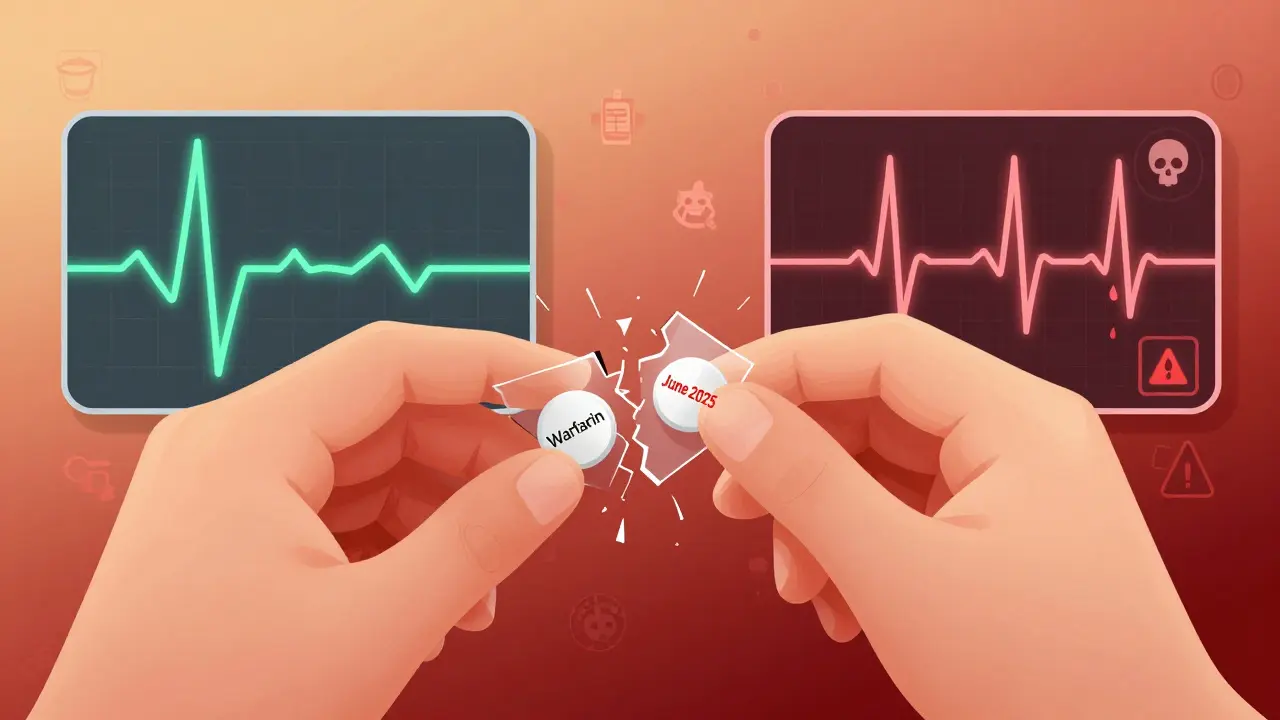
When a pill says it expires in June 2025, most people think, "I’ll throw it out next month." But for some medications, that date isn’t just a suggestion - it’s a line between life and death. Medications with a narrow therapeutic index (NTI) are among the most dangerous to use after their expiration date. These aren’t your typical painkillers or antihistamines. They’re drugs where even a tiny change in dose - as little as 5% - can cause a stroke, a seizure, organ failure, or death.
What Makes a Drug Have a Narrow Therapeutic Index?
A narrow therapeutic index means there’s almost no room for error. The difference between a dose that works and a dose that harms is razor-thin. Think of it like walking a tightrope. One step too far, and you fall.
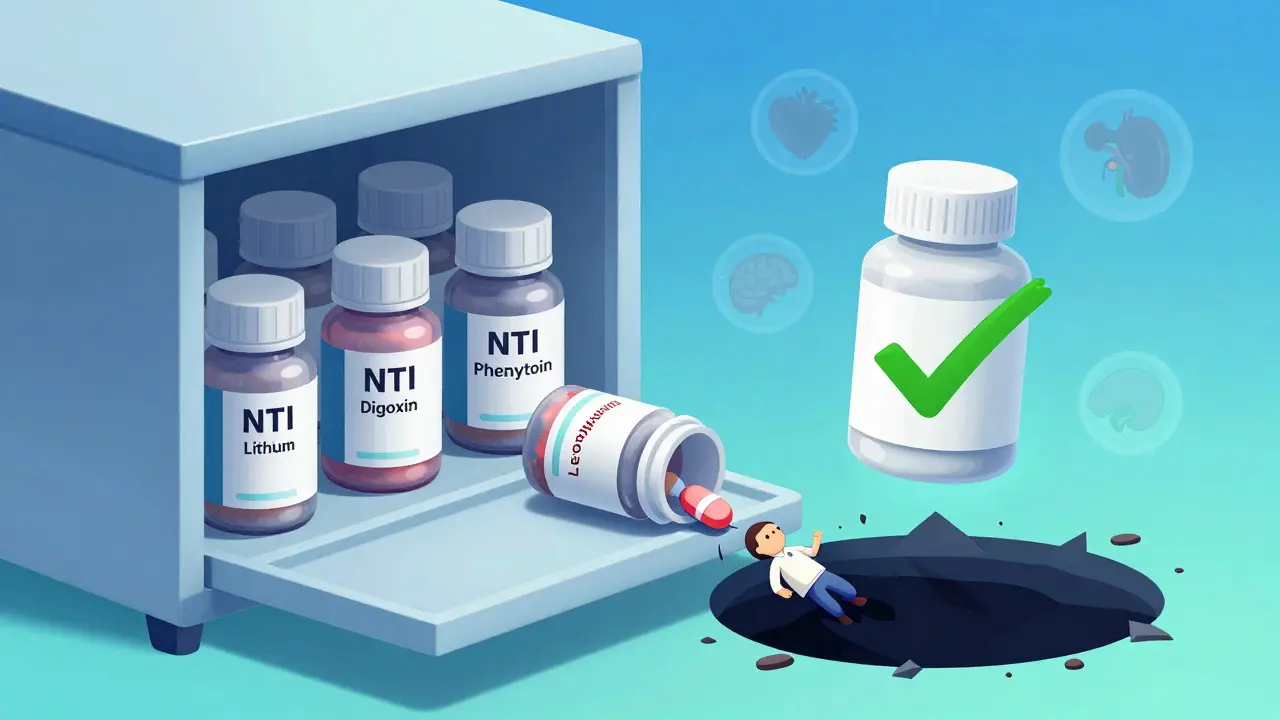
The U.S. Food and Drug Administration (FDA) defines NTI drugs as those where small changes in blood concentration can lead to serious, even life-threatening, outcomes. For example:
- Warfarin: Too little and you risk a blood clot; too much and you bleed internally.
- Lithium: Too low and mood swings return; too high and you suffer tremors, confusion, or kidney damage.
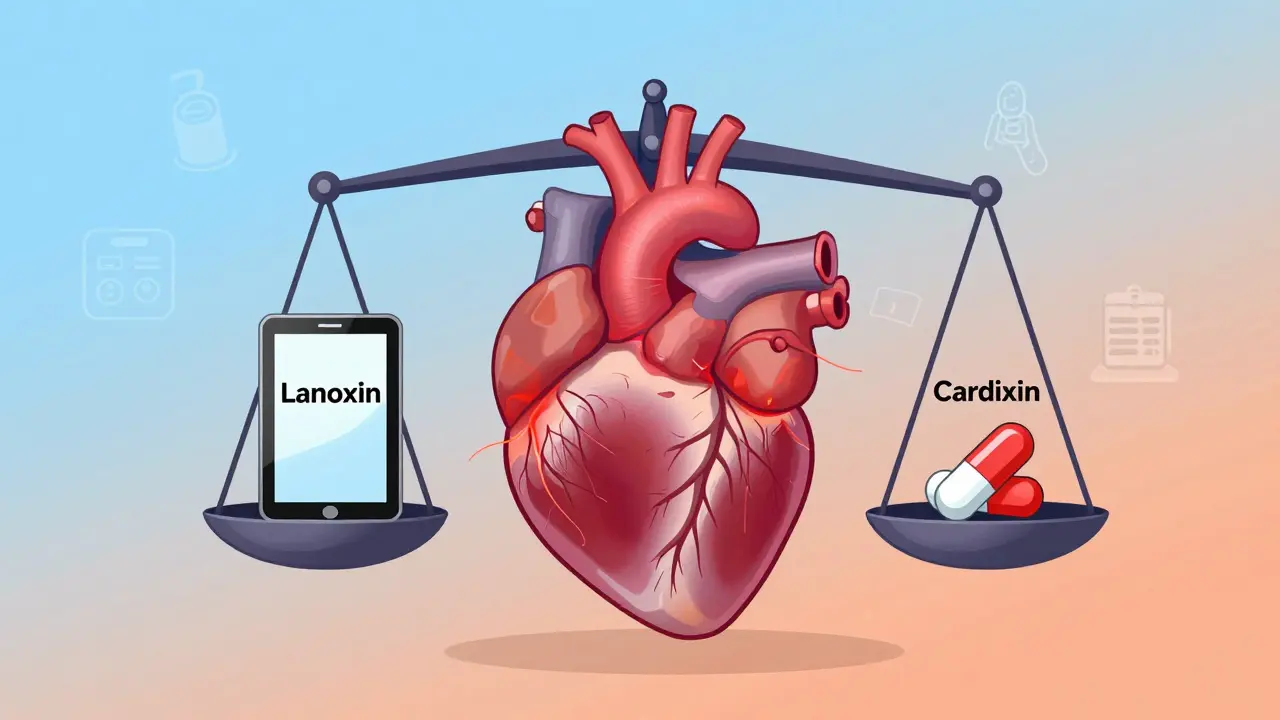
- Digoxin: A 0.3 ng/mL rise in blood levels - from 0.9 to 1.2 - can turn a life-saving heart drug into a poison.
- Phenytoin: A 10% drop in potency can trigger seizures in someone who’s been seizure-free for years.
These drugs require constant monitoring. Blood tests aren’t optional - they’re essential. Doctors check levels regularly because even minor changes in how the body absorbs or processes the drug can throw everything off. And if the drug itself changes? That’s when things get dangerous.
Why Expiration Dates Matter More for NTI Drugs
Expiration dates aren’t arbitrary. They’re based on stability testing. Manufacturers prove that the drug will maintain its full strength, purity, and safety up to that date - under proper storage conditions. For most medications, losing 5-10% potency over time isn’t a big deal. But for NTI drugs, that 5% loss can push you out of the safe zone.
Take warfarin. The target INR range is 2.0-3.0. A 10% drop in potency could lower your INR from 2.8 to 2.5 - still "in range," right? Maybe. But if you’re on a mechanical heart valve, your doctor might have set the target at 2.8 for a reason. A drop could mean your blood starts clotting. One missed dose, one expired pill, and you could end up with a stroke.
On the flip side, some degradation products become toxic. While tetracycline isn’t an NTI drug, expired versions can form compounds that damage kidneys. For NTI drugs like carbamazepine or phenytoin, even small chemical changes might create metabolites that build up in the body and trigger seizures or liver damage. We don’t have full data on all degradation pathways - but we know enough to say: don’t risk it.
What NTI Drugs Are Most at Risk?
Not all NTI drugs are created equal, but these are the ones that show up most often in emergency rooms due to dosing issues:
- Warfarin - Blood thinner. Used for atrial fibrillation, clots, heart valves.
- Lithium - Mood stabilizer. Used for bipolar disorder.
- Digoxin - Heart medication. Controls rhythm and strength of heartbeat.
- Phenytoin - Antiseizure drug. Used for epilepsy.
- Carbamazepine - Also for seizures and nerve pain.
- Levothyroxine - Thyroid hormone replacement. Even small changes affect metabolism, heart rate, and mood.
- Ciclosporin - Immunosuppressant. Used after transplants. Too low = organ rejection; too high = kidney failure.
- Aminoglycosides - Antibiotics like gentamicin. Used in hospitals. Too much = permanent hearing loss or kidney damage.
The FDA requires special bioequivalence testing for generic versions of these drugs. While most generics must be 80-125% as potent as the brand, NTI drugs must fall within 90-111%. That’s a tighter window - because the stakes are higher.
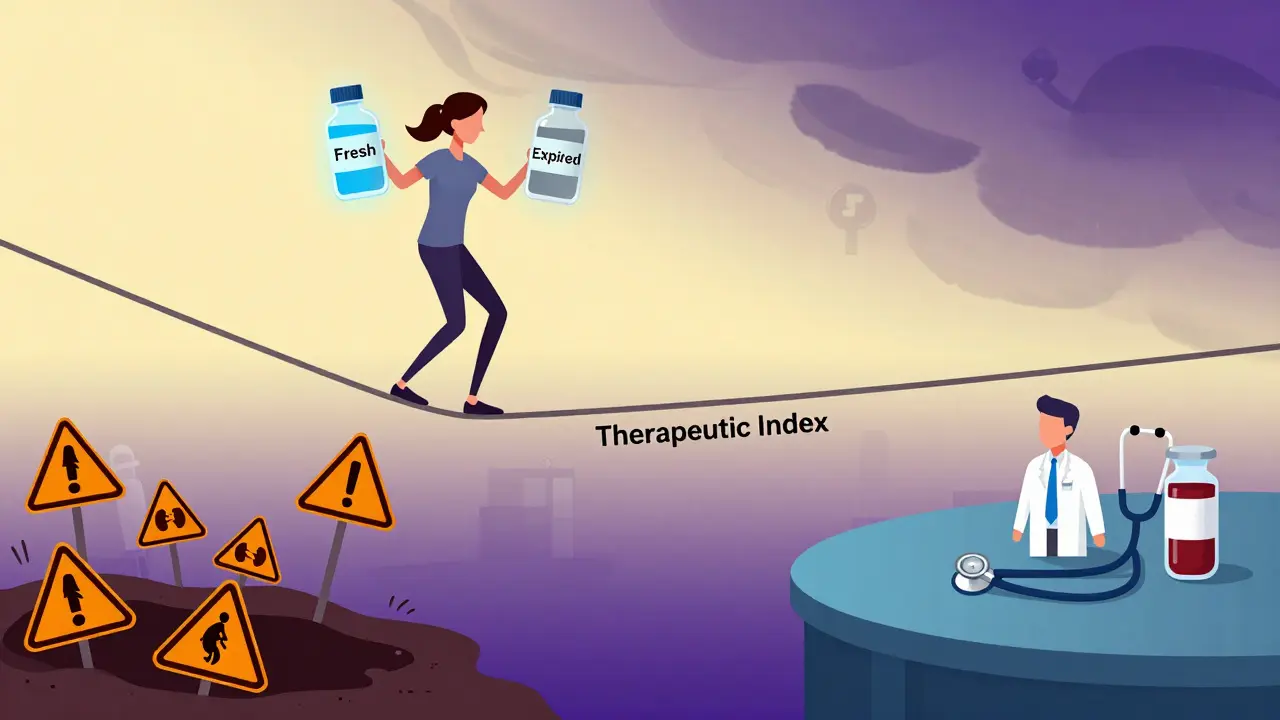
What Happens When You Take an Expired NTI Drug?
There’s no single study that says, "Taking expired warfarin caused 3,000 strokes." But we have enough clinical evidence to know the pattern:
- A 2014 study in the Journal of Clinical Pharmacy and Therapeutics found that NTI drug errors were three times more likely to cause serious harm than other medications.
- Pharmacists report that 67% of them refuse to substitute NTI generics without direct physician approval - because they’ve seen patients crash after switching brands.
- The American Society of Health-System Pharmacists warns that "even minor changes in concentration" for NTI drugs require dose adjustments - and expired drugs introduce uncontrolled changes.
- The NIH’s MedlinePlus explicitly states: "Patients on lithium should never use expired medication."
Imagine this: You’ve been on levothyroxine for 5 years. Your dose is perfect. Your TSH is stable. You find an old bottle in the back of your cabinet. "It’s only 8 months past the date," you think. You take it. Within weeks, you’re exhausted, gaining weight, feeling depressed. Your doctor adjusts your dose - but it doesn’t help. Why? Because the expired pill delivered only 85% of the intended hormone. Your body never got the signal to stop making TSH. By the time you realize it, your thyroid function is out of balance - and it takes months to fix.
What Should You Do?
If you take any of these drugs, here’s what you need to do:
- Never use expired NTI medications. Not even one pill. Not "just in case."
- Check your supply every 3 months. Set a calendar reminder. If it’s close to expiring, call your pharmacy. Most can send a refill early.
- Store them properly. Keep them in a cool, dry place. Not the bathroom. Not the car. Heat and moisture break down drugs faster.
- Ask your pharmacist about alternatives. Some NTI drugs come in blister packs with expiration dates printed on each pill. Others are available in liquid form with shorter shelf lives - but more predictable absorption.
- Don’t share or borrow. Even if someone has the same condition, their dose is unique to them.
Hospitals and pharmacies treat NTI drugs as "high-alert medications." That means double-checks, barcode scans, and independent verification before dispensing. You should treat your own supply with the same caution.
What About Studies That Say Most Drugs Last Years Beyond Expiration?
You might have heard that the FDA found most drugs remain effective for years after expiration. That’s true - for ibuprofen, antibiotics, or allergy pills. But those drugs have wide therapeutic windows. You can take 400 mg or 800 mg of ibuprofen - both are safe. The difference between 400 mg and 360 mg? Not life-changing.
NTI drugs don’t have that luxury. The 1985 FDA study that found 90% potency after 10 years? It didn’t test NTI drugs. It tested common painkillers and cold medicines. Applying those results to warfarin or lithium is like saying, "A parachute that works 90% of the time is fine."
Pharmaceutical manufacturers are starting to recognize this. In 2022, 78% of major drugmakers began extended stability testing for NTI drugs - even beyond the labeled expiration. But that doesn’t mean it’s safe to use them. Those tests are done in controlled labs, not in your medicine cabinet.
Final Reality Check
You don’t need to be a doctor to understand this: If your life depends on a drug being exactly right - and the drug can degrade - then you can’t gamble with an expired bottle.
It’s not about being paranoid. It’s about being smart. NTI drugs are like precision tools. You wouldn’t use a worn-out wrench on a critical bolt. You wouldn’t fly with a cracked wing. Don’t take an expired NTI drug.
When in doubt, throw it out. Get a new prescription. The cost of a new bottle is nothing compared to the cost of a hospital stay - or worse.
Can I still use an NTI medication if it’s only a few months past its expiration date?
No. Even a few months past expiration can mean a 5-15% loss in potency for NTI drugs. For medications like warfarin, lithium, or digoxin, that small drop can push your blood levels out of the safe range. There’s no safe grace period. If it’s expired, replace it.
Is it safe to take NTI drugs if they were stored in the fridge?
Storage matters - but it doesn’t override expiration. Refrigeration can slow degradation for some drugs, like levothyroxine, but it doesn’t stop chemical breakdown. The expiration date is based on stability testing under labeled storage conditions. Even if kept cold, an expired NTI drug is not guaranteed to be safe or effective.
Can I split an expired NTI pill to stretch my supply?
Never. Splitting pills already introduces variability in dose - and with NTI drugs, that variability can be dangerous. If the pill is expired, the active ingredient may have degraded unevenly. A half-pill might contain 60% of the intended dose - or 120%. There’s no way to know. Always use a full, unexpired pill as prescribed.
Do pharmacies test expired NTI drugs before dispensing?
No. Pharmacies rely on manufacturer expiration dates and packaging integrity. They don’t test potency. If a drug is expired, it’s removed from inventory. If you receive an expired NTI drug, return it immediately. You have the right to a fresh, unexpired supply.
What should I do if I accidentally took an expired NTI medication?
Call your doctor or pharmacist right away. Don’t wait for symptoms. For drugs like warfarin or lithium, even one dose can change your blood levels. Your provider may order a blood test to check your concentration and adjust your dose if needed. Don’t panic - but don’t delay.


David Robinson
March 15, 2026 AT 22:21Man, I just took my grandma's old warfarin last week because I was too lazy to call the pharmacy. Thought it was fine - it was only 3 months past. Now I'm sitting here Googling "what happens if you take expired blood thinners" like a total idiot. Don't be me.
Jeremy Van Veelen
March 15, 2026 AT 23:23Let me get this straight - you're telling me that a drug that keeps people from dying suddenly turns into a ticking time bomb if it's 8 months past its expiration? That's not science. That's pharmaceutical propaganda. The FDA's own data says most drugs are good for years. Why are NTI drugs the exception? Because they're expensive. Because Big Pharma wants you to keep buying. I'm not falling for it.
My uncle took lithium for 17 years. Expired? Yes. Still alive? Also yes. Coincidence? Or are we being lied to?
jerome Reverdy
March 17, 2026 AT 18:24NTI drugs are fascinating from a pharmacokinetic standpoint. The margin for error is so narrow because the target receptor binding affinity is razor-sharp - think of it like a key that only turns in a lock if it's perfectly aligned. Degradation alters the molecular conformation just enough to throw off that fit. It's not about potency loss alone - it's about off-target binding. A 5% drop in active ingredient might seem trivial, but if the degradation byproduct starts binding to GABA receptors or sodium channels? That's when you get seizures or arrhythmias. We don't even fully map all metabolites for most of these drugs. So yeah - don't risk it. It's not fearmongering. It's biochemistry.
Nicole Blain
March 19, 2026 AT 04:38Yikes 😳 I just threw out my entire levothyroxine stash after reading this. Like... I had a bottle from 2023. "It's probably fine," I thought. Nope. Not anymore. Thanks for the wake-up call 💊🫡
Kathy Underhill
March 21, 2026 AT 00:32Srividhya Srinivasan
March 22, 2026 AT 18:37Of course they say it's dangerous - the pharmaceutical mafia doesn't want you to know that pills last forever! They're making billions off you replacing your meds every 3 months! I've been taking expired digoxin since 2020 - and guess what? I'm healthier than ever! The FDA is just scared of competition! Also, my cousin in Thailand says they use expired meds all the time and no one dies - so why are we being terrorized here?
And why is everyone so scared of a little chemical change? Isn't the human body supposed to adapt? Isn't that what evolution is? We're being conditioned to fear medicine like it's poison. Wake up!
Prathamesh Ghodke
March 23, 2026 AT 20:59Hey, I'm a pharmacist in Mumbai - we see this all the time. People here? They'll take anything. Expired? Sure. Moldy? Okay. But NTI drugs? That's when we shut it down. I had a guy come in with a 2-year-old carbamazepine bottle. Said his seizures stopped after he took it. I asked for his last blood level. He had no idea. That's not bravery - that's Russian roulette with your brain.
Don't be cool. Be smart. Replace it. Your brain doesn't care how "eco-friendly" you are.
Stephen Habegger
March 24, 2026 AT 11:10Good post. Really clear. I didn't realize how fragile these meds are. I always thought expiration = "might not work as well." Didn't know it could actively hurt you. I'm checking my cabinet right now. Thanks for the heads-up!
Justin Archuletta
March 25, 2026 AT 07:02YESSSSSSS. I just got my new warfarin refill today. My doc said "if it's expired, toss it. No exceptions." I thought he was being dramatic. Now I get it. I'm printing this out and taping it to my medicine cabinet. Life-saving info. Thank you.
Sanjana Rajan
March 25, 2026 AT 08:37Ugh. Another fear-mongering post from people who think they're doctors. I take expired lithium and I'm perfectly fine. My doctor doesn't even check my levels anymore - says I'm "stable." So why are you scaring people? You're probably just trying to sell more pills. Get off your high horse.
Also, why are you so obsessed with expiration dates? I've had canned food for 10 years. It's still good. Why should medicine be different? Hypocrites.
Kyle Young
March 25, 2026 AT 19:22If we accept that expiration dates are based on stability testing under controlled conditions, then it follows that environmental variables - heat, humidity, light - are uncontrolled variables in the home setting. Thus, the expiration date is not merely a temporal marker, but a boundary of environmental integrity. The question becomes: can we, with epistemic certainty, assert that the molecular structure remains intact outside the laboratory? The answer, empirically, is no - particularly for compounds with high reactivity or low solubility. Therefore, the ethical imperative is not to gamble with degradation pathways we have not fully characterized. The cost of error is not merely financial - it is ontological.
Aileen Nasywa Shabira
March 26, 2026 AT 22:15Oh wow. So now we're supposed to believe that a pill from 2024 is suddenly a death trap? Did you know that aspirin from 1975 was tested and still worked? Maybe the real danger is trusting pharmaceutical companies who charge $300 for a 30-day supply of something that costs $2 to make. Maybe the real threat is greed - not expired meds.
Also, why are you so scared of degradation? Maybe your body needs the byproducts. Maybe the "toxic" metabolites are actually healing you. Science doesn't know everything - maybe you're the experiment.
Kendrick Heyward
March 28, 2026 AT 22:12My mom took expired digoxin for 4 years. She died in her sleep. They said it was "natural causes." I know better. I know it was because she trusted the expiration date. Now I cry every time I see a pill bottle. I don't trust anything anymore. 😭
lawanna major
March 29, 2026 AT 21:09What's fascinating is how this intersects with the broader issue of pharmaceutical trust. We treat expiration dates as absolute, yet we rarely question the testing parameters - temperature, humidity, packaging, light exposure. Most people store meds in bathrooms or cars. The expiration date assumes ideal conditions. Reality? Not so much. So the real takeaway isn't just "don't use expired" - it's "store properly and verify regularly." The date is a baseline, not a guarantee. And yes - for NTI drugs, even that baseline is non-negotiable.
Ryan Voeltner
March 29, 2026 AT 21:59