
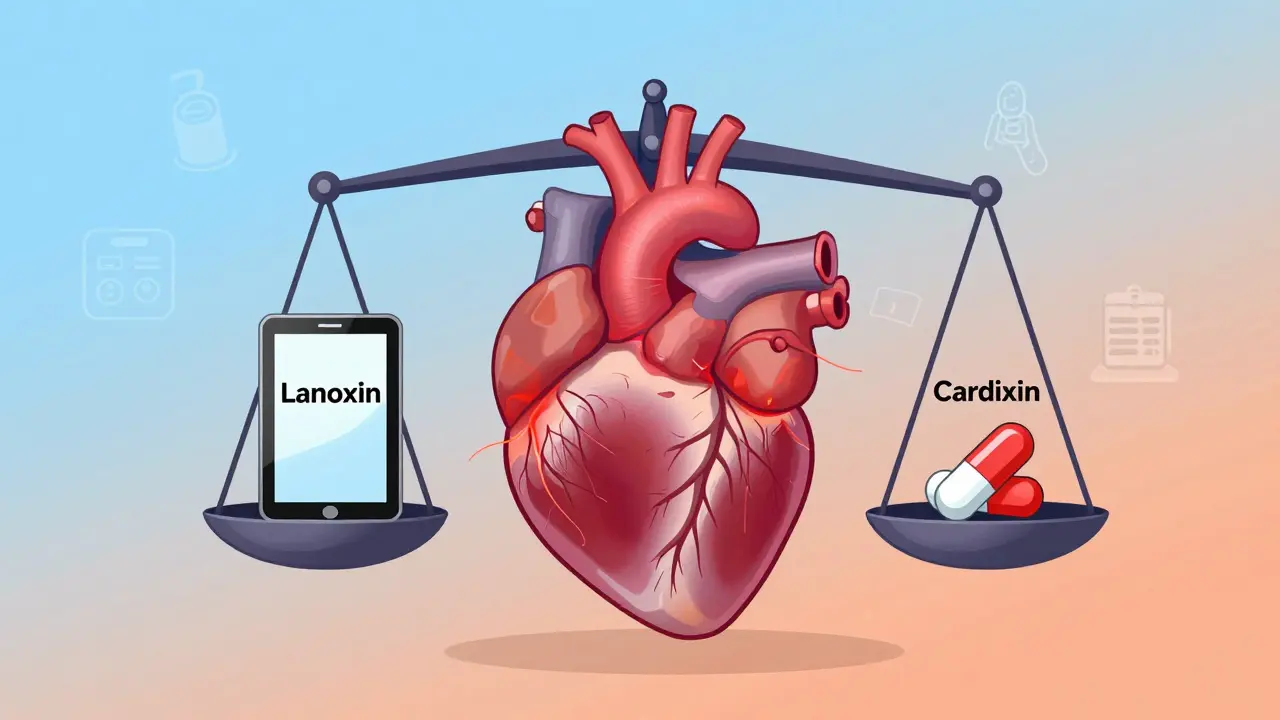
When you take digoxin, you're not just taking a pill-you're managing a delicate balance between life-saving benefits and potentially deadly risks. Digoxin is used for heart failure and atrial fibrillation, but its therapeutic range is razor-thin: 0.5 to 2.0 ng/mL. Go just a little too high, and you risk vomiting, confusion, dangerous heart rhythms, or even death. Go too low, and your heart condition worsens. This is why digoxin is classified as a narrow therapeutic index (NTI) drug. And when it comes to generic versions, things get even trickier.
Why Digoxin Generics Are Not Like Other Generics
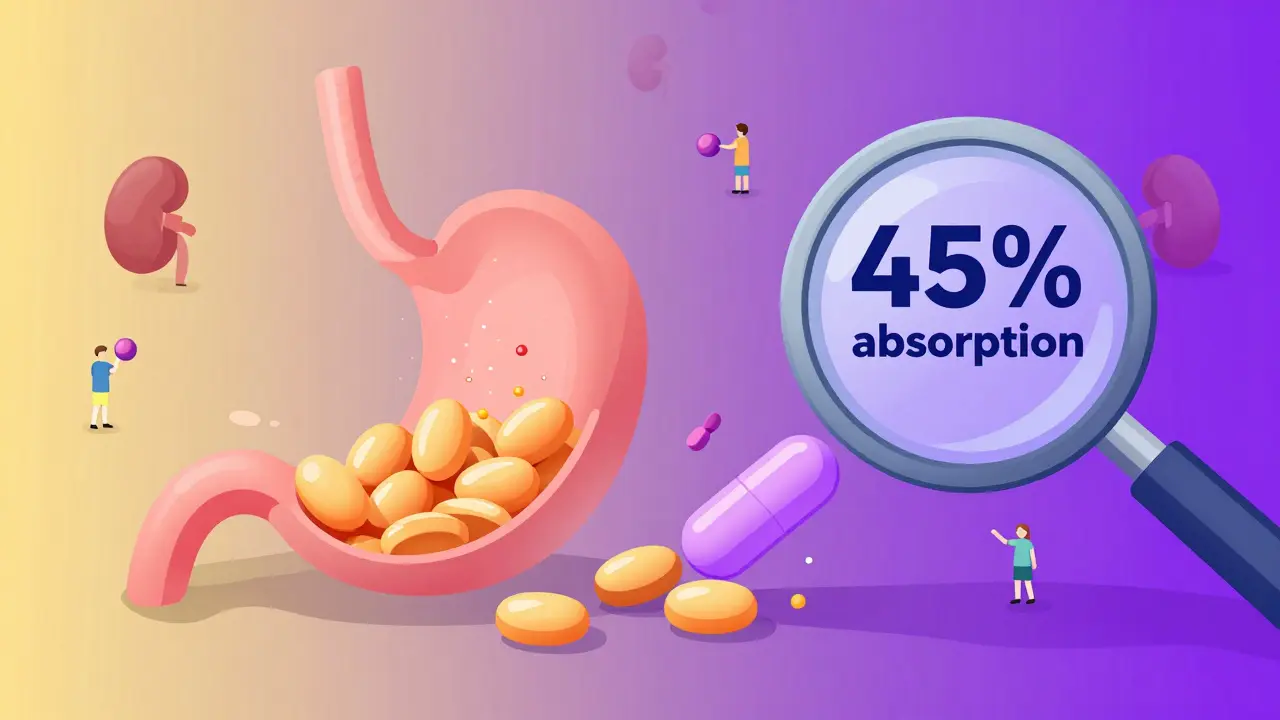
Most generic drugs are considered interchangeable because their absorption in the body is close enough to the brand-name version. But digoxin is different. Even small differences in how much of the drug gets into your bloodstream can cause serious harm. The FDA treats digoxin like a new drug, not just another generic. To get approved, a generic digoxin tablet must prove it delivers between 80% and 125% of the amount of drug that the brand-name version (Lanoxin) delivers. That sounds strict, and it is. But here’s the catch: that range is based on average results across a group of healthy volunteers.One study in Saudi Arabia tested a generic called Cardixin against Lanoxin in 12 men. The average absorption was well within the acceptable range. So why the concern? Because one person might absorb only 45% of the drug, while another absorbs 110%. If the average of all participants lands in the 80-125% window, the FDA approves the generic. But for the person who absorbs only 45%? That’s not safe. And if they switch from one generic to another-say, from Cardixin to a different brand-they might suddenly absorb even less, or suddenly absorb too much.
Switching Generics Can Be Dangerous
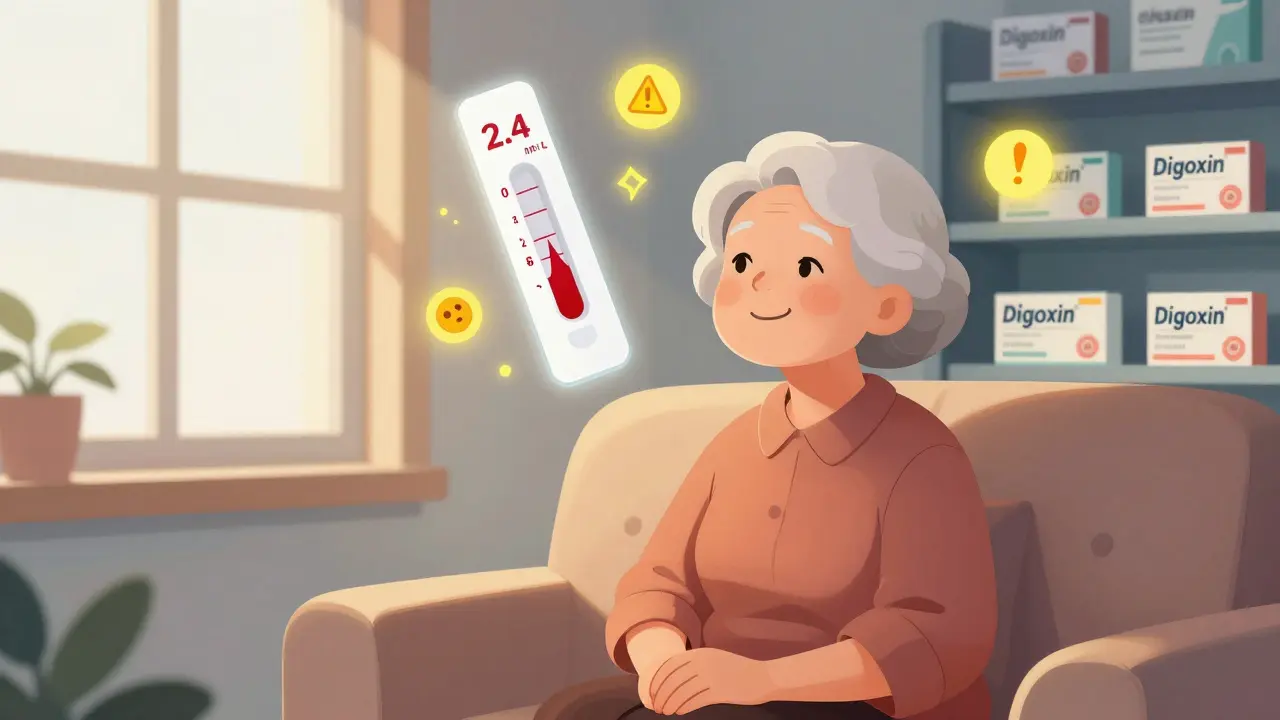
Many patients are switched between generic digoxin brands because of cost, pharmacy stock, or insurance changes. But there are no studies comparing one generic to another. The FDA only requires each generic to match the brand-name drug-not other generics. So if you’ve been stable on Generic A, and your pharmacy switches you to Generic B, you could be at risk. Real-world cases show serum digoxin levels changing by more than 25% after a switch. That’s enough to push someone from a safe level into toxicity-or out of the therapeutic range entirely.Imagine an 82-year-old woman with heart failure. She’s been on digoxin for years. Her levels are steady at 0.8 ng/mL-perfect. Then her pharmacy runs out of her usual generic and gives her a different one. Three days later, she feels nauseous and sees yellow halos around lights-a classic sign of digoxin toxicity. Her doctor checks her blood level: it’s now 2.4 ng/mL. She almost died because of a switch no one warned her about.
Formulation Matters More Than You Think
Not all digoxin products are the same. Tablets are the most common, but they don’t absorb the same way for everyone. Bioavailability ranges from 60% to 80% in tablets, meaning some people get only 60% of the labeled dose into their bloodstream. The elixir (liquid) form, however, absorbs better-up to 70% to 85% of the dose. That’s why some patients do better on liquid. But if you’re switched from tablet to liquid without adjusting the dose, you could overdose. And if you’re switched from liquid to tablet? You might not get enough.Even the way the tablet is made matters. Dissolution rates-the speed at which the drug breaks down in your stomach-can vary between manufacturers. One tablet might dissolve in 15 minutes; another might take 45. That delay can change how much drug gets absorbed, especially in elderly patients with slower digestion or reduced kidney function.
Who’s Most at Risk?
Older adults make up the majority of digoxin users. Their kidneys don’t clear the drug as well, so it builds up. Many take other medications-antibiotics, diuretics, or even over-the-counter antacids-that can interfere with digoxin levels. Some have low potassium or magnesium, which increases the risk of toxicity. And because digoxin has a long half-life (about 36 hours), it lingers in the body. A small change in absorption can take days to show up in blood tests.Patients with kidney disease, those on multiple medications, and elderly individuals are the most vulnerable. Yet, they’re the ones most likely to be switched between generics. Insurance plans don’t care if a patient is stable. Pharmacies don’t track which brand they dispense. And many doctors assume “bioequivalent” means “interchangeable.” It doesn’t.
How to Stay Safe: Monitoring and Best Practices
The American College of Clinical Pharmacy and the American Heart Association agree: don’t switch digoxin brands without monitoring. Here’s what you need to do:- Always check serum digoxin levels before starting therapy-wait 4 to 7 days after the first dose or after a dose change.
- Test again 3 to 5 days after switching manufacturers or formulations (tablet to liquid, or one generic to another).
- Measure trough levels: draw blood just before your next scheduled dose, when levels are lowest and most stable.
- Target levels between 0.5 and 0.9 ng/mL for heart failure patients-lower is safer and just as effective.
- Watch for symptoms: nausea, vomiting, blurred or yellow vision, irregular heartbeat, dizziness, or worsening fatigue.
- Ask your pharmacist: Is this the same brand I’ve been taking? If not, ask your doctor to check your digoxin level.
Some hospitals now use a “digoxin consistency protocol.” If a patient is stable on a specific generic, they keep them on it. If a switch is unavoidable, they schedule a follow-up blood test within a week. That’s not standard everywhere-but it should be.
The Bottom Line: Don’t Assume Equivalence
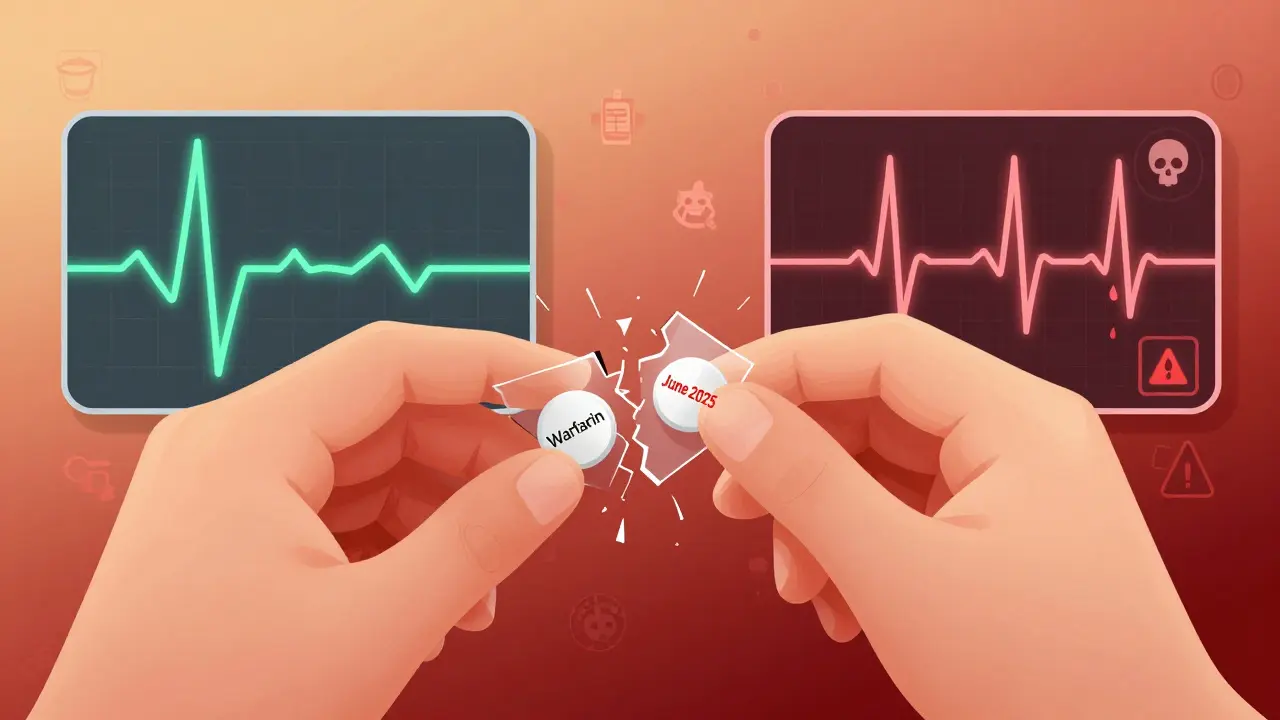
Yes, FDA-approved digoxin generics meet bioequivalence standards. But those standards were designed for population averages-not individual safety. For a drug as dangerous as digoxin, that’s not enough. Two generics can both be “bioequivalent” to Lanoxin, but not to each other. And when you’re the patient, you don’t care about the average-you care about what happens to you.The best strategy? Stick with the same manufacturer and formulation. If you’re doing well, don’t change. If you must switch, test your blood level. And if your doctor doesn’t mention monitoring, ask. Your life might depend on it.
Can I switch between generic digoxin brands without any risk?
No. Even though each generic must meet FDA bioequivalence standards compared to the brand-name drug, there are no studies comparing one generic to another. Switching between different generic manufacturers can cause unpredictable changes in blood levels-sometimes by more than 25%. This can lead to toxicity or loss of effectiveness. Always check your digoxin serum level 3 to 5 days after switching.
Why is digoxin more dangerous than other generic drugs?
Digoxin has a narrow therapeutic index (NTI), meaning the difference between a safe dose and a toxic one is very small. The therapeutic range is only 0.5-2.0 ng/mL. Small changes in absorption-due to different manufacturing, formulation, or individual metabolism-can push levels outside this range. Most other drugs have wider safety margins, so minor differences in bioavailability don’t cause harm. With digoxin, even a 10% change can be dangerous.
Is the liquid form of digoxin safer or more reliable than tablets?
The liquid form (elixir) is more consistently absorbed than tablets, with bioavailability of 70-85% compared to 60-80% for tablets. This makes it a better choice for patients with irregular digestion or those who need precise dosing. However, if you switch from tablet to liquid without adjusting the dose, you can overdose. Always consult your doctor before changing formulations.
How often should digoxin levels be checked?
Check levels before starting therapy (4-7 days after the first dose), and then whenever there’s a change in dosage, kidney function, other medications, or the generic brand. After switching digoxin products, recheck within 3-5 days. Stable patients on the same formulation may only need testing every 6-12 months, but those with kidney disease or on multiple drugs should be monitored more frequently.
What should I do if I notice side effects after switching digoxin brands?
If you experience nausea, vomiting, vision changes (like yellow halos), dizziness, irregular heartbeat, or worsening heart failure symptoms after switching digoxin brands, contact your doctor immediately. These are signs of possible toxicity. Do not stop taking the medication without medical advice, but request a serum digoxin level test as soon as possible. Keep a record of when you switched brands and when symptoms started-this helps your doctor determine the cause.

John Sonnenberg
February 7, 2026 AT 12:27Joshua Smith
February 8, 2026 AT 16:58Elan Ricarte
February 8, 2026 AT 21:50THANGAVEL PARASAKTHI
February 10, 2026 AT 00:52Ritteka Goyal
February 10, 2026 AT 07:13Jonah Mann
February 11, 2026 AT 16:27Scott Conner
February 12, 2026 AT 23:36Marie Fontaine
February 13, 2026 AT 05:10Tatiana Barbosa
February 14, 2026 AT 21:39