
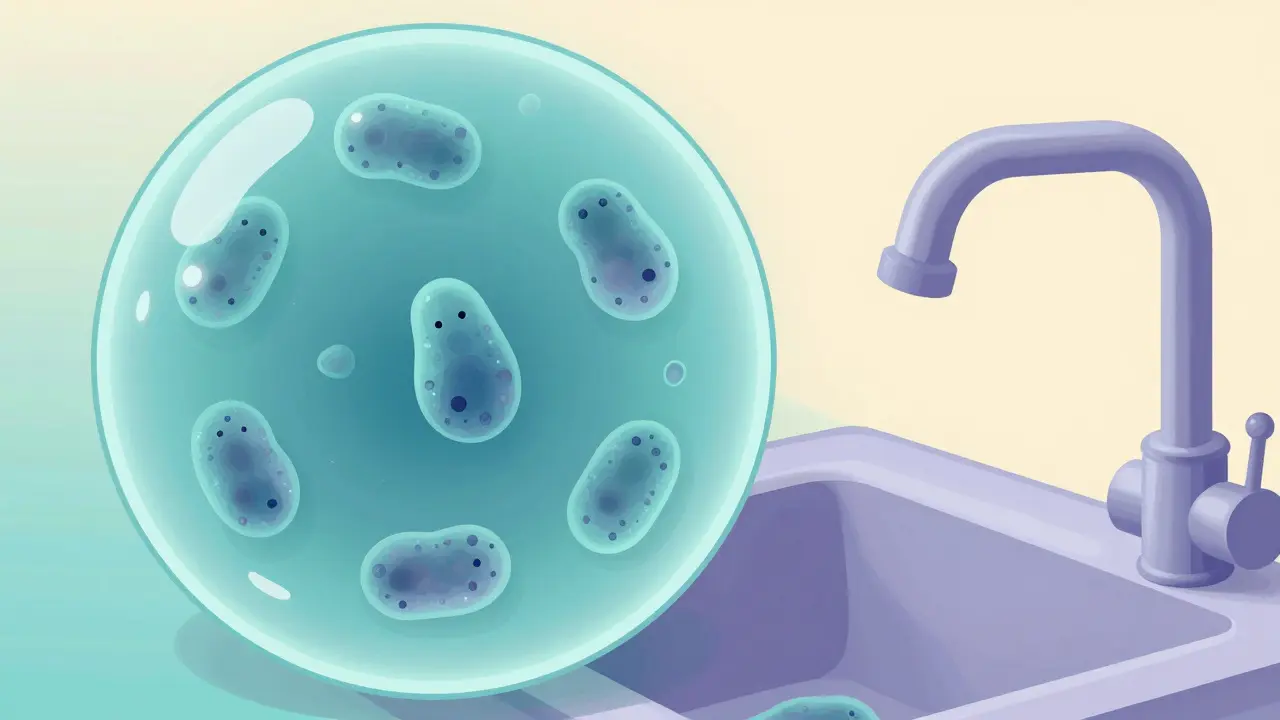
When you think of parasites, you might picture tropical jungles or dirty water in faraway countries. But here’s the truth: giardia and pinworms are hiding in plain sight - in your kitchen sink, your child’s backpack, or even your own bedding. These aren’t rare or exotic threats. They’re common, contagious, and often misunderstood.
What Giardia and Pinworms Actually Are
Giardia isn’t a worm. It’s a microscopic parasite called Giardia lamblia, a single-celled organism shaped like a pear with tiny whip-like tails that let it swim. It lives in the small intestine and causes giardiasis - a nasty digestive infection. The real danger? It doesn’t live as a trophozoite (the active form) for long. It turns into a cyst - a tough, protective shell that can survive for months in cold water, on surfaces, or even in soil.
Pinworms, or Enterobius vermicularis, are different. They’re tiny white worms, about the length of a staple. Adult females crawl out of the anus at night to lay eggs around the skin. These eggs are sticky, light, and can float in the air. They land on bedding, toys, doorknobs, and clothing. A single egg can start a new infection.
Both are spread through the fecal-oral route. That means you swallow them. Not because you ate something gross - but because you touched something contaminated and then touched your mouth. Kids are especially vulnerable. They put things in their mouths. They don’t always wash hands after using the bathroom. And they’re often the first ones infected - then they bring it home to everyone else.
How You Get Infected
Giardia spreads mostly through water. Think camping trips, backyard pools, or even municipal water systems that haven’t been filtered properly. The cysts are resistant to chlorine. Boiling water for one minute kills them. So does using a filter with pores smaller than 1 micron. Bottled water? Not always safe - some brands just bottle tap water.
Food can carry giardia too. If someone with the infection doesn’t wash their hands after using the bathroom and then handles food, it’s game over. Raw produce washed in contaminated water is a known source. Restaurants, daycare centers, and camps are high-risk spots.
Pinworms don’t need dirty water. They need people. A child scratches their itchy bottom at night. Eggs get under their fingernails. They touch the bed, the TV remote, their lunchbox. Someone else touches the same surface and then eats without washing hands. Boom - infection. Airborne eggs? Yes. Studies show they can become airborne when shaking out sheets or blankets. That’s why pinworm outbreaks hit families hard - one person, then the whole household.
Even adults aren’t immune. Travelers to developing countries get giardia from unboiled water. Parents of toddlers get pinworms from changing diapers. Immunocompromised people - those with HIV, cancer treatment, or organ transplants - can suffer longer, more severe infections. Giardia can last for months in these cases, leading to malnutrition and weight loss.
Symptoms: What to Look For
Giardia symptoms hit 1 to 14 days after swallowing cysts. The average? Seven days. You might get:
- Watery, foul-smelling diarrhea - sometimes explosive
- Bloating and gas that won’t quit
- Stomach cramps and nausea
- Fatigue and weakness
- Weight loss from poor nutrient absorption
Some people feel fine - no symptoms at all. That’s the sneaky part. They’re spreading it without knowing.
Pinworms? Almost always it’s one thing: intense itching around the anus. Especially at night. That’s when the female worm crawls out to lay eggs. The itch can be so bad it wakes you up. Kids might scratch until they bleed. They might become irritable, have trouble sleeping, or even develop a rash from constant scratching.
Don’t confuse pinworm itching with diaper rash or yeast infections. If the itching is worst at night and doesn’t improve with creams, think pinworms. And yes - it’s possible to have pinworms without itching. Up to 20% of cases are silent.

How Doctors Diagnose These Infections
For giardia, stool tests used to be the go-to. But they’re unreliable. Microscopy misses up to 30% of cases. Today, the gold standard is a stool antigen test - it looks for giardia proteins. It’s 95% accurate. If your doctor suspects giardia, they’ll order this test. Multiple samples over a few days may be needed if symptoms persist but the first test is negative.
Pinworms? The scotch tape test. It sounds silly, but it works. First thing in the morning, before bathing or using the toilet, press a piece of clear tape against the skin around the anus. Peel it off and stick it to a slide. A lab tech looks for eggs under a microscope. One test catches about half the cases. Three tests over three days catch 90%. No stool sample needed. No blood test. Just tape.
Doctors don’t always test right away. Many assume it’s a stomach bug. A 2022 JAMA Internal Medicine study found primary care doctors correctly identify giardia in only 65% of cases. If you’ve had diarrhea for more than a week - especially after travel, camping, or daycare exposure - push for a test.
Treatment: What Actually Works
Giardia is treatable. But not all meds are created equal.
- Metronidazole (250 mg, 3 times a day for 5-7 days) - the most common. Side effects? Metallic taste (78% of users), nausea (65%), and dizziness. Avoid alcohol - it causes severe reactions.
- Tinidazole - one 2g dose. Just one pill. Fewer side effects. Works just as well.
- Nitazoxanide - 500 mg twice daily for 3 days. Safe for kids as young as 1. Good option if you can’t tolerate metronidazole.
Cure rates? 80-95% with the right drug. But reinfection is common. If symptoms come back, it’s not always drug resistance. More likely, you got re-exposed. Someone in your house is still shedding cysts.
Pinworms? Easier to treat.
- Mebendazole - 100 mg single dose. Repeat after 2 weeks.
- Albendazole - 400 mg single dose. Also repeat after 2 weeks.
- Pyrantel pamoate - 11 mg per kg (up to 1 gram). One dose, repeat in 2 weeks.
The CDC updated its guidelines in January 2024. For stubborn cases, they now recommend triple-dose albendazole (400 mg on days 1, 8, and 15). In a recent trial, this worked in 98% of cases.
Important: Treat everyone in the household at the same time. If you treat just the child, the parent who changed the diaper will reinfect them. Studies show 75% of household members are infected when one person has pinworms.
Prevention: Stop the Cycle
Treatment alone won’t fix this. You have to break the chain.
For giardia:
- Boil water for 1 minute if you’re unsure of the source - camping, travel, or during boil advisories.
- Use a water filter labeled to remove cysts (pore size under 1 micron).
- Wash hands with soap and water after using the bathroom, before eating, and after changing diapers.
- Avoid swallowing water in pools, lakes, or rivers.
- Wash fruits and vegetables with clean water - even if they’re labeled organic.
For pinworms:
- Wash hands immediately after using the bathroom and before meals.
- Keep fingernails short. No nail-biting.
- Change underwear and pajamas daily. Wash them in hot water (at least 130°F) and dry on high heat.
- Shower in the morning to wash off eggs laid overnight.
- Wash all bedding, towels, and stuffed animals after treatment. Vacuum carpets and wipe down surfaces.
- Don’t shake out bedding - that spreads eggs into the air.
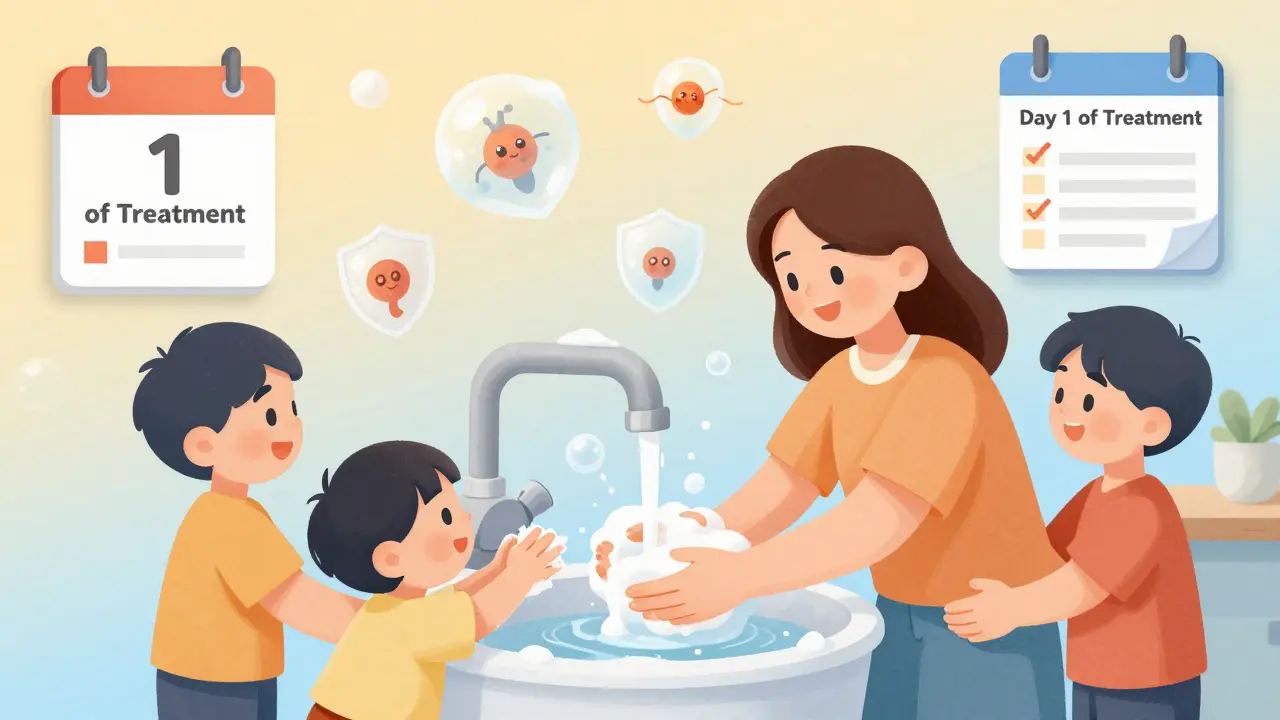
Handwashing alone reduces transmission by 30-50%, according to WHO. Simple? Yes. But most people don’t do it right. You need 20 seconds - sing "Happy Birthday" twice.
Why Some People Keep Getting Sick
Reinfection is the #1 reason treatment fails. One Reddit user, u/GIWarrior, treated their whole family twice for pinworms. Still got it back. Why? Eggs survived on the couch. They didn’t vacuum or wash the curtains. The eggs were still alive - waiting.
Another issue: drug resistance. A 2024 study found 15% of giardia cases in Southeast Asia no longer respond to metronidazole. That’s up from 5% in North America. Tinidazole and nitazoxanide still work - but we’re running out of options.
Climate change is making things worse. Warmer temperatures and heavy rains increase water contamination. The Merck Manual predicts giardia will spread into 20-30% more temperate areas by 2040. Brisbane, Australia - where this is being written - could see more cases as rainfall patterns shift.
What to Do After Treatment
Don’t just take the pill and forget it.
- For giardia: Avoid food handling, childcare, or swimming pools for at least 2 weeks after symptoms stop. You can still shed cysts.
- For pinworms: Keep treating the environment for 3 weeks. Eggs can live 2-3 weeks on surfaces.
- Watch for symptoms to return. If they do, repeat treatment and retest.
- Keep a symptom diary. Note when itching started, what you ate, who was sick around you.
Most people recover fully. But chronic giardia can lead to lactose intolerance that lasts for months - even after the parasite is gone. That’s because the infection damages the lining of the small intestine. You might need to avoid dairy for a while.
When to See a Doctor
See a doctor if:
- Diarrhea lasts more than a week
- You’re losing weight or feeling extremely tired
- Children have persistent itching that disrupts sleep
- You’ve been treated but symptoms came back
- You’re pregnant, immunocompromised, or caring for someone who is
Don’t wait. These infections are treatable - but only if you catch them early.
Can you get giardia from a swimming pool?
Yes. Giardia cysts survive chlorine in pools. If someone with giardia has a bowel movement in the water, others can swallow it. That’s why public pools are high-risk during outbreaks. Avoid swallowing pool water, and don’t swim if you’re sick.
Do pinworms go away on their own?
Sometimes, yes - but not reliably. The worms die in about 6 weeks. But the eggs hatch, and the cycle continues. Without treatment, you can infect others and re-infect yourself. Treatment breaks the cycle and stops the itching fast.
Is giardia contagious between people?
Absolutely. You don’t need to drink dirty water to get it. Touching a contaminated surface - like a toilet handle, diaper changing table, or kitchen counter - and then touching your mouth can spread giardia. It’s highly contagious in households and daycare centers.
Can pets give you giardia or pinworms?
Pets can carry giardia, but the type that infects dogs and cats is usually different from the human strain. Transmission from pets to people is rare. Pinworms, however, are human-only. Your dog or cat can’t give you pinworms.
How long do pinworm eggs live on surfaces?
Up to 2-3 weeks on surfaces like bedding, toys, or doorknobs. They’re tough. That’s why washing everything in hot water and vacuuming thoroughly is critical after treatment. Eggs can even become airborne - so don’t shake out sheets.
Are there natural remedies for giardia or pinworms?
Garlic, pumpkin seeds, or herbal teas might sound appealing, but there’s no strong evidence they kill these parasites. Relying on them instead of proven medication can delay treatment and lead to complications. Stick to FDA-approved drugs - they work fast and safely.




Nancy Kou
December 20, 2025 AT 02:21Finally, someone laid out the real facts about these parasites without fluff. I thought I was the only one who knew you have to boil water even if it’s 'filtered' during camping trips. My kid got giardia last year from a backyard pool - no one told us chlorine doesn’t kill cysts.
Dorine Anthony
December 20, 2025 AT 18:43This is the most practical post I’ve read all year. I’m printing this out and taping it to our fridge. Handwashing for 20 seconds? I’m finally doing it. No more singing 'Happy Birthday' twice - now I’m doing it three times just to be safe.
Chris Clark
December 21, 2025 AT 20:22Man, I used to think pinworms were just a kid thing until my niece came over and my wife started scratching at 3am. We didn’t even know it was possible to get it from shaking out sheets. That airborne egg thing? Mind blown. I vacuumed the whole house after treatment - even the curtains. No joke, it worked. Also, mebendazole is cheaper than coffee at Starbucks. Buy it.
Hussien SLeiman
December 23, 2025 AT 17:03Let’s be real - this whole post is just fear-mongering dressed up as public health advice. You act like every kitchen sink is a parasite breeding ground, but the truth is most people’s immune systems handle these things just fine. The real issue is the medical-industrial complex pushing unnecessary drugs. Metronidazole has more side effects than a bad date, and tinidazole? That’s just a branded placebo with a higher price tag. And don’t get me started on the 'scotch tape test' - it’s like something out of a 1950s school nurse’s nightmare. We’re over-testing, over-treating, and under-trusting the body’s natural defenses. Also, climate change? Please. The real reason giardia is spreading is because governments stopped funding clean water infrastructure, not because the planet is warming. Fix the pipes, not the panic.
Nicole Rutherford
December 24, 2025 AT 05:42You think you’re being helpful, but you’re just feeding paranoia. I’ve lived in three countries, worked in three daycare centers, and never once had giardia - even when I drank from the hose as a kid. Your 'gold standard' stool test? It’s a cash grab. Doctors order it because they’re scared of lawsuits, not because it’s necessary. And don’t even get me started on treating the whole household. That’s just an excuse to buy more bleach and wash everything in hot water like you’re preparing for the apocalypse. I’ve got two kids, a dog, and a husband who doesn’t wash his hands - and we’re fine. Stop making normal life feel like a biohazard zone.
Janelle Moore
December 24, 2025 AT 19:48Wait - so you’re telling me the government knows about this and still lets chlorine be used in pools? And they don’t tell people? This is a cover-up. I’ve been getting chronic diarrhea since 2020 and I never connected it to pool water. Now I’m wondering if the CDC is in on it. They’re probably working with Big Pharma to sell more metronidazole. I’ve read that 90% of bottled water is just filtered tap - and if it’s from a city with old pipes? That’s poison. They’re poisoning us slowly. And the 'scotch tape test'? That’s a trick to make you think you’re being tested when really, they’re just collecting DNA for the biometric database. Don’t trust anyone. Wash your hands. But also, don’t trust hand sanitizer - it’s full of glyphosate.
Alisa Silvia Bila
December 26, 2025 AT 03:07Just wanted to say thank you. This helped me finally understand why my daughter kept getting itchy after daycare. We did the tape test - three days in a row - and bingo. One dose of mebendazole and it’s gone. No drama. No panic. Just science.
James Stearns
December 27, 2025 AT 05:19It is with the utmost gravity that I address the preceding discourse. The dissemination of such meticulously researched and clinically validated information constitutes a vital public health imperative. One cannot overstate the significance of adhering to evidence-based protocols - particularly in light of the documented persistence of Giardia lamblia cysts in ambient environments, and the well-established fecal-oral transmission vectors delineated herein. To dismiss these findings as alarmist is not merely irresponsible - it is, in the strictest sense, a dereliction of civic duty. I urge all readers to consult the most recent CDC guidelines, to implement the prescribed environmental decontamination measures with precision, and to refrain from the pernicious influence of pseudoscientific narratives. The integrity of public health depends upon it.