
Warfarin Vitamin K Intake Calculator
Daily Vitamin K Tracker
Track your vitamin K intake to stay within the safe range of 60-120 mcg per day.
How to Use This Tool
Track your intake for 4-6 weeks. Your goal is to stay within the safe range consistently.
Aim for no more than 20% variation in daily intake. For example, if your average is 90 mcg, stay between 72-108 mcg.
Your Consistency Report
This shows how your intake compares to your target range over time.
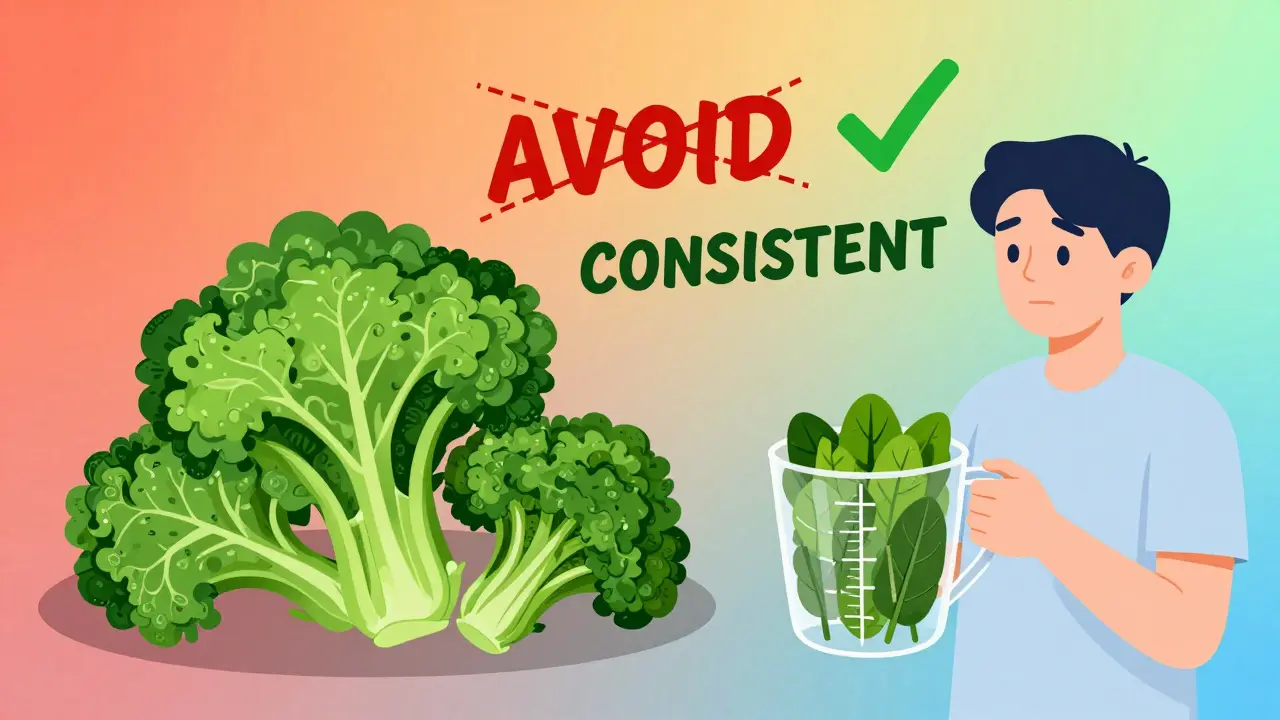
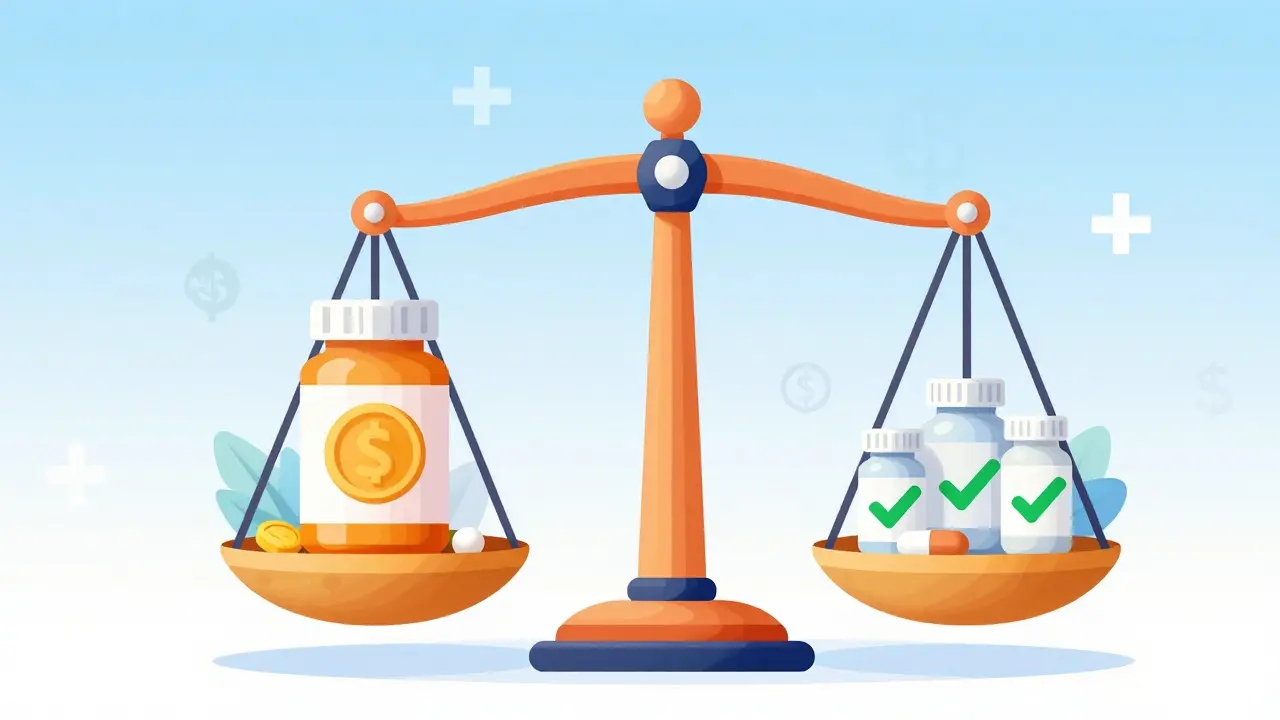
When you're on warfarin, your goal isn't to avoid vitamin K-it's to keep it steady. Many people hear "vitamin K interferes with blood thinners" and immediately cut out spinach, kale, and broccoli. That’s the wrong move. Cutting these foods doesn’t make warfarin work better. It makes your INR jump around, which is dangerous.
Why Vitamin K Matters with Warfarin
Warfarin works by blocking a protein called VKORC1, which your body needs to recycle vitamin K. Without enough recycled vitamin K, your blood can’t form clots properly. That’s the point-you’re trying to thin your blood to prevent strokes or clots. But if your vitamin K intake swings wildly, your body fights back. One day you eat a big salad, your INR drops. Next day you skip greens, your INR spikes. That’s why people end up in the ER with bleeding or clots.Research shows patients with inconsistent vitamin K intake are 2.3 times more likely to have INR levels outside the safe range. The target INR for most people is 2.0-3.0. For those with mechanical heart valves, it’s 2.5-3.5. Staying in that range cuts your risk of stroke or dangerous bleeding by nearly half.
What Happens When You Restrict Vitamin K
For years, doctors told patients to avoid vitamin K-rich foods. That advice is outdated-and harmful. A 2021 guideline from the American College of Chest Physicians explicitly says: "Dietary vitamin K restriction is not recommended and may be harmful."Why? Because when you avoid vitamin K long-term, your body starts to run low. This triggers a stress response: your liver ramps up clotting factor production to compensate. Then, when you finally eat a serving of kale, your body overreacts. Your INR plummets. You’re more likely to have clots.
One study found that patients on low-vitamin-K diets had 37% more day-to-day INR variability. Their blood was less predictable, not more. The American Heart Association now recommends eating vitamin K foods regularly-not avoiding them.
How Much Vitamin K Is Too Much? Or Too Little?
The official daily recommendation is 90 mcg for women and 120 mcg for men. But people on warfarin need more than just the RDA-they need consistency.Here’s what works in real life:
- 60-120 mcg of vitamin K per day, spread evenly
- Don’t binge on greens one day and skip them the next
- Aim for no more than a 20% variation day-to-day
That’s not as hard as it sounds. One cup of cooked spinach has 889 mcg. That’s way too much for one meal. But if you eat ¼ cup of spinach three times a week, you’re at about 220 mcg per week-roughly 30 mcg per day. That’s fine. The key is spacing it out.
Here’s a simple daily plan that keeps intake steady:
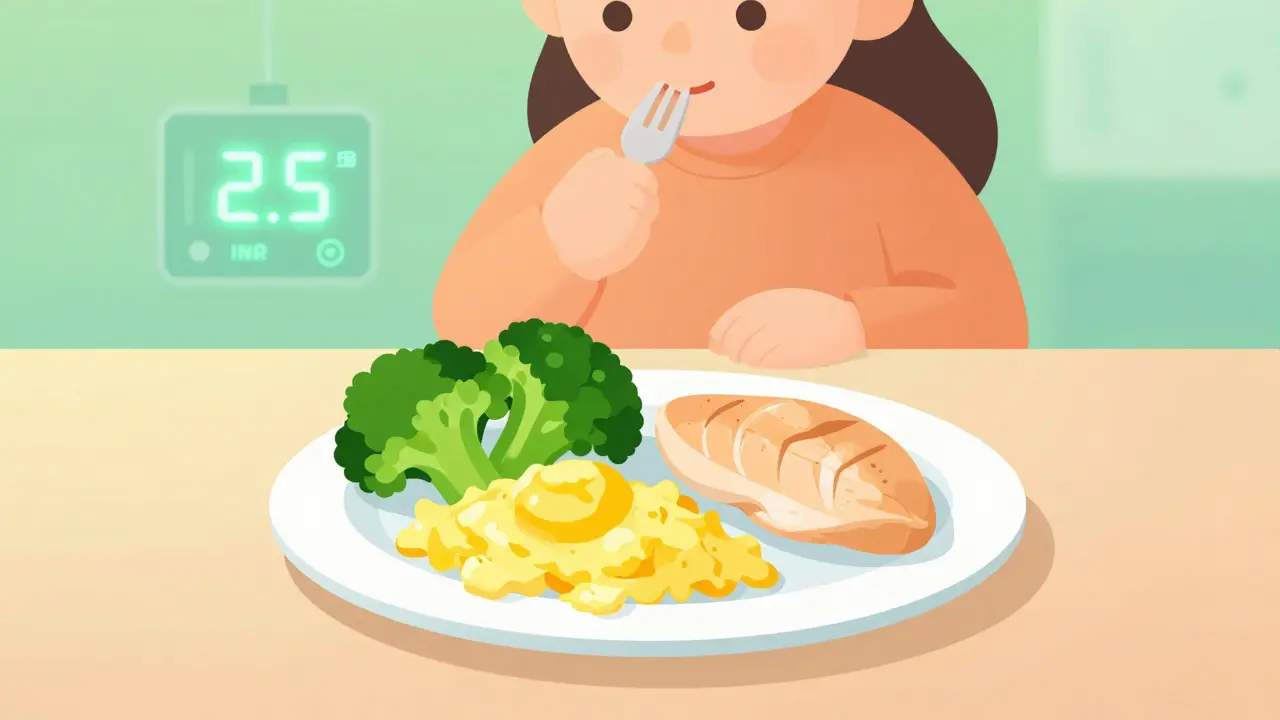
- Breakfast: 1 scrambled egg (20 mcg)
- Lunch: ½ cup cooked broccoli (102 mcg)
- Dinner: 3 oz chicken breast (2 mcg)
- Total: ~124 mcg
That’s within the safe range. And if you swap the broccoli for kale or Brussels sprouts, you’re still in the same ballpark.
What Foods Are High in Vitamin K?
You don’t need to memorize a list. Just know the big ones:- Leafy greens: kale, spinach, collards, Swiss chard
- Cruciferous veggies: broccoli, Brussels sprouts, cabbage
- Herbs: parsley, basil, cilantro
- Plant oils: soybean, canola, olive oil
- Animal sources: liver, egg yolks, cheese (these have vitamin K2, which is less impactful than K1)
Notice something? Most of these are healthy foods. You’re not being asked to give them up. You’re being asked to eat them the same way, every week.
Tracking Your Intake: The Game Changer
Most people guess how much they’re eating. That’s a recipe for disaster. A 2022 study showed visual estimation leads to 45% more variability in vitamin K intake than using measuring cups.Here’s what works:
- Use a food diary for the first 4-6 weeks
- Write down what you eat and how much (use measuring cups or a food scale)
- Use apps like Warframate (iOS/Android) to scan foods and track vitamin K
- After 6 weeks, you’ll know your routine-no need to track constantly
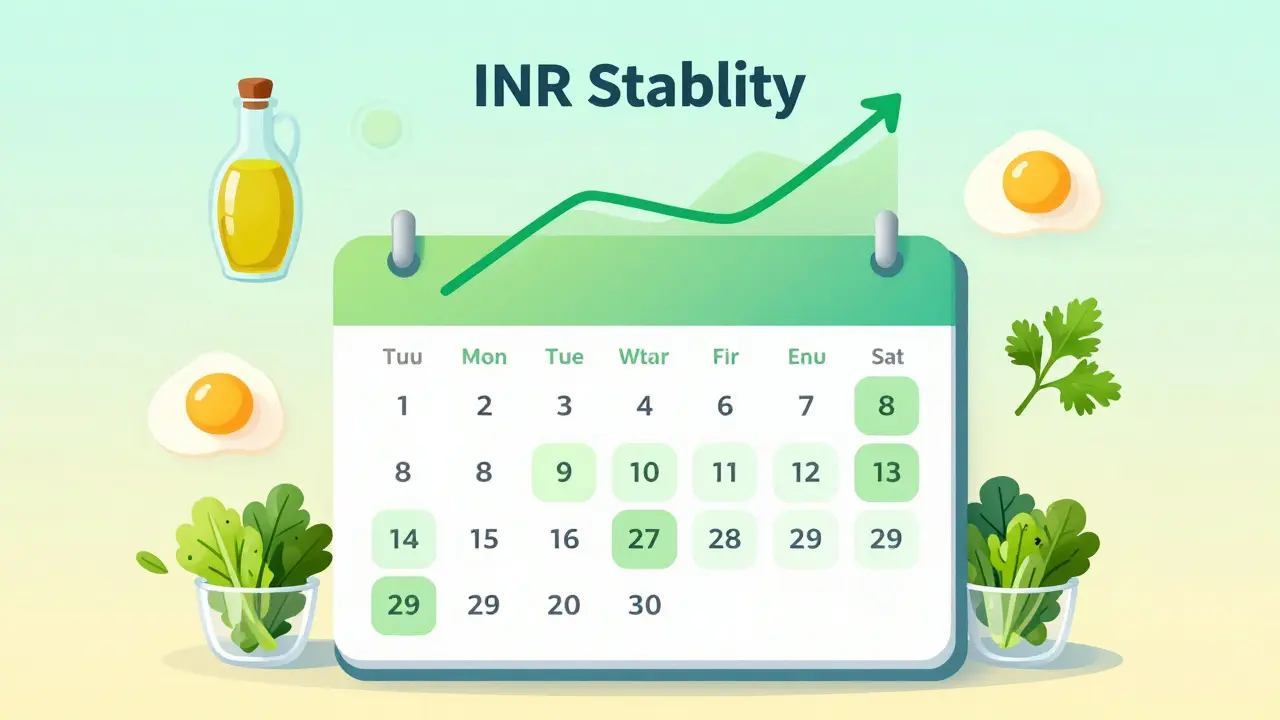
One Reddit user, u/WarfarinWarrior, shared how their INR jumped from 45% time in range to 78% after starting a simple routine: one cup of mixed greens every Tuesday and Thursday. No more guessing. No more panic when their INR was high.
Genetics Can Change the Rules
Not everyone reacts the same way to vitamin K. Your genes matter. If you have a variant in the VKORC1 or CYP2C9 gene, you’re more sensitive to vitamin K changes. Some people need to stay within ±10% variation. Others can handle ±25%.Right now, most doctors don’t test for this. But if your INR keeps fluctuating even with consistent diet, ask your pharmacist or anticoagulation clinic about genetic testing. It’s not routine-but it can explain why you’re struggling.
What About Supplements or Smoothies?
Avoid vitamin K supplements unless your doctor tells you to take them. Some people get prescribed 150 mcg daily to stabilize INR-but only under supervision. Self-supplementing can backfire.Green smoothies are another trap. One smoothie with a whole bunch of kale, spinach, and parsley can pack 1,000+ mcg of vitamin K. That’s like eating three days’ worth in one go. If you drink them, keep the ingredients and portion the same every time. Otherwise, your INR will swing.
When to Call Your Doctor
You don’t need to panic over one high or low INR. But if your INR is out of range twice in a row, or if you’ve made a big dietary change (like starting a new diet, juicing, or cutting out greens), call your anticoagulation clinic. Don’t wait for your next appointment.Also, if you’re sick, stressed, or starting a new medication (even over-the-counter ones like ibuprofen or antibiotics), your INR can change. Diet isn’t the only factor-but it’s the one you can control.
Real Results from Real Programs
Centers that teach vitamin K consistency see dramatic improvements:- Patients with structured counseling: 82% time in therapeutic range
- Patients with standard care: 63% time in therapeutic range
- Centers with vitamin K programs: 72.4% TTR vs. 61.8% without
That’s not just numbers. It means fewer hospital visits, fewer clots, fewer bleeds. It means living with more confidence.
Dr. John Fanikos at Brigham and Women’s Hospital reduced emergency visits by 28% just by teaching patients to eat vitamin K foods consistently-not to avoid them. That’s the new standard.
Final Takeaway: It’s About Predictability, Not Perfection
You don’t need to eat the exact same amount of vitamin K every single day. You need to make it predictable. Eat your greens. Eat your broccoli. Enjoy your eggs and olive oil. But keep it steady.Warfarin isn’t about fear. It’s about routine. And vitamin K isn’t your enemy-it’s your partner in staying safe.


Akshaya Gandra _ Student - EastCaryMS
January 4, 2026 AT 07:10so i been on warfarin for 3 yrs and i just found out i was doing it wrong 😅 i used to eat spinach every other day then skip for a week… my INR was all over the place. now i eat 1/4 cup spinach every tuesday and thursday like the post said and my numbers are finally chillin. no more panic calls to the clinic. 🙌
en Max
January 6, 2026 AT 01:26It is imperative to underscore, with the utmost clinical precision, that dietary vitamin K variability constitutes a statistically significant confounding variable in anticoagulation management-particularly within the therapeutic window of INR 2.0–3.0. The 2.3-fold increase in out-of-range events, as cited in the referenced literature, is corroborated by multiple prospective cohort analyses, including the 2021 ACCP guidelines, which unequivocally disavow dietary restriction as a therapeutic strategy. Consistency, not avoidance, is the cornerstone of safe, effective warfarin therapy.
Enrique González
January 7, 2026 AT 01:31Man, this post is a game-changer. I thought I had to give up my green smoothies forever. Now I just make the same one every morning-kale, banana, almond butter, flaxseed. No changes. No stress. My INR hasn’t budged in 4 months. You don’t have to live like a monk-you just gotta be consistent. Keep it simple.
Aaron Mercado
January 7, 2026 AT 20:27WHO TOLD YOU TO EAT KALE?!?!? I SWEAR, DOCTORS ARE JUST PUSHING THIS TO MAKE YOU DEPENDENT ON THEIR PRESCRIPTIONS! THEY’RE HIDING THE TRUTH-VITAMIN K IS A SECRET WEAPON USED BY BIG PHARMA TO MAKE YOU NEED MORE WARFARIN!!! I STOPPED ALL GREENS AND MY INR STABILIZED… THEN THEY CHANGED MY DOSE AND SAID IT WAS "DIET"!!! I’M NOT BUYING IT!!!
saurabh singh
January 9, 2026 AT 05:10Bro, this is the real deal. I’m from India, we eat a lot of spinach and fenugreek-used to think it was bad for blood thinners. Then my cousin’s wife, she’s a nurse, told me: "steady, not zero." Now I eat a small bowl of saag every other day. No spikes, no crashes. My INR is perfect. If you’re scared of greens, just start with half a cup, same time, same way. Your body will thank you.
Dee Humprey
January 10, 2026 AT 01:36One cup of cooked spinach = 889 mcg. One cup = 889 mcg. That’s the number I wrote on my fridge. I don’t even think about it anymore. I eat 1/4 cup every other day. That’s 220 mcg/week. That’s 30/day. Done. No apps. No tracking. Just consistency. My INR is stable. I sleep better. 🌿
John Wilmerding
January 11, 2026 AT 15:59Thank you for this comprehensive and well-referenced summary. The data regarding the 37% increase in day-to-day INR variability among patients on low-vitamin-K diets is particularly compelling. Furthermore, the emphasis on structured dietary counseling yielding an 82% time in therapeutic range-compared to 63% under standard care-is a powerful validation of patient education as a clinical intervention. I will be sharing this with my anticoagulation clinic team immediately.
Charlotte N
January 12, 2026 AT 13:54I didn’t even realize I was eating way more vitamin K on weekends because I’d have salads with my mom… now I just do the same thing every day. Broccoli at lunch, egg at breakfast. No more guessing. I’m not perfect, but I’m predictable now. That’s enough.
Catherine HARDY
January 14, 2026 AT 03:49Wait… so you’re telling me the government and the FDA and the doctors all lied to us for 20 years about vitamin K? And now they’re saying it’s safe? But what if this is just a cover-up? What if they’re secretly using this to track us through our food? I used to eat kale and now I eat only white rice and chicken breast. I’m safe. They can’t control me anymore.
Jacob Milano
January 14, 2026 AT 22:39This is the kind of post that makes you feel like you’re finally being treated like a human, not a lab rat. I used to dread my INR checks because I never knew if it was the meds or my weird diet. Now I eat my broccoli like a ritual-same time, same amount. It’s not about being perfect. It’s about being steady. And that’s the most powerful thing I’ve learned in years. Thank you.
Siobhan Goggin
January 16, 2026 AT 20:39My mum’s on warfarin and I just sent her this. She cried. Said no one ever explained it like this before. She’s been scared of broccoli for 5 years. Now she’s making a big batch for Sunday dinner. Small changes. Big difference.