Travel with Insulin: Essential Tips for Safe Trips and Stable Blood Sugar
When you travel with insulin, a life-saving medication used by millions to manage diabetes. Also known as insulin therapy, it requires careful handling—especially when you’re far from home, in different climates, or dealing with delays. Unlike pills, insulin is a biologic that can break down if it gets too hot, too cold, or exposed to light. A single mishandled vial can throw your blood sugar out of control, leading to hospital visits or worse.
That’s why knowing how to store, carry, and use insulin while traveling isn’t just helpful—it’s critical. Insulin storage, the practice of keeping insulin at the right temperature matters whether you’re flying to Europe, road-tripping across the U.S., or hiking in the mountains. Most insulin lasts 28 days at room temperature, but if it’s above 86°F (30°C), it loses potency fast. Cold packs, insulated travel cases, and avoiding checked luggage are simple fixes that prevent costly mistakes.
And it’s not just about storage. Blood sugar management, the ongoing process of monitoring and adjusting insulin doses changes when your routine shifts. Time zones, activity levels, and unfamiliar foods all affect how your body uses insulin. Jet lag can make your morning dose less predictable. A long hike might drop your glucose faster than usual. Knowing how to adjust—and having backup supplies—is what separates a smooth trip from a medical emergency.
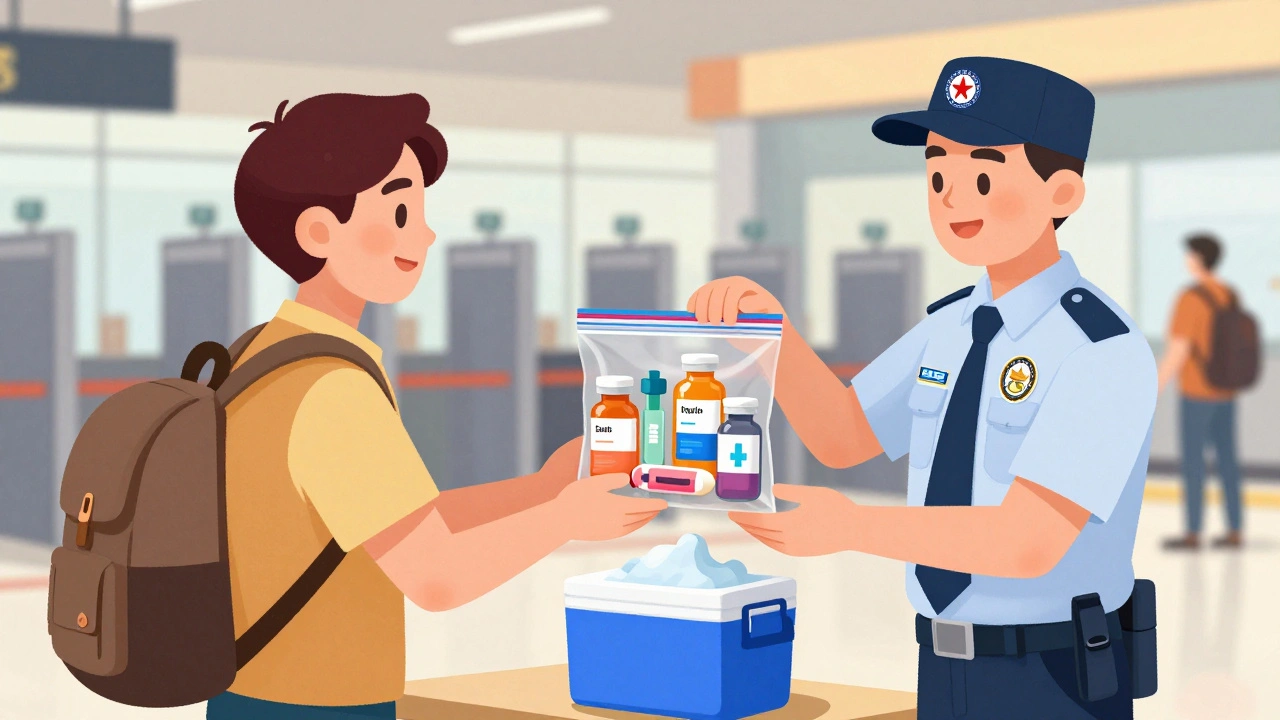
You’ll also need to think about security. Airport scanners won’t harm insulin, but TSA agents may ask to inspect it. Always carry a doctor’s note, keep your insulin in its original packaging, and never pack it in checked bags. Carry twice the amount you think you’ll need. Missed flights, lost luggage, or delayed connections happen. And don’t forget glucagon—some travelers forget it’s just as important as insulin when things go wrong.
What about travel insurance? Many plans don’t cover lost or spoiled insulin. Look for policies that include medical supply replacement. If you’re flying internationally, check local regulations—some countries require prescriptions for insulin, even if you’re just passing through. A little prep can save you from being turned away at customs or stuck without your meds.
The good news? Millions of people travel with insulin every year and do it safely. It’s not about perfection—it’s about preparation. Knowing how to read your pump’s battery life, pack extra syringes, or find a pharmacy abroad makes all the difference. You don’t need to be an expert, but you do need to be ready.
Below, you’ll find real-world advice from people who’ve been there: how to handle insulin during long flights, what to do when your pump fails, how to eat out without crashing your glucose, and how to avoid the most common errors that lead to hospital trips. Whether you’re a first-time traveler with diabetes or someone who’s done this for years, there’s something here that’ll make your next trip safer, calmer, and more enjoyable.