NSAID Risks: What You Need to Know Before Taking Common Pain Relievers
When you reach for ibuprofen or naproxen for a headache or sore back, you’re using a NSAID, a nonsteroidal anti-inflammatory drug that reduces pain, fever, and inflammation. Also known as nonsteroidal anti-inflammatory drugs, these are among the most widely used medications in the world—but they’re not harmless.
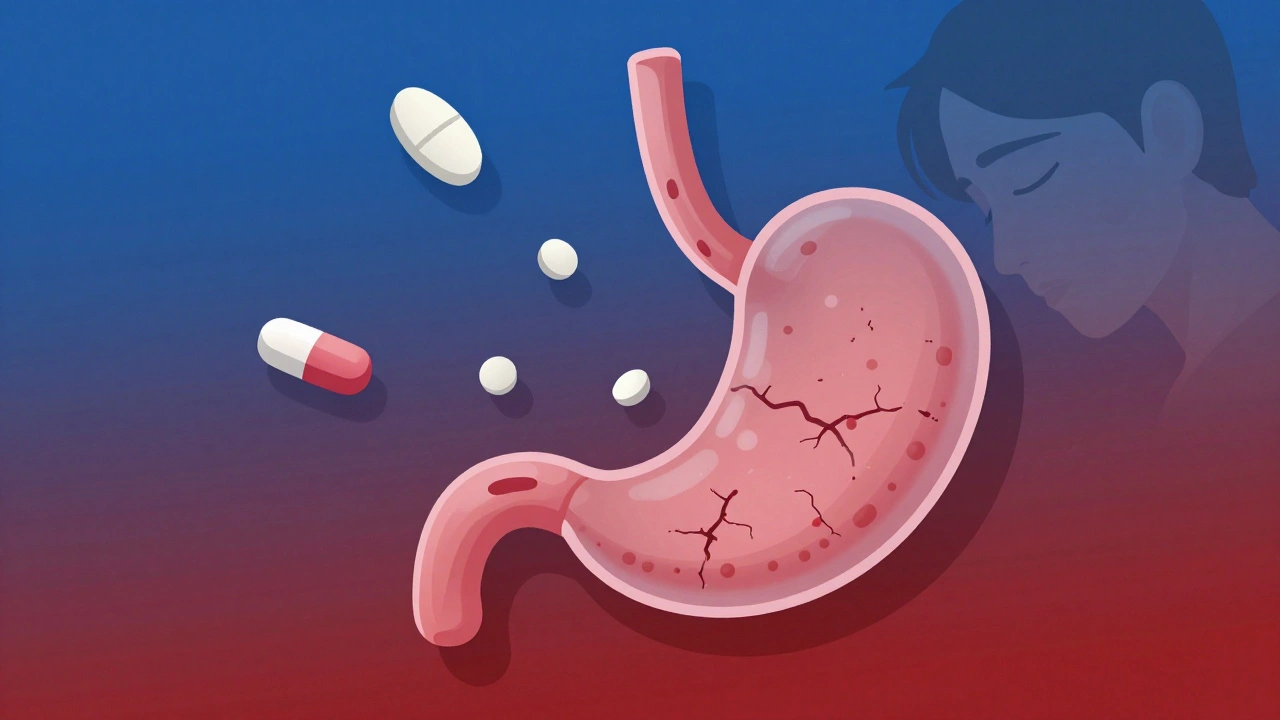
Many people think because NSAIDs are sold without a prescription, they’re safe for daily use. That’s not true. Long-term or high-dose use can cause stomach ulcers, open sores in the digestive tract that lead to bleeding and severe pain. The risk goes up if you’re over 60, take blood thinners, or drink alcohol. Even short-term use can trigger kidney damage, especially in people with existing high blood pressure or diabetes. Your kidneys rely on prostaglandins to regulate blood flow, and NSAIDs block those. Over time, that stress can reduce kidney function—or cause sudden failure.
And then there’s the heart. Heart attack risk, a hidden danger tied to many NSAIDs, including celecoxib and diclofenac, rises even in healthy people who take them regularly. Studies show the risk starts climbing within weeks. It’s not just for people with heart disease. If you’ve ever been told to avoid NSAIDs before surgery or during pregnancy, it’s because these drugs affect clotting, blood pressure, and fluid balance in ways most don’t realize.
You might not feel anything until it’s too late. No burning? No swelling? That doesn’t mean it’s not happening. That’s why pharmacists often ask patients: "How often are you taking this?" and "Have you noticed any black stools or swelling in your ankles?" These aren’t random questions—they’re lifesavers. The posts below dig into real cases where people ignored early signs, ended up in the ER, and learned the hard way that "just one more pill" isn’t worth the cost.
Some of these stories involve people who took NSAIDs for arthritis, others for migraines or sports injuries. A few were even prescribed them after surgery. But the pattern is the same: they thought it was safe because it was common. What you’ll find here are clear, no-fluff breakdowns of how NSAIDs interact with other meds, who’s most at risk, and what alternatives actually work—without putting your organs on the line.