Metabolic Syndrome: Causes, Risks, and How to Take Control
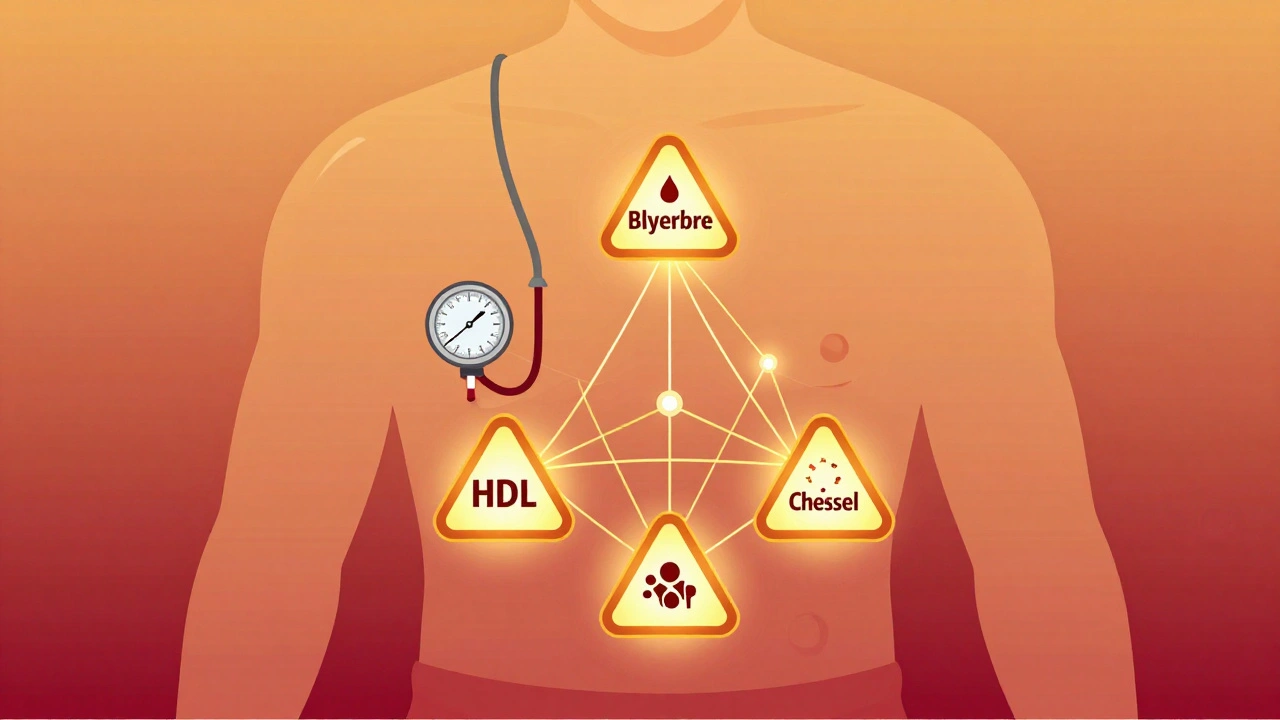
When you hear metabolic syndrome, a cluster of conditions that increase your risk of heart disease, stroke, and type 2 diabetes. Also known as insulin resistance syndrome, it doesn’t show up as one single disease—but as five warning signs working together: large waist size, high blood pressure, high blood sugar, high triglycerides, and low HDL cholesterol. This isn’t just about being overweight. It’s about how your body processes food, especially sugar and fat, and how your cells respond—or don’t respond—to insulin.
Many people with metabolic syndrome don’t feel sick. No chest pain, no dizziness. But behind the scenes, your body is under stress. High blood sugar slowly damages blood vessels. Fat around your waist releases chemicals that trigger inflammation. Your liver starts storing fat instead of processing it. Over time, this leads to type 2 diabetes, a condition where your body can’t use insulin properly, or heart disease, the leading cause of death worldwide. And it’s not rare. Nearly 1 in 3 adults in the U.S. has it. Most don’t know it until they get a blood test or end up in the hospital.
What makes metabolic syndrome so tricky is how it connects to everyday choices. Skipping movement, eating too many refined carbs, or sleeping poorly doesn’t just make you tired—it rewires your metabolism. Medications can help manage the numbers, but they won’t fix the root cause. That’s why so many posts here focus on what you can do: how to read labels to spot hidden sugars, why weight loss—even 5%—can reverse insulin resistance, and how certain drugs like metformin or GLP-1 agonists work alongside lifestyle changes. You’ll also find guides on how to track your progress without obsessing over the scale, how to talk to your doctor about blood tests, and what supplements might help (or hurt) your numbers.
This isn’t about quick fixes. It’s about building habits that stick. The posts below give you real tools—how to use apps to log meals, how to choose foods that stabilize blood sugar, and how to spot when a medication might be making things worse. You’ll see how pharmacists help patients understand their prescriptions, how insurers handle generic drugs for chronic conditions, and what to watch for when switching meds. You’ll learn about the hidden risks of common drugs that can worsen insulin resistance, and how to avoid medication errors that could push you further into danger. The goal isn’t to scare you. It’s to show you that you’re not powerless. Small, smart changes can turn the tide.