
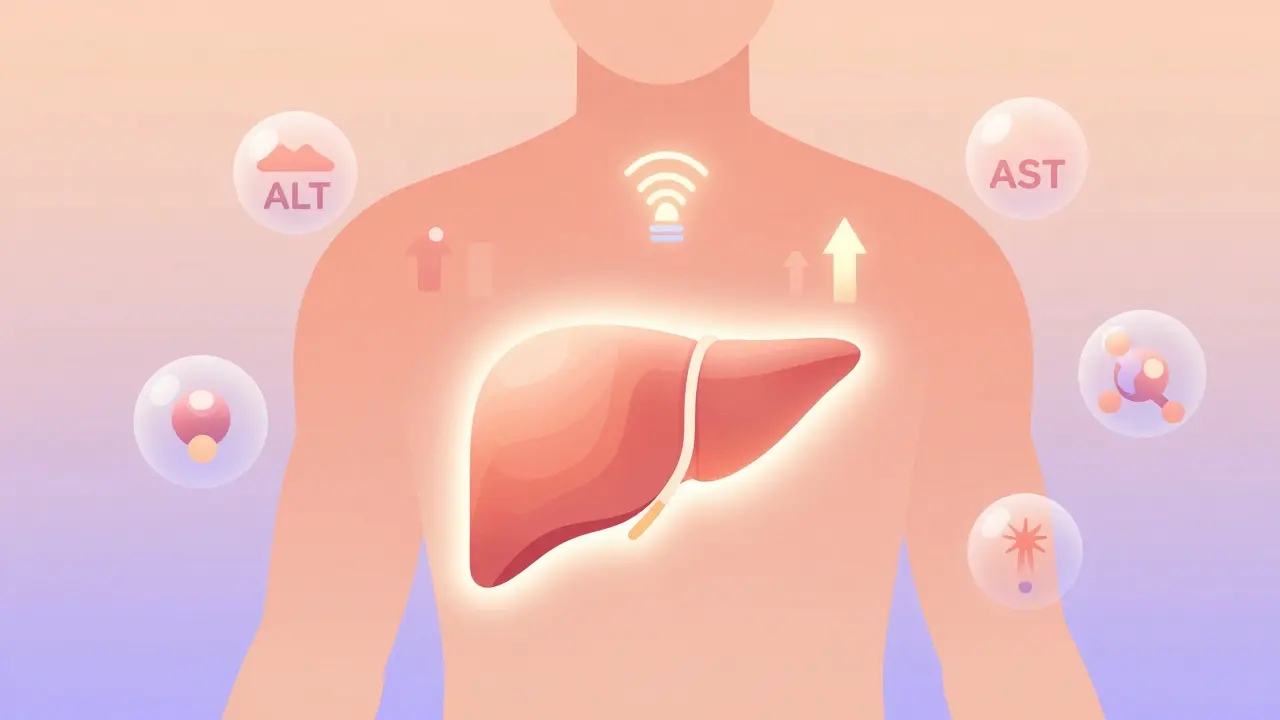
When your doctor orders a liver function test, it’s not because they think you have liver disease - it’s usually because something else is off. Maybe your blood work showed a slight bump in enzymes, or you’ve been feeling unusually tired. Maybe you drink alcohol occasionally, or you’re taking a new medication. The truth is, most people who get these tests done don’t have serious liver problems. But that doesn’t mean you should ignore the results. Understanding what ALT, AST, and bilirubin actually tell you can save you from unnecessary worry - or help catch something serious early.
What Liver Function Tests Actually Measure
The name ‘liver function tests’ is misleading. These aren’t tests that measure how well your liver is working, like filtering toxins or making bile. They measure damage. Think of them like smoke alarms: they don’t tell you if the house is burning down, but they do tell you something’s wrong inside the walls.
The most common tests are ALT (alanine aminotransferase), AST (aspartate aminotransferase), ALP (alkaline phosphatase), GGT (gamma-glutamyl transferase), bilirubin, albumin, and prothrombin time. Of these, ALT and AST are the most talked about. They’re enzymes found mostly in liver cells. When those cells get damaged - from alcohol, viruses, fat buildup, or drugs - these enzymes leak into the bloodstream. That’s what shows up on your blood test.
But here’s the catch: AST isn’t just in the liver. It’s also in your heart, muscles, and kidneys. So if you’ve had a heart attack or done an intense workout, your AST might be high - even if your liver is fine. ALT, on the other hand, is almost exclusively in the liver. That’s why ALT is a better signal of liver-specific damage.
Normal Ranges Are Not One-Size-Fits-All
You might see a lab report that says your ALT is 58 U/L and your AST is 49 U/L. The reference range says 7-55 for ALT and 8-48 for AST. So you’re over. But does that mean you have liver disease? Not necessarily.
Normal ranges vary by lab, sex, and body weight. Men typically have higher normal levels than women. People with a BMI over 30 - that’s overweight or obese - can have ALT and AST levels 10-15% higher than someone with a normal weight, and still be completely healthy. A 2022 study in JAMA Internal Medicine found that 10-15% of healthy people have mildly elevated liver enzymes with no underlying disease.
For bilirubin, normal levels are between 3-17 μmol/L. Anything above that can mean your liver isn’t processing bile properly. But mild elevations - say, 20-25 μmol/L - can happen after fasting, during dehydration, or in people with Gilbert’s syndrome, a harmless genetic condition that affects about 5-10% of the population.
Patterns Matter More Than Numbers
Here’s where most people get confused. It’s not about one number being high. It’s about the pattern. Three patterns tell doctors what’s likely going on:
- Hepatocellular pattern: ALT and AST are much higher than ALP and bilirubin. This means liver cells are damaged. ALT is usually more than twice AST. This is classic for viral hepatitis (like hepatitis A or B), drug reactions (like paracetamol overdose), or fatty liver disease (MASLD).
- Cholestatic pattern: ALP and bilirubin are high, but ALT and AST are only mildly raised. This suggests bile flow is blocked - maybe by gallstones, a tumor, or medication. If ALP is high but GGT is normal, it might not be liver-related at all. ALP is also made in bones, so a bone fracture or bone disease can raise it too.
- Mixed pattern: All enzymes are elevated. This often happens with drug-induced liver injury or autoimmune hepatitis.
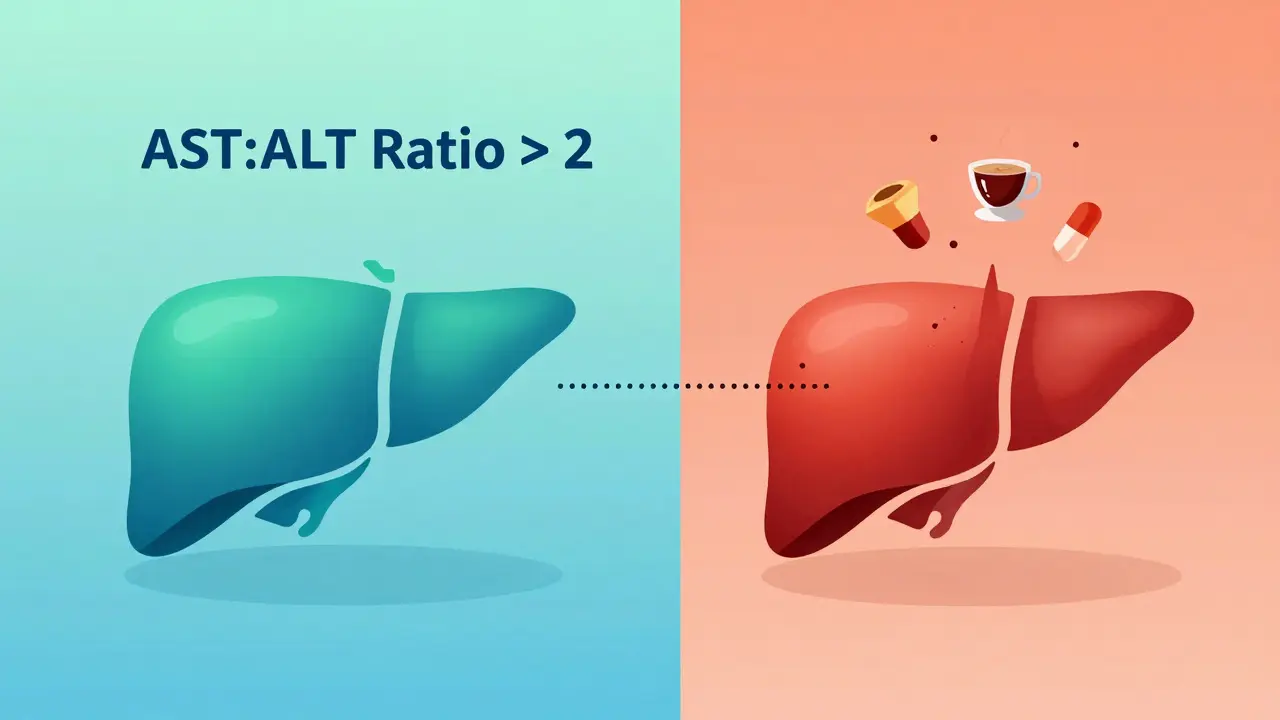
The AST-to-ALT ratio is one of the most useful clues. If AST is more than twice as high as ALT - say, AST 120 and ALT 50 - it strongly points to alcohol-related liver damage. In fact, over 90% of people with alcoholic hepatitis have an AST:ALT ratio above 1, and often above 2. If the ratio is less than 1 - ALT higher than AST - it’s more likely non-alcoholic fatty liver disease (now called MASLD), viral hepatitis, or medication-induced injury.
But here’s the exception: if AST or ALT shoots above 500 U/L, alcohol alone is unlikely to be the cause. That kind of spike usually means acute viral hepatitis or a paracetamol overdose. In these cases, the damage happens fast - within hours - and the enzymes rise quickly.
What Bilirubin Tells You
Bilirubin is the yellow pigment your liver breaks down from old red blood cells. When the liver can’t process it, bilirubin builds up. That’s what causes jaundice - yellow skin and eyes.
There are two types: unconjugated (indirect) and conjugated (direct). If total bilirubin is high but direct bilirubin is normal, it’s likely due to too many red blood cells breaking down (hemolysis) or Gilbert’s syndrome. If direct bilirubin is high, it means the liver isn’t excreting bile properly - that’s cholestasis.
ALP and GGT are often checked alongside bilirubin. If ALP is more than three times higher than ALT, and bilirubin is elevated, it’s almost always a bile duct issue. But if GGT is normal while ALP is high, look elsewhere - maybe your bones.
Albumin and Prothrombin Time: The Real Liver Function Tests
Here’s the part most people miss. Albumin and prothrombin time are the only true measures of liver function - not damage.
Albumin is a protein your liver makes. It helps keep fluid in your blood vessels and carries hormones and drugs. If your albumin is low (below 35 g/L), it means your liver has been struggling for weeks or months. It’s a sign of chronic liver disease - like cirrhosis. But albumin takes 20 days to drop. So if you had a sudden liver injury yesterday, your albumin will still look normal.
Prothrombin time (PT) measures how long it takes your blood to clot. Your liver makes clotting factors. If PT is prolonged, it means your liver isn’t making enough of them. This can happen quickly - within days - after severe liver damage. It’s one of the first signs your liver is failing.
That’s why doctors don’t rely on ALT and AST alone to judge how bad your liver disease is. A person with cirrhosis might have normal ALT and AST - because there’s little liver tissue left to damage. But their albumin is low and their PT is long. That’s the real picture.
When to Worry - And When to Wait
Not every abnormal result needs a scan or a specialist. Here’s what experts recommend:
- If ALT or AST is less than 2 times the upper limit (say, under 110 U/L) and you feel fine - wait. Repeat the test in 3-6 months. Watch for weight gain, alcohol use, or new medications.
- If ALT or AST is above 500 U/L, or if it’s rising fast (more than 100 U/L per week) - get evaluated immediately. This could be acute hepatitis or drug toxicity.
- If bilirubin is high and you’re yellow, or if you have dark urine, pale stools, or itching - see a doctor right away.
- If you have risk factors - heavy drinking, obesity, type 2 diabetes, or hepatitis B/C - even mild elevations should be followed up.
Studies show that combining liver enzyme patterns with simple non-invasive scores like FIB-4 (which uses age, platelets, ALT, and AST) can predict advanced liver scarring with 89% accuracy - far better than enzymes alone.
Common Mistakes and Misinterpretations
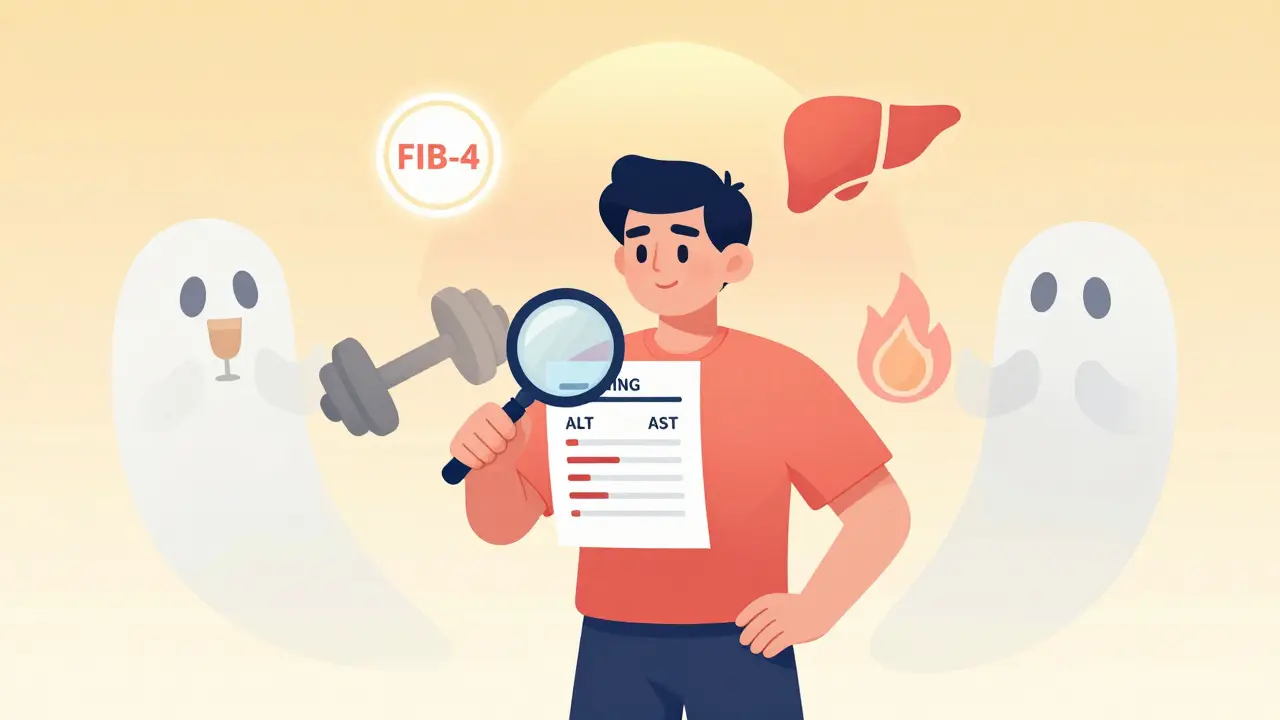
Doctors get it wrong more often than you think. A 2022 study found that 37% of primary care doctors ordered ultrasounds or CT scans for ALT levels between 41-80 U/L - even when the patient had no symptoms, no alcohol use, and no risk factors. Most of those people had no liver disease. The elevation was due to obesity, exercise, or even a recent illness.
Another mistake: blaming alcohol for everything. Yes, high AST:ALT ratio suggests alcohol. But if you’re a non-drinker with the same ratio, it could be MASLD - which is now the leading cause of liver disease worldwide. And if your AST is over 500 U/L, alcohol is probably not the culprit - you need to check for paracetamol overdose, especially if you’ve been taking cold medicine or painkillers.
And don’t forget: muscle injury can raise AST. A tough workout, a car accident, or even a seizure can cause temporary spikes. That’s why doctors look at the whole picture - not just the numbers.
What Comes Next?
If your tests are abnormal, your doctor might order more tests: hepatitis B and C screening, ultrasound, FIB-4 score, or even a FibroScan to check for liver stiffness. In some cases, a biopsy is needed - but that’s rare now. Most liver diseases can be diagnosed with blood tests and imaging.
For fatty liver (MASLD), the treatment isn’t a pill - it’s lifestyle. Losing 5-10% of your body weight can reverse fat buildup and lower ALT. Cutting back on sugar and alcohol helps. Exercise matters more than you think - even without weight loss, regular activity reduces liver fat.
For viral hepatitis, antiviral drugs can cure hepatitis C and control hepatitis B. For autoimmune liver disease, steroids or immunosuppressants can stop the attack. But none of that matters if you don’t know what you’re dealing with.
Don’t panic over a single high number. But don’t ignore it either. Liver disease often has no symptoms until it’s advanced. The best defense is awareness - and knowing what your numbers really mean.
Can ALT and AST be high without liver disease?
Yes. Mild elevations (under 2x the upper limit) are common in healthy people, especially those who are overweight, exercise intensely, or take certain medications. Alcohol, even in small amounts, can raise them. So can recent viral infections or muscle injury. A single high reading doesn’t mean you have liver disease - but it does mean you should check again in a few months.
What does a high AST:ALT ratio mean?
An AST:ALT ratio greater than 1 - especially above 2 - strongly suggests alcohol-related liver damage. In alcoholic hepatitis, AST is often twice or more than ALT. But if you don’t drink, a ratio above 1 can still happen with advanced fatty liver disease (MASLD) or cirrhosis. A ratio below 1 is more typical of viral hepatitis or non-alcoholic fatty liver.
Is bilirubin always high in liver disease?
No. Bilirubin only rises when bile flow is blocked or the liver can’t process it. In early fatty liver or mild hepatitis, bilirubin is often normal. It’s usually elevated in advanced disease, bile duct obstruction, or conditions like Gilbert’s syndrome - which is harmless. High bilirubin with normal ALT/AST often points to a non-liver cause, like hemolysis.
Can medications cause elevated liver enzymes?
Yes. Many common drugs can raise liver enzymes, including statins, antibiotics, anti-seizure meds, and even some herbal supplements. Paracetamol (acetaminophen) is the most dangerous - taking too much can cause sudden, severe liver damage. Always tell your doctor what you’re taking, even over-the-counter pills and vitamins.
Should I get tested if I have no symptoms?
If you have risk factors - obesity, type 2 diabetes, heavy alcohol use, or a family history of liver disease - yes. Even without symptoms, fatty liver can silently progress to scarring. Routine blood tests during check-ups can catch it early. If you’re healthy with no risks, testing isn’t needed unless your doctor finds something unusual.
Can liver function tests detect liver cancer?
Not directly. Liver cancer often doesn’t raise liver enzymes until it’s advanced. That’s why screening for people with cirrhosis or chronic hepatitis involves ultrasound and AFP blood tests - not routine LFTs. If your enzymes are normal but you’re at high risk, don’t assume you’re safe. Talk to your doctor about proper screening.
What to Do Next
If your liver enzymes are slightly high and you’re otherwise healthy, start with lifestyle changes: lose weight if you’re overweight, cut out sugary drinks and alcohol, get moving. Re-test in 3 months. If they’re still up, ask for a FIB-4 score or ultrasound. Don’t rush to a specialist unless you have jaundice, swelling, or rapid enzyme rises.
If you’re diagnosed with MASLD or fatty liver, know this: it’s reversible. Most people who lose weight and improve their diet see their ALT drop back to normal within a year. The liver is one of the few organs that can regenerate. But only if you give it a chance.




Napoleon Huere
January 26, 2026 AT 23:22It's wild how we treat liver enzymes like some kind of moral failing. Like if your ALT is up, you've failed at life. But it's just biology. Your body's giving you a heads-up, not a verdict. We've turned medical data into a guilt trip instead of a conversation starter.
Maybe the real problem isn't the liver - it's the way we panic over numbers instead of asking what's going on in someone's life. Are they stressed? Sleeping? Eating junk because they're working two jobs? The liver doesn't care about your BMI category - it just reacts.
And yet we still have doctors ordering CT scans for ALT 60. That's not medicine. That's fear-based billing.
It's not about fixing the number. It's about understanding the person behind the lab report.
Shweta Deshpande
January 28, 2026 AT 23:00OMG I just read this and I’m crying tears of relief 😭 I’ve been freaking out for months because my ALT was 58 and my doctor looked at me like I’d been drinking vodka straight from the bottle. But I don’t even drink! I’m a yoga teacher who eats kale and drinks herbal tea! Turns out I’m just a chubby girl with a super active lifestyle and Gilbert’s syndrome - which I didn’t even know I had until now!
Thank you for explaining the AST:ALT ratio thing - I finally get why my numbers looked weird. And the part about albumin and prothrombin time? Mind blown. I always thought the liver enzymes were the whole story. Nope. Turns out I’ve been overthinking this whole time.
Also - if you’re reading this and you’re scared? Breathe. Your liver is a warrior. It’s been carrying you through bad sleep, stress, and that one too-many-pizzas weekend. Give it a break. Cut out soda. Walk more. Sleep better. You’ve got this 💪❤️
Aishah Bango
January 30, 2026 AT 21:38People need to stop making excuses for their poor lifestyle choices. If your liver enzymes are elevated, it’s not ‘Gilbert’s syndrome’ or ‘muscle soreness’ - it’s because you’re overweight, drinking too much, and eating sugar like it’s oxygen.
Stop blaming the lab. Stop blaming your genes. Stop pretending your 3 AM TikTok scrolling and 12-pack of soda a week isn’t doing damage. The liver doesn’t lie. It just waits until it’s too late to scream.
And yes - I’m talking to YOU. You know who you are.
Stop being a victim. Start being responsible. Your liver didn’t ask to be punished.
Simran Kaur
February 1, 2026 AT 03:54I’m from India and I’ve seen so many people here panic over a single blood test result - then go buy some ‘liver detox’ tea from a guy on Instagram who says he cured his liver with turmeric and moonlight.
My uncle had ALT at 110 - no symptoms, no drinking, just a little overweight and working 14-hour shifts as a taxi driver. His doctor told him to eat less fried food and walk after dinner. Six months later? Normal. No meds. No drama.
But the moment he got the result, his sister started crying, his mother made him drink bitter neem juice, and his cousin sent him a 20-page PDF on ‘50 herbs to save your liver.’
We need less fear, less magic pills, and more common sense. The liver is tough. It just needs space to heal. And sometimes, that means letting go of the panic.
Also - I love how you mentioned FIB-4. So many doctors here still think ALT is the whole story. Thank you for this. Truly.
PS: If you’re reading this from India - you’re not alone. We’ve all been there. Breathe. You’re okay.
Jessica Knuteson
February 2, 2026 AT 15:19Robin Van Emous
February 3, 2026 AT 01:14Thank you for writing this with so much clarity. I’ve been a nurse for 18 years and I still see patients terrified of numbers they don’t understand. I’ve had people cancel their jobs because their ALT was 62. One woman cried because her doctor said ‘your liver is stressed’ - and she thought that meant she was going to die.
This post? This is the kind of thing we need more of. Not fear. Not jargon. Not panic. Just honest, calm, human explanation.
I’m going to print this out and keep it in my clinic folder. I’m also going to share it with my patients who keep Googling ‘liver failure symptoms’ at 3 a.m. They need this. Not another scary blog.
And yes - I’m totally stealing the smoke alarm analogy. That’s perfect.
rasna saha
February 5, 2026 AT 01:10Just wanted to say - if you’re reading this and you’re scared, you’re not alone. I had the same thing last year. ALT 65. No alcohol. No meds. Just… me. Turns out I was working 70 hours a week, eating takeout every night, and sleeping 4 hours. I didn’t realize how much I was burning out.
I started walking 20 minutes after dinner. Cut out soda. Went to bed at 11. Three months later - normal. No pills. No miracle cure. Just… better habits.
You don’t have to be perfect. Just better than yesterday. Your liver doesn’t need a saint. It just needs a break.
I’m cheering for you. You’ve got this.
James Nicoll
February 5, 2026 AT 16:03So let me get this straight - we’ve turned a biological warning signal into a moral audit?
‘Your ALT is high? Must be because you’re lazy.’
‘Your AST is up? You must be a drunk.’
‘Your bilirubin’s elevated? You’re probably just a bad person.’
Meanwhile, the guy who works three jobs, eats rice and beans, sleeps 5 hours, and drinks 2 beers on Friday? His liver’s fine. Why? Because his body’s not in survival mode.
It’s not about morality. It’s about stress. Sleep. Sugar. Movement. And yet we still treat liver enzymes like a confession booth.
Next thing you know, they’ll start charging people for ‘liver sins.’
Just… stop.
Uche Okoro
February 6, 2026 AT 23:01It is imperative to underscore the pathological significance of transaminase elevation as a biomarker of hepatocellular necrosis, which, in the absence of confounding variables such as rhabdomyolysis or hemolysis, is pathognomonic for hepatic parenchymal injury. The AST:ALT ratio exceeding 2:1 is statistically significant (p < 0.001) in the context of alcoholic liver disease, per the 2021 AASLD guidelines. Furthermore, the diagnostic utility of FIB-4 in non-invasive fibrosis assessment demonstrates an AUC of 0.89, corroborating its clinical validity. It is also noteworthy that GGT elevation in the absence of ALP elevation is indicative of cholestasis, whereas isolated ALP elevation without GGT elevation suggests extrahepatic etiology, such as osseous pathology. The concomitant elevation of PT and hypoalbuminemia constitutes a decompensated hepatic phenotype, necessitating urgent hepatology referral. To dismiss these parameters as ‘noise’ is not merely scientifically unsound - it is clinically negligent.