
Handwritten prescriptions are killing people - and we’ve known it for decades
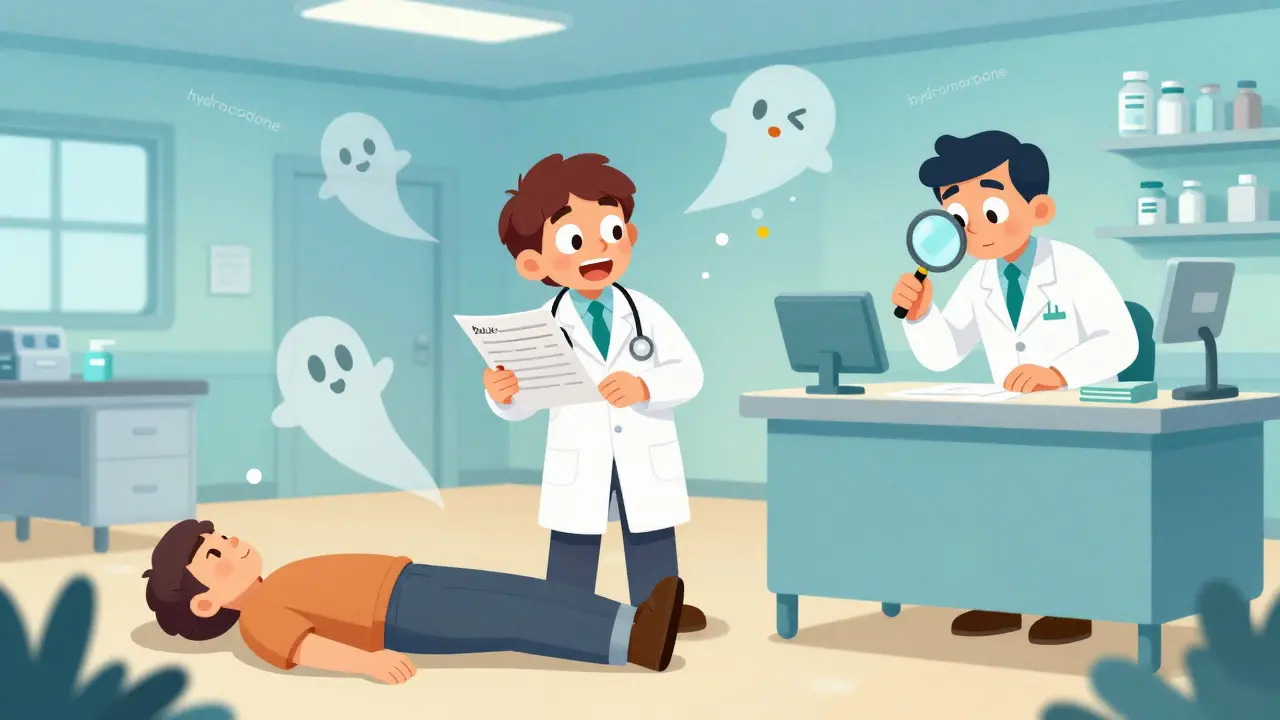
Imagine this: a doctor scribbles a prescription. A pharmacist squints at it. The drug name looks like hydrocodone... or is it hydromorphone? The dose says 10... but is that a 10 or a 7? The frequency says q.d. - a shorthand banned since 2004 because it’s too easily mistaken for q.i.d.. The patient gets the wrong medicine. They end up in the ER. Maybe they don’t come home.
This isn’t fiction. In the U.S. alone, illegible handwriting on prescriptions causes an estimated 7,000 preventable deaths every year. That’s more than plane crashes. And it’s not just deaths - over 1.5 million adverse drug events happen annually because of messy writing, unclear dosages, or missing details. These aren’t rare mistakes. They’re routine.
Back in 2000, two leading patient safety experts called handwritten prescriptions a "dinosaur long overdue for extinction." Two decades later, we’re still waiting for the extinction. Why?
How bad is it really? The numbers don’t lie
A 2005 study of 40 surgical notes from a British hospital found only 24% were rated as "excellent" or "good" for legibility. Nearly 40% were deemed "poor." That’s not a glitch - that’s the norm.
More recently, a 2022 study found that 92% of medical students and doctors made at least one prescription error. On average, each one made two. Most weren’t due to ignorance. They were due to time pressure, fatigue, and the sheer messiness of writing by hand while juggling 20 patients a day.
Pharmacists are on the front lines. In the U.S., they make 150 million phone calls per year just to clarify handwriting. That’s not customer service - that’s a system breaking down. Nurses spend an average of 12.7 minutes per illegible prescription tracking down the right info. That’s time taken from actual patient care.
And it’s not just doctors. Even trained professionals can’t read their own handwriting after a 12-hour shift. A 2022 survey showed that 22% of healthcare workers admitted they’d ignore illegible prescriptions rather than delay treatment. That’s not negligence - it’s survival.
Electronic prescribing isn’t just better - it’s 97% more accurate
Here’s the good news: we already have the fix. It’s called e-prescribing.
By 2019, 80% of U.S. office-based providers had switched to electronic systems. The results? A 97% drop in errors caused by illegible handwriting. That’s not a small improvement. That’s a revolution.
A 2025 study in JMIR compared safety compliance between handwritten and electronic prescriptions. Handwritten? Only 8.5% met basic safety standards. Electronic? 80.8%. Even manually typed e-prescriptions - without templates or auto-fill - hit 56% accuracy. That’s still six times safer than scribbling on paper.
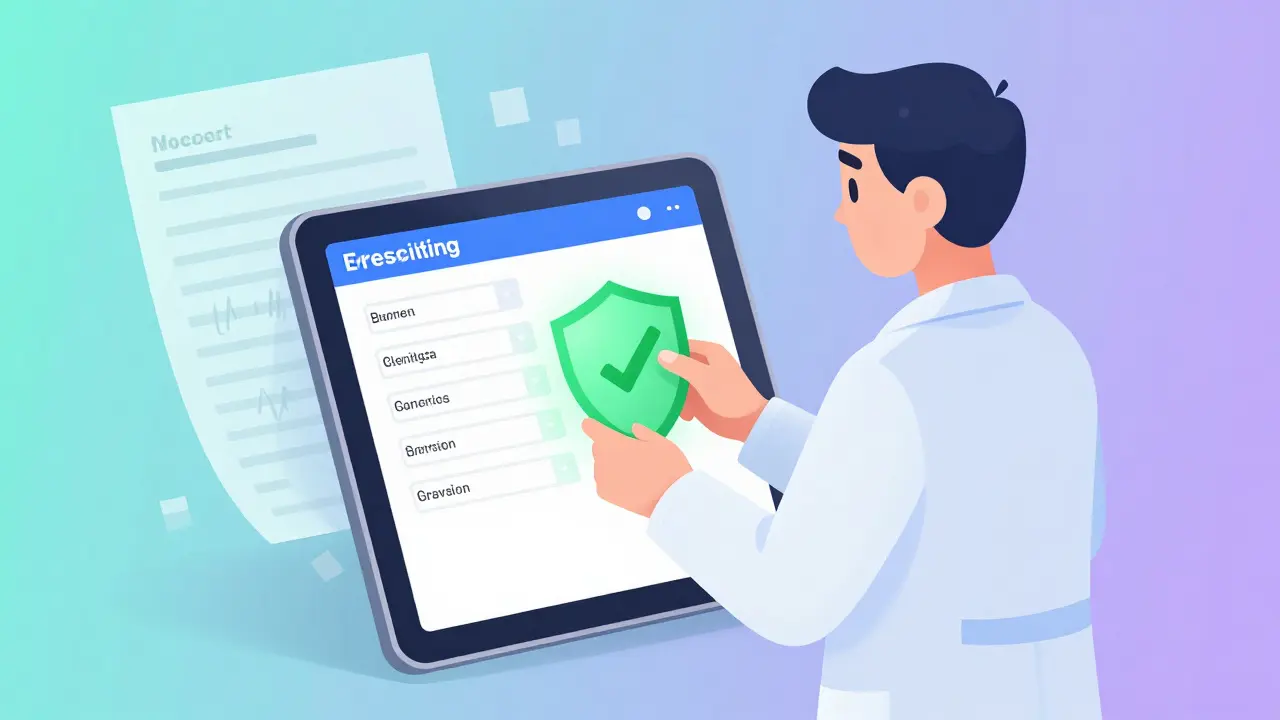
Why? Because e-prescribing removes guesswork. The system forces you to pick from a list of approved drugs. It auto-fills dosage ranges. It blocks dangerous abbreviations. It flags interactions with other meds. It sends the prescription directly to the pharmacy - no phone calls, no misreads, no delays.
Dr. Cheryl Reifsnyder from Veradigm says it plainly: "e-prescribing has absolutely lived up to expectations in improving patient safety."
But e-prescribing isn’t perfect - and here’s what’s still going wrong
Switching to digital doesn’t mean all problems vanish. New ones pop up.
One big issue is "alert fatigue." E-prescribing systems bomb doctors with warnings: "This drug interacts with aspirin!" "This dose exceeds safe limits!" "This patient is allergic!" After seeing 20 false alarms in a row, a doctor starts clicking "ignore" without reading. That’s when the system becomes a liability.
Then there’s workflow. Some doctors say e-prescribing takes longer. Typing, clicking, navigating menus - it feels slower than scribbling a quick note. And if the system crashes or the internet goes down? You’re stuck.
Cost is another barrier. Setting up a full e-prescribing system can cost $15,000-$25,000 per provider. Training staff takes 8-12 hours. Integrating it with electronic health records? That’s a technical nightmare for small clinics.
And in rural areas or low-resource countries? Many still rely on paper. No reliable internet. No tablets. No budget for software. For them, e-prescribing isn’t an option - yet.
What to do if you still have to write prescriptions by hand
If you’re in a setting where e-prescribing isn’t possible - or you’re still using paper for now - here’s how to cut the risk right now:
- Print, don’t cursive. Block letters are 3x easier to read than cursive. Even if you hate it, it saves lives.
- Avoid banned abbreviations. No "q.d." (use "daily"). No "U" for units (use "units"). No "μg" (use "microgram"). The Joint Commission banned these for a reason.
- Write everything. Patient name. Drug name. Exact dose. Route (oral, IV, topical). Frequency (twice daily, not "b.i.d."). Prescriber name and contact info. Missing any one? That’s a red flag.
- Use numbers, not words. Write "5 mg," not "five milligrams." It’s clearer and harder to misread.
- Double-check before signing. Walk away for 30 seconds. Come back. Can you read it? If not, rewrite it.
One 2019 study showed that using a simple 15-item checklist - even just for self-review - cut errors in handwritten prescriptions by over 40%. You don’t need fancy tech. You just need discipline.

The future is digital - and it’s coming fast
The U.S. e-prescribing market was worth $1.8 billion in 2022. By 2027, it’s projected to hit $4.2 billion. Why? Because governments are forcing the change.
The Medicare Improvements for Patients and Providers Act of 2008 gave financial bonuses for e-prescribing. The 21st Century Cures Act of 2016 made interoperability mandatory. The Centers for Medicare & Medicaid Services now tie reimbursement to meaningful use of electronic records.
By 2030, handwritten prescriptions will be rare in developed countries. They’ll be the exception - not the norm.
But even in places where paper still exists, new tools are helping. AI-powered handwriting recognition is now hitting 85-92% accuracy in reading medication names from scanned prescriptions. It’s not perfect - but it’s a bridge.
The real question isn’t whether e-prescribing works. It’s why we waited so long. We had the data in 2000. We had the tech in 2003. We had the deaths in 2005. And still, we clung to paper.
It’s not about tradition. It’s about safety. And safety doesn’t wait for convenience.
What’s next? If you’re a patient, here’s what you can do
You don’t have to wait for the system to fix itself.
- When you get a prescription, ask: "Is this printed or handwritten?" If it’s handwritten, ask the pharmacist to confirm the drug and dose with your doctor.
- Never assume the label matches what the doctor wrote. Compare the bottle to the paper. If they don’t match, ask.
- Use a pill organizer with labels. If you’re unsure what a pill is, take a photo and ask your pharmacist.
- Speak up. If you think something’s wrong - even if you’re not sure - say something. It’s your life.
Medication errors are preventable. But only if everyone - doctors, pharmacists, nurses, and patients - plays their part.

Henry Jenkins
January 26, 2026 AT 09:41Look, I’ve been in ERs where people got the wrong meds because of scribbles that looked like chicken scratch. I’m not surprised by the stats, but what kills me is that we’ve had the tech for 20 years and still treat this like a minor paperwork issue. It’s not. It’s a systemic failure dressed up as tradition. E-prescribing isn’t a luxury-it’s a basic safety protocol, like seatbelts or fire alarms. The fact that we’re still debating it is embarrassing.
Rakesh Kakkad
January 27, 2026 AT 03:25While the case for e-prescribing is empirically robust, one must not overlook the cultural and infrastructural dissonance prevalent in resource-constrained settings. In many Indian primary care clinics, the absence of reliable electricity, let alone EHR integration, renders digital solutions aspirational rather than actionable. The solution must be tiered: universal standards for digitization, but with pragmatic, analog-safe fallbacks until infrastructure catches up.
TONY ADAMS
January 28, 2026 AT 20:57bro i once got a script that said 'take 2' but looked like 'take 20' and i nearly OD'd. my mom had to call the pharmacy three times. this shit is literally life or death and doctors still write like they're in a hurry to get to their next beer.
George Rahn
January 28, 2026 AT 21:55Let us not mince words: the continued use of handwritten prescriptions is a moral abdication. It is the last bastion of medical arrogance-where the physician’s ego, his ‘signature,’ his romanticized notion of the ‘old-school healer,’ outweighs the sanctity of human life. We do not let pilots fly with paper checklists. We do not let train engineers navigate by memory. Why then do we entrust lives to a scribble? This is not resistance to change-it is resistance to responsibility. And in the face of 7,000 deaths a year, that resistance is treason.
Ashley Karanja
January 29, 2026 AT 12:36It’s fascinating how we’ve normalized this level of systemic risk. The cognitive load on clinicians is already astronomical-add illegible scripts, then add the 150 million clarification calls pharmacists make annually, and you’ve got a perfect storm of burnout and error. E-prescribing isn’t just about accuracy-it’s about restoring dignity to the workflow. When you eliminate the guesswork, you give clinicians back mental bandwidth to actually care. And that’s not just efficiency-it’s healing. The real tragedy? We’ve known this since 2000, and yet we kept asking nurses to play detective instead of giving them tools to be healers.
Karen Droege
January 29, 2026 AT 21:02My brother’s oncologist still writes prescriptions by hand. I’ve stood in the pharmacy watching the pharmacist squint, call the office, get a voicemail, then call again-30 minutes later, the script’s still not clear. This isn’t ‘inconvenient.’ This is torture for patients who are already terrified. And don’t even get me started on alert fatigue. The system’s supposed to protect us, but when it’s screaming wolf every 20 seconds, people stop listening. We need smarter alerts-not more noise. Maybe AI that learns from past overrides? Or color-coded urgency tiers? We’re not stuck-we just haven’t built the right version yet.
Ashley Porter
January 31, 2026 AT 00:41the 22% who just ignore illegible scripts? i get it. been there. 3am, 18 patients, 2 pagers going off, and your own handwriting looks like a toddler’s doodle. you pick the most likely med and hope.
shivam utkresth
February 2, 2026 AT 00:26Coming from India, I’ve seen both sides. In Mumbai’s private clinics, e-prescribing is everywhere. In rural UP? A doctor scribbles on a napkin and the patient walks 20km to the pharmacy. But here’s the thing-some pharmacies now use AI apps to scan handwritten scripts. It’s not perfect, but it cuts misreads by half. Maybe the real path isn’t ‘go digital or die’-but ‘use tech where you can, and train humans to be better where you can’t.’
Aurelie L.
February 3, 2026 AT 02:27My GP still writes in cursive. I once had to Google a drug name because I couldn’t tell if it was ‘Cipro’ or ‘Ciprofloxacin.’ I’m not a doctor. I shouldn’t have to be a cryptologist.