
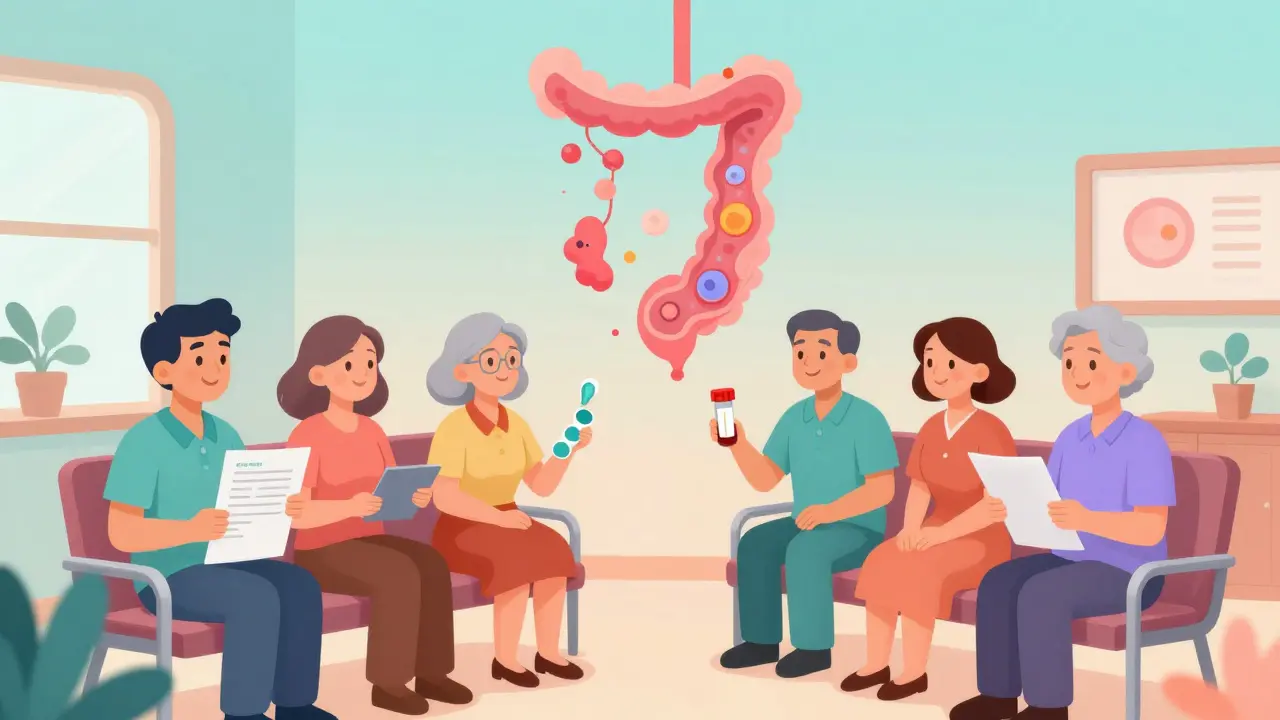
Colorectal cancer doesn’t always come with warning signs-until it’s too late. That’s why colonoscopy screening is one of the most powerful tools we have to stop it before it starts. Between 2021 and 2025, guidelines changed dramatically: if you’re 45 or older, you’re now officially in the screening window. No longer is this something only for people over 50. The rise in cases among younger adults-up 2.2% every year since the mid-90s-forced doctors to act. And the data is clear: catching polyps early, or even removing them during a colonoscopy, cuts your risk of dying from colorectal cancer by more than half.
Why Colonoscopy Is Still the Gold Standard
Not all screening tests are created equal. You’ve probably heard of stool tests, CT scans, or sigmoidoscopies. But colonoscopy remains the only method that can both find and remove precancerous growths in one visit. That’s huge. While a stool test might catch blood or DNA markers from cancer, it can’t remove a polyp. If it comes back positive, you still need a colonoscopy anyway. And that’s where colonoscopy wins: prevention, not just detection.
Studies show colonoscopy reduces colorectal cancer incidence by 67% and death by 65%. That’s not a small number. It means for every 1,000 people who get screened every 10 years, roughly 15 to 20 cancers are prevented. The procedure itself takes about 30 minutes. You’re sedated. Most people don’t remember a thing. The real challenge? The prep. Drinking gallons of laxative the day before isn’t fun, but it’s necessary. A clean colon means nothing gets missed. Newer prep solutions are easier than before, but they still taste awful. Still, 89% of people who’ve had one say they’d do it again-because they know how much it saved them.
For African Americans, who face a 20% higher incidence and 40% higher death rate from colorectal cancer, colonoscopy isn’t just recommended-it’s essential. Guidelines specifically highlight this group because early detection makes the biggest difference. And if you have a family history, inflammatory bowel disease, or a genetic syndrome like Lynch syndrome, you may need to start even before 45. Your doctor will help you figure that out.
Other Screening Options-and When They Make Sense
Not everyone wants a colonoscopy. That’s okay. There are other options, and they work-especially if they get you screened at all.
Stool-based tests like FIT (fecal immunochemical test) are simple. You collect a sample at home, mail it in, and wait for results. It detects hidden blood in the stool, which can signal cancer or large polyps. Sensitivity is good-around 80% for cancer-but it’s not perfect. It misses smaller polyps. And you have to do it every year. If you skip a year, you lose the protection. Studies show FIT adherence is higher than colonoscopy in low-income communities, especially among Hispanic patients. It’s cheaper, less intimidating, and accessible. But it’s not a one-and-done.
The multi-target stool DNA test (like Cologuard) checks for both blood and abnormal DNA. It’s more sensitive than FIT-92% for cancer-but less specific. That means more false positives. About 13% of people get called back for a colonoscopy even though they don’t have cancer. That’s stressful, and it adds cost. But for someone who refuses a colonoscopy entirely, this might be the best alternative.
Flexible sigmoidoscopy looks only at the lower third of the colon. It’s faster, requires less prep, and has fewer complications. But it misses polyps in the upper colon-where many cancers develop. It’s still useful, especially if done every five years, but it doesn’t replace colonoscopy.
CT colonography (virtual colonoscopy) uses X-rays to create a 3D image. No sedation, no scope. But you still need bowel prep. And if they find anything, you still need a colonoscopy to remove polyps. Plus, you get radiation exposure-about the same as a low-dose CT scan. It’s a good option for people who can’t tolerate sedation, but it’s not ideal for routine screening.
The bottom line: colonoscopy every 10 years is the most effective. But if you can’t do that, a yearly FIT or a stool DNA test every three years is better than nothing. The goal isn’t perfection-it’s participation.

What Happens If Cancer Is Found?
If a colonoscopy finds cancer, the next step is staging. Is it just in the colon? Has it spread to lymph nodes? To the liver or lungs? That determines treatment. Early-stage cancer (Stage I or II) often only needs surgery. Remove the tumor, remove the nearby lymph nodes, and you’re done. No chemo needed. Five-year survival for Stage I is over 90%.
But if cancer has spread to lymph nodes (Stage III), chemotherapy becomes standard. The goal isn’t to cure it at this point-it’s to kill any leftover cancer cells that might come back. The two most common regimens are FOLFOX and CAPOX.
FOLFOX combines 5-fluorouracil (5-FU), leucovorin, and oxaliplatin. It’s given every two weeks for six months. Side effects include nerve damage (tingling in hands and feet), fatigue, nausea, and low blood counts. Oxaliplatin can cause cold sensitivity-some patients can’t even hold an ice cube without pain. That usually fades after treatment ends, but not always.
CAPOX uses capecitabine (an oral pill version of 5-FU) and oxaliplatin. It’s easier to manage at home. You take the pill twice a day for two weeks, then rest for one week. Repeat. It’s just as effective as FOLFOX but avoids the need for IV infusions. Some patients prefer it. Others find the nausea from the pill worse than the IV.
For Stage IV cancer-where it’s spread beyond the colon-chemotherapy becomes the main treatment. It won’t cure it, but it can shrink tumors, relieve symptoms, and extend life by months or even years. Drugs like bevacizumab (Avastin), cetuximab (Erbitux), or panitumumab (Vectibix) are often added to chemotherapy. These target specific proteins cancer cells use to grow. Genetic testing of the tumor is now routine. If you have a KRAS or NRAS mutation, certain drugs won’t work. That’s why testing matters.
Immunotherapy is another option-but only if your cancer has microsatellite instability-high (MSI-H) or mismatch repair deficiency (dMMR). That’s about 15% of cases. Drugs like pembrolizumab (Keytruda) can trigger the immune system to attack cancer cells. Some patients see long-lasting responses. But if your tumor doesn’t have these markers, immunotherapy won’t help.
Who Shouldn’t Be Screened-and Why
Screening isn’t for everyone. For people over 75, the benefits drop. The risk of complications from colonoscopy-like perforation or bleeding-goes up. If you’ve had regular screenings and no polyps, you may not need to continue. The U.S. Preventive Services Task Force says decisions after 75 should be individualized. Are you healthy? Do you have 10+ years to live? Have you been screened before? If yes, you might skip it. If no, you might still benefit.
People with severe frailty, dementia, or limited life expectancy shouldn’t be screened. The stress, the prep, the procedure-none of it helps if you’re not going to live long enough to benefit. Medicare and other insurers now have specific exclusions for patients in long-term care or those on dementia medications. It’s not about denying care-it’s about avoiding harm.
And if you’ve had a colonoscopy in the last 10 years with no polyps? You’re good. No need to rush back. Don’t let anxiety push you into unnecessary tests. Screening works best when it’s timed right.
Barriers to Screening-and How to Beat Them
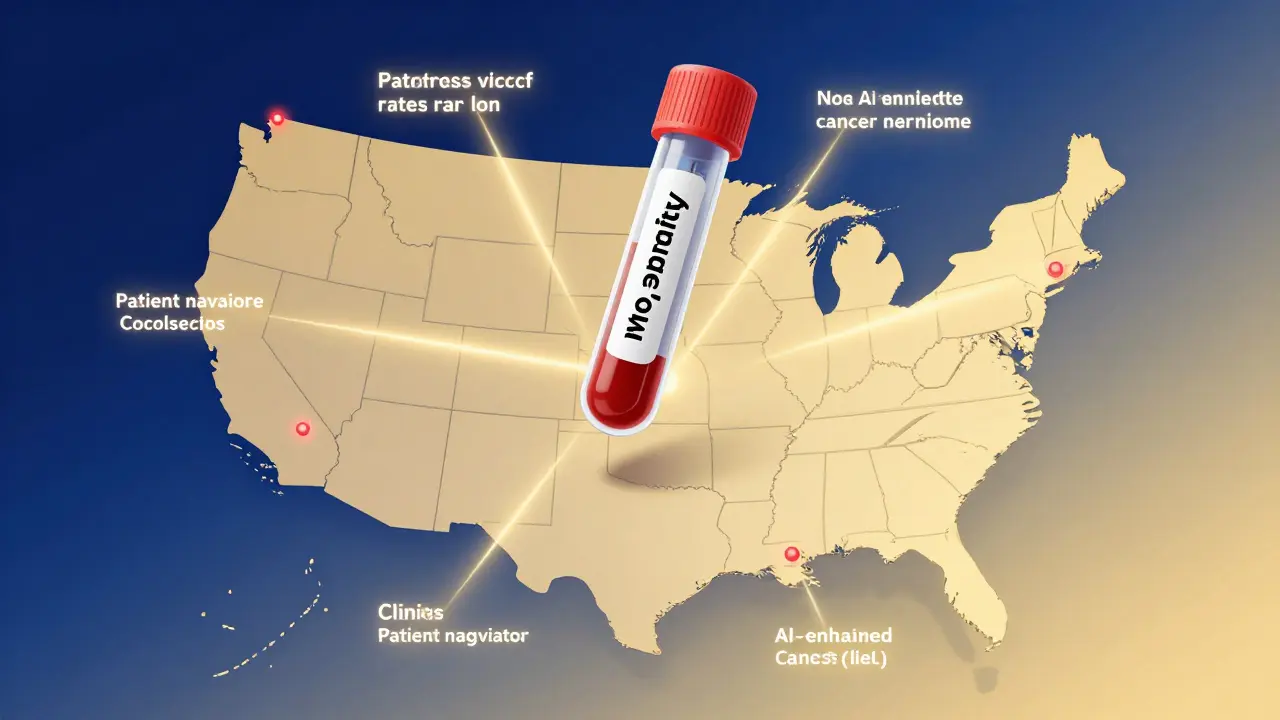
Despite all the evidence, only 67% of eligible adults in the U.S. are up to date with screening. Why? Cost, fear, access, and misinformation.
Uninsured people are less than half as likely to get screened as those with private insurance. In rural areas, wait times for colonoscopy can be over two months. Many clinics don’t have patient navigators to help people schedule, prep, or follow up. That’s a huge gap.
But solutions exist. Automated reminders-text messages, phone calls, emails-boost screening rates by nearly 30%. Patient navigators-trained staff who walk you through each step-cut no-show rates by almost half. Community health workers who speak your language and understand your culture can make all the difference.
And if cost is the issue? Many states offer free or low-cost screening programs for uninsured adults. Medicare covers colonoscopy with no copay if you’re 45 or older. If you’re on Medicaid, check your state’s rules-they vary, but most cover it.
It’s not about finding the perfect test. It’s about finding the test you’ll actually do.
The Future Is Here
There’s exciting research on the horizon. Blood tests that detect cancer DNA are now being tested in large trials. One called Guardant SHIELD detected colorectal cancer with 83% accuracy in a 10,000-person study. If approved, it could become a simple annual blood draw instead of a colonoscopy. AI-assisted colonoscopy systems are already in use-they highlight polyps doctors might miss, increasing detection by 14%. That’s huge.
But none of this matters if people don’t get screened. The most advanced test in the world won’t save a life if it’s never taken.
So if you’re 45 or older, talk to your doctor. Don’t wait for symptoms. Don’t assume you’re too healthy. Don’t let fear or inconvenience stop you. Colonoscopy might be uncomfortable. Chemotherapy might be hard. But both are better than dying from a cancer that could’ve been stopped.
At what age should I start colonoscopy screening for colorectal cancer?
You should start screening at age 45 if you’re at average risk. This is the current standard recommended by the U.S. Preventive Services Task Force, the American Cancer Society, and the American College of Gastroenterology. If you have a family history of colorectal cancer, a genetic syndrome like Lynch syndrome, or inflammatory bowel disease, you may need to start earlier-sometimes as early as age 40 or even younger. Always talk to your doctor about your personal risk.
How often do I need a colonoscopy if no polyps are found?
If your colonoscopy shows no polyps or other abnormalities, you typically don’t need another one for 10 years. This is based on how long it takes for a small polyp to develop into cancer-usually 10 to 15 years. If one or two small, low-risk polyps are found and removed, your next colonoscopy is usually in 5 to 7 years. Higher-risk findings may require a follow-up in 3 years.
Is chemotherapy always needed after colorectal cancer surgery?
No. Chemotherapy is not needed for Stage I cancer, where the tumor is small and hasn’t spread beyond the colon wall. For Stage II, it depends on risk factors like poor tumor differentiation, lymphovascular invasion, or a low number of lymph nodes sampled. Stage III cancer-where lymph nodes are involved-almost always requires chemotherapy. Common regimens include FOLFOX or CAPOX, which are given for 6 months to reduce the chance of recurrence.
Can I avoid a colonoscopy and just use a stool test instead?
Yes, if you’re unable or unwilling to have a colonoscopy. Annual FIT or a stool DNA test every 3 years are acceptable alternatives. But if either test comes back positive, you’ll still need a colonoscopy to confirm and remove any polyps. Stool tests are good for catching cancer, but they miss many polyps. Colonoscopy is the only test that prevents cancer by removing polyps before they turn cancerous.
What are the side effects of FOLFOX and CAPOX chemotherapy?
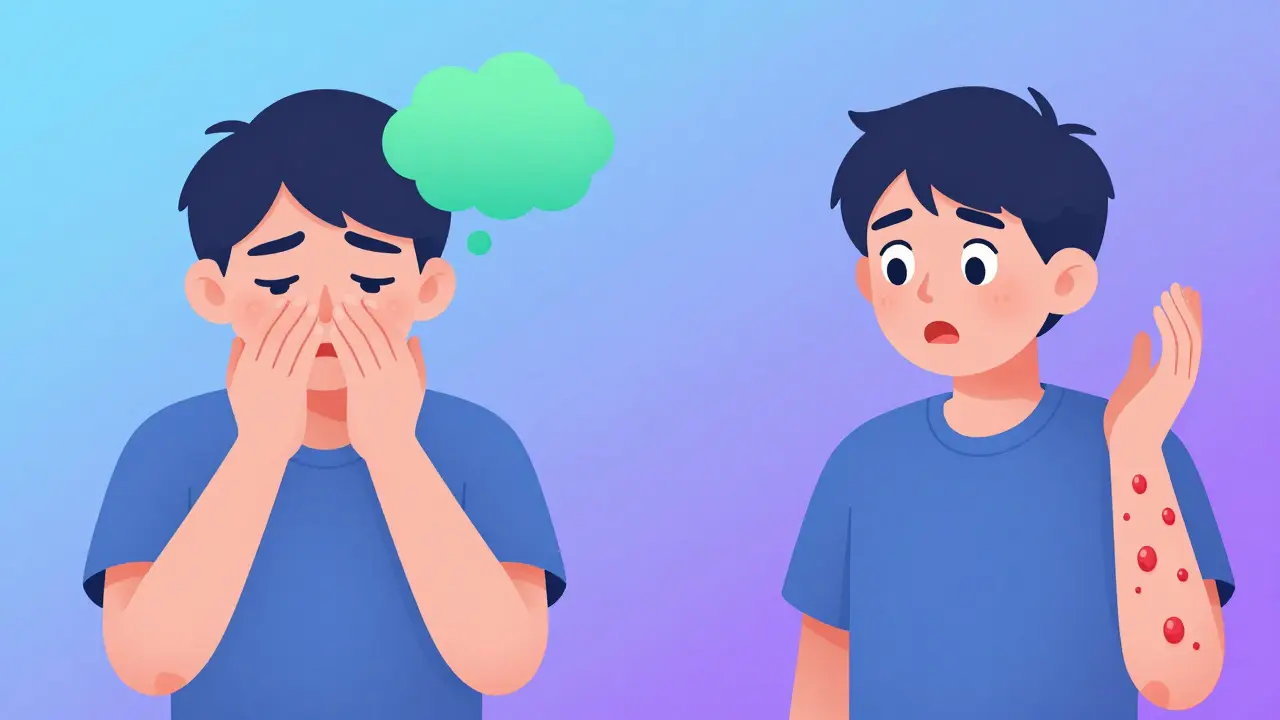
FOLFOX (given through IV) commonly causes fatigue, nausea, numbness or tingling in hands and feet from oxaliplatin, and low blood counts. CAPOX (oral capecitabine + IV oxaliplatin) causes similar side effects but may lead to more hand-foot syndrome-redness, pain, and peeling of the skin on palms and soles. Cold sensitivity from oxaliplatin is common with both-some patients can’t drink cold liquids. Most side effects improve after treatment ends, but nerve damage can sometimes last.
Is colorectal cancer screening covered by insurance?
Yes. Under the Affordable Care Act, most private insurance plans cover colonoscopy and other recommended screenings with no out-of-pocket cost if you’re 45 or older. Medicare covers colonoscopy every 10 years for average-risk people, or every 2 years if you’re high-risk. Stool-based tests like FIT are also covered with no copay. If you’re uninsured, free or low-cost screening programs are available through state health departments and community clinics.

Kathy Scaman
January 27, 2026 AT 19:56Just had my first colonoscopy at 46 and honestly? The prep was the worst part. I cried over a gallon of that gross orange juice. But the actual procedure? Felt like a nap. Woke up like, ‘Wait, that’s it?’ Now I’m telling everyone I know to just do it. No more ‘I’ll wait till I have symptoms’ nonsense.
Timothy Davis
January 29, 2026 AT 13:30Let’s be real - most people don’t understand the difference between sensitivity and specificity. FIT has 80% sensitivity for cancer but <30% for advanced adenomas. That’s not screening, that’s triage. And Cologuard’s 13% false positive rate? That’s a pipeline to anxiety, unnecessary procedures, and $$$ for the healthcare industrial complex. Colonoscopy isn’t perfect - but it’s the only tool that actually prevents death. Stop pretending alternatives are equivalent.
Howard Esakov
January 31, 2026 AT 11:24Ugh. I just saw someone on Instagram say they ‘did a stool test and skipped the colonoscopy.’ Honey. No. 😒 You’re not ‘saving time’ - you’re gambling with your colon. If you’re 45+ and not doing a colonoscopy, you’re not health-conscious - you’re just convenient. 🤦♂️
Sue Latham
February 2, 2026 AT 08:41My aunt got Stage III colon cancer at 48. She didn’t think she ‘needed’ screening because she ‘ate kale.’ Now she’s on CAPOX and can’t hold ice cream. I’m getting mine next week. No more ‘I’m too busy’ or ‘it’s embarrassing.’ Life’s too short for pride. 💪
Mindee Coulter
February 3, 2026 AT 02:32My mom’s a nurse and she said the biggest thing they see is people waiting until they’re bleeding or in pain. That’s already too late. I got mine last month. The prep sucked. The rest? Easy. Now I’m doing it every 10 years like clockwork. You don’t need to be brave. Just be consistent.
Lexi Karuzis
February 4, 2026 AT 23:41Wait… why is the government pushing this so hard? Who profits from colonoscopies? Big Pharma? The GI clinics? I’ve read that 80% of polyps are harmless - so why are we all being scared into invasive procedures? And what about the perforation rates? And the fact that many people die from complications? This feels like fear-mongering disguised as prevention… 🤔
Anna Lou Chen
February 5, 2026 AT 05:18Colonoscopy as a hegemonic biomedical ritual - a performative act of corporeal obedience to the biopolitical apparatus of preventive capitalism. The ritualization of bowel prep as a rite of passage, the commodification of surveillance under the guise of ‘early detection’ - it’s not medicine, it’s social control. The fecal immunochemical test? A decentralized, non-invasive epistemology of bodily truth - yet dismissed as ‘inferior’ because it doesn’t generate revenue streams for endoscopy centers. We must decenter the colonoscope as the sole arbiter of health. The body is not a machine to be scanned, but a flux of micro-ecologies. 🌱
John Rose
February 7, 2026 AT 04:09Just want to say - thank you for writing this. I’ve been avoiding screening for years because I thought it was only for older people. Reading about the rise in younger cases was a wake-up call. I booked mine for next month. If you’re reading this and hesitating - please, just do it. It’s not about being scared. It’s about being smart.