
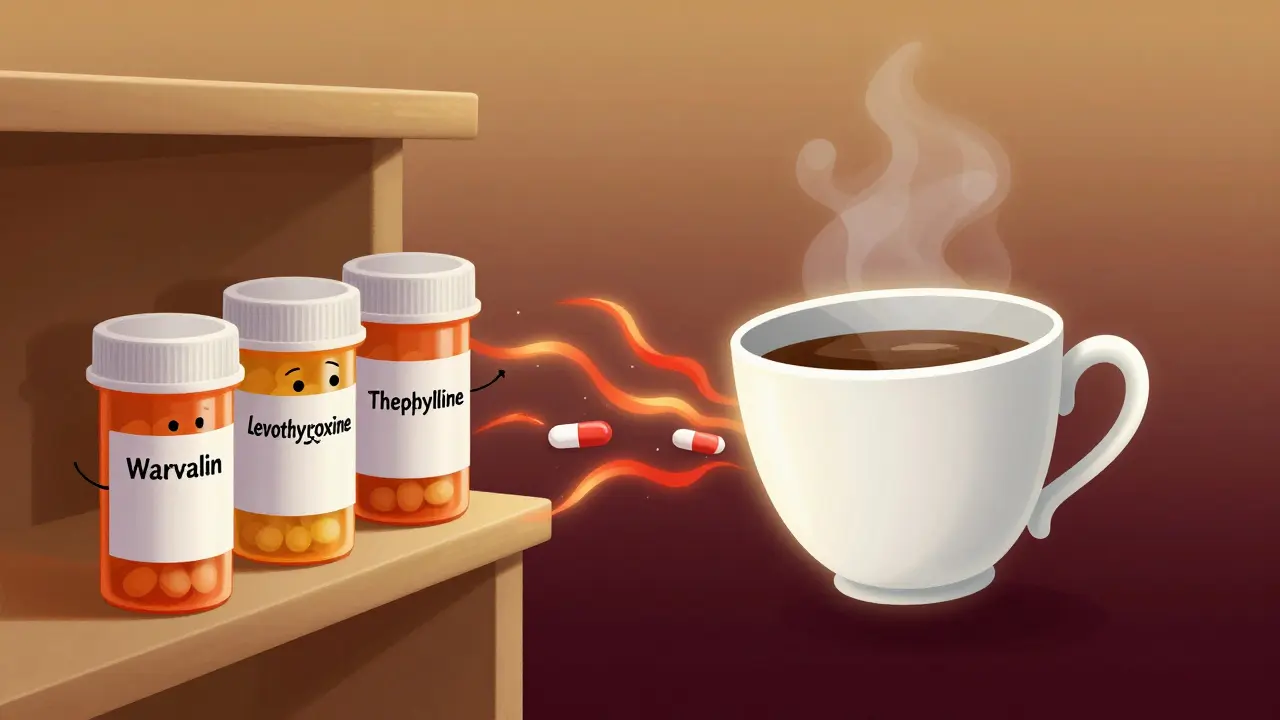
Most people drink coffee without thinking twice. But if you're on medication, that morning cup could be doing more than just waking you up-it could be making your drugs less effective, or even dangerous. Caffeine isn't just a harmless pick-me-up. It interacts with dozens of common medications in ways that can change how your body absorbs, breaks down, or responds to them. And many people have no idea.
How Caffeine Messes With Your Medications
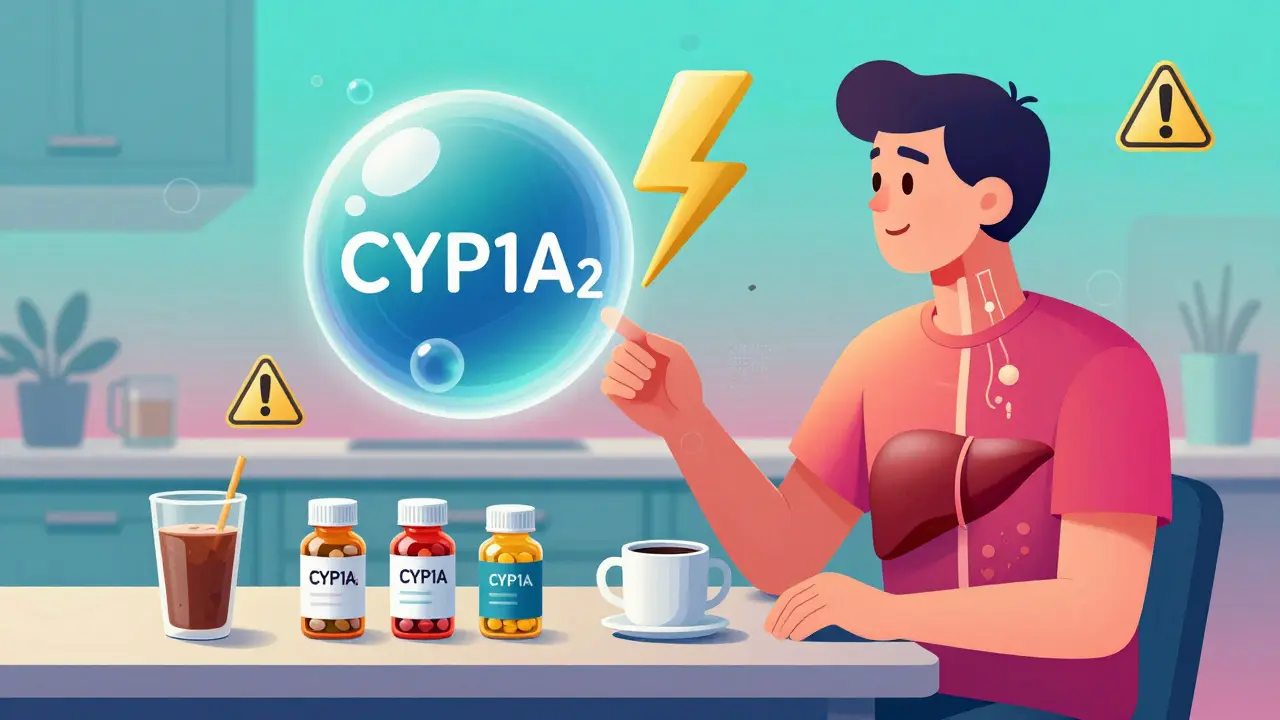
Caffeine doesn’t just stimulate your brain. It also interferes with enzymes in your liver and gut that are responsible for breaking down medications. The main enzyme it messes with is called CYP1A2. This enzyme handles about 10% of all prescription drugs. When caffeine blocks it, those drugs stick around longer-or don’t get absorbed properly-leading to unexpected side effects or reduced effectiveness. For example, if you take warfarin (a blood thinner), caffeine can slow down how fast your body clears it. That means more warfarin builds up in your system, raising your risk of bleeding. Studies show that just one cup of coffee can increase your INR (a measure of blood clotting time) by 15-25% within 24 hours. That’s enough to send someone to the ER with internal bleeding. It’s not just coffee. Energy drinks, soda, tea, and even chocolate can contain enough caffeine to cause these problems. A single energy drink can pack 80-300 mg of caffeine-more than two cups of coffee-and often includes other stimulants like taurine or ginseng that make the interaction worse.Top 5 High-Risk Medications and How to Avoid Trouble
Some medications are especially sensitive to caffeine. Here are the five most dangerous combinations and what to do about them.- Warfarin (Coumadin) - Caffeine increases warfarin levels, raising bleeding risk. The FDA recommends keeping your daily caffeine intake consistent. Don’t suddenly drink three coffees a day if you usually have one. Stick to under 200 mg per day and get your INR checked more often if you change your caffeine habits.
- Levothyroxine (Synthroid) - Coffee reduces how much of this thyroid hormone your body absorbs by up to 55%. One patient on Reddit reported their TSH jumped from 1.8 to 8.7 after taking levothyroxine with coffee for three weeks. The American Thyroid Association says to wait at least 60 minutes after taking the pill before drinking coffee-or better yet, take it with water on an empty stomach and wait 30-60 minutes before eating or drinking anything else.
- Theophylline (for asthma) - This drug and caffeine are broken down by the same liver enzyme. When you drink caffeine while taking theophylline, your blood levels of the drug can rise 15-20%. That can lead to nausea, fast heartbeat, shaking, or even seizures. Patients on theophylline should limit caffeine to less than 100 mg per day-about one small coffee.
- Adenosine and Dipyridamole (used in heart stress tests) - If you’re scheduled for a cardiac stress test, caffeine can make these drugs useless. They work by temporarily slowing your heart to detect blockages. But caffeine blocks the same receptors. Studies show that even one cup of coffee within 24 hours can reduce the test’s accuracy by 70-90%. If you’re having this test, avoid all caffeine for at least 24 hours before.
- Verapamil (for high blood pressure) - Caffeine can cut verapamil’s blood pressure-lowering effect by 25-30%. Harvard Health found that patients who drank coffee within two hours of taking verapamil saw little to no drop in their blood pressure. Take your coffee at least two hours before or after your pill.
Antidepressants, Cold Meds, and Other Hidden Risks
It’s not just the big-name drugs. Many everyday medications carry risks too. Selective serotonin reuptake inhibitors (SSRIs) like fluoxetine and sertraline can be affected by caffeine. Harvard Health reports that high caffeine intake reduces SSRI absorption by about 33%. That means you might feel like your depression isn’t improving-even though you’re taking your pills exactly as prescribed. Over 1,200 users on Drugs.com reported increased anxiety, jitteriness, or reduced medication effectiveness when combining caffeine with antidepressants. Cold and allergy meds are another trap. Many contain pseudoephedrine or phenylephrine, which are stimulants. Add caffeine to the mix, and your heart rate can spike by 20-30 beats per minute. One cardiologist at UT Southwestern calls it a “one-two punch.” In people with heart conditions, this can trigger palpitations, chest pain, or even a heart attack. Even bupropion (Wellbutrin), an antidepressant used for smoking cessation, can be risky. While it doesn’t interact directly with caffeine, both raise heart rate and blood pressure. Combining them can make you feel wired, anxious, or dizzy. If you’re trying to quit smoking with bupropion, cutting back on coffee might help you avoid side effects.Who’s at the Highest Risk?
Not everyone reacts the same way. Some people break down caffeine quickly. Others hold onto it for hours. Why? Genetics. A gene called CYP1A2 controls how fast your liver processes caffeine. About 50% of people have a slow version. That means caffeine stays in their system longer-increasing the chance of interactions. Older adults, people with liver disease, and pregnant women also process caffeine slower. In newborns, caffeine’s half-life can be as long as 96 hours. That’s why caffeine is avoided in NICUs. The biggest risk group? People on five or more medications daily. A 2021 study found these patients were 3.2 times more likely to have a dangerous caffeine interaction. If you’re managing diabetes, high blood pressure, heart disease, depression, and thyroid issues-all with different pills-you’re playing with fire if you don’t track your caffeine.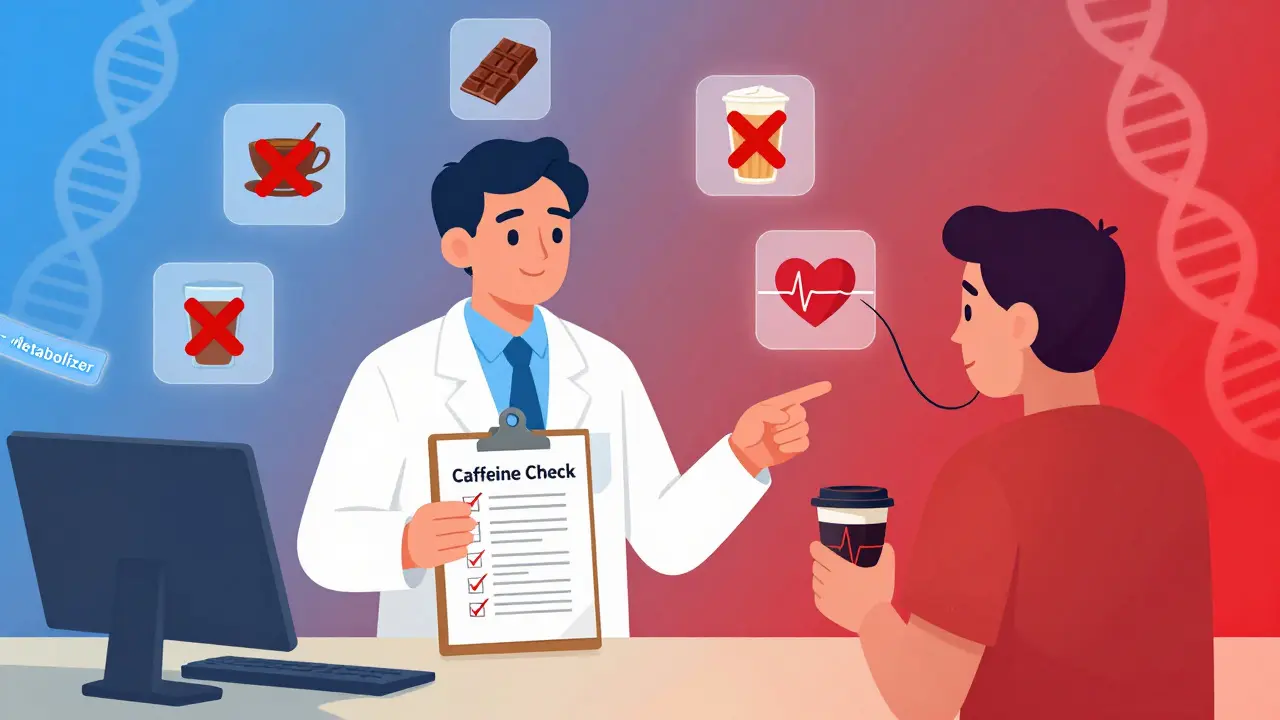
What You Should Do Right Now
You don’t need to quit coffee. But you do need to be smart about it.- Check your meds. Look at the patient information leaflet inside your pill bottle. If it mentions caffeine, coffee, or stimulants, pay attention.
- Time it right. Take levothyroxine and calcium-channel blockers at least 2 hours before or after coffee. Wait 60 minutes after taking thyroid meds before drinking anything.
- Track your intake. A cup of brewed coffee = 95-200 mg. Espresso = 63 mg. Energy drink = 80-300 mg. Tea = 30-70 mg. Keep a simple log for a week. You might be surprised how much you’re consuming.
- Ask your pharmacist. Pharmacists are trained to catch these interactions. When you pick up a new prescription, ask: “Does this interact with caffeine?” They’ll know.
- Be honest with your doctor. Don’t say “I only have one cup.” Say “I drink coffee every morning and two energy drinks on weekends.” That’s the full picture they need.
The Bigger Picture
Caffeine is everywhere. Eighty-five percent of American adults consume it daily. But until recently, doctors didn’t talk about it. The FDA reported a 37% spike in caffeine-medication adverse events between 2020 and 2024. Energy drinks caused 68% of those serious cases. Now, things are changing. The American Pharmacists Association made caffeine interaction screening mandatory in 2023. Epic Systems, the biggest electronic health record company, rolled out a pilot program in 47 hospitals that flags high-risk combinations-and reduced adverse events by 29%. In the next few years, genetic testing for CYP1A2 will become more common. By 2028, your doctor might tell you: “Your genes make you a slow metabolizer. You need to limit caffeine to one small cup a day.” Until then, don’t assume your meds are safe just because you’ve been taking them for years. Caffeine doesn’t care how long you’ve been on them. It only cares about what’s in your cup.Can I still drink coffee if I’m on blood thinners?
Yes, but you need to be consistent. Don’t suddenly start drinking three cups a day if you usually have one. Keep your caffeine intake stable-under 200 mg per day-and get your INR checked more often if you change your habits. Sudden increases in caffeine can raise your bleeding risk by 15-25%.
Does tea have the same effect as coffee on medications?
It depends. Black tea has about 30-70 mg of caffeine per cup, less than coffee. But if you drink multiple cups, it adds up. Green tea has even less, but it still contains caffeine and can interfere with medications like theophylline or warfarin. If you’re on a high-risk medication, treat tea like coffee-time it carefully and monitor your response.
I take levothyroxine and I drink coffee. Is my thyroid not working because of this?
Possibly. Coffee can reduce levothyroxine absorption by up to 55%. If your TSH levels are high despite taking your pill correctly, caffeine could be the culprit. Try taking your pill with water first thing in the morning, then wait 60 minutes before drinking coffee. Retest your TSH after 6 weeks. Many patients see their levels normalize once they separate the two.
Can energy drinks cause worse interactions than coffee?
Yes. Energy drinks often contain 80-300 mg of caffeine per serving-more than two cups of coffee-and include other stimulants like taurine, ginseng, or guarana. These can independently affect drug metabolism and increase heart rate or blood pressure. They’re responsible for 68% of serious caffeine-medication adverse events reported to the FDA since 2020.
Should I stop caffeine completely if I’m on multiple medications?
Not necessarily. Most people can safely have one cup of coffee a day if they time it right and avoid high-risk combinations. The key is awareness and consistency. If you’re on five or more medications, talk to your pharmacist. They can tell you which ones are safe with caffeine and which ones need separation. Cutting back is smarter than quitting cold turkey.
Amelia Williams
January 23, 2026 AT 22:31Wow, I had no idea coffee could mess with my blood thinner like that. I take warfarin and drink two cups every morning-guess I’m lucky I haven’t ended up in the ER yet. Gonna start timing it better now.
Juan Reibelo
January 24, 2026 AT 06:44My pharmacist flagged this exact thing last month-after I mentioned my energy drink habit. I thought I was just being ‘productive.’ Turns out I was playing Russian roulette with my INR. Cut back to one coffee a day. My numbers stabilized within two weeks. Don’t be like me.
Viola Li
January 25, 2026 AT 23:46So let me get this straight-you’re telling me caffeine is the new villain? Next you’ll say sugar is evil and water is a communist plot. People used to drink coffee with their pills for decades and lived to 90. Maybe your meds are just bad.
venkatesh karumanchi
January 26, 2026 AT 21:25I’m on 6 meds and drink chai every morning. This article saved me. My TSH was crazy high-turns out my ‘healthy’ green tea was blocking my Synthroid. Now I take it with water, wait an hour. My doctor was shocked how much it changed. Thank you.
Jenna Allison
January 28, 2026 AT 08:15As a clinical pharmacist, I see this daily. CYP1A2 inhibition is underdiagnosed because providers don’t ask about caffeine. Patients say ‘I just have one cup’-but they don’t count the matcha latte, the chocolate bar, or the pre-workout. Document intake like you document meds. Consistency is the only safe variable.
Kat Peterson
January 28, 2026 AT 19:45So… I’m basically a walking time bomb? 😭 I’ve been chugging Monster Energy while on Wellbutrin and levothyroxine for TWO YEARS. My heart feels like it’s trying to escape my chest. I’m crying. I need a hug and a decaf latte. 🥺☕
Shelby Marcel
January 29, 2026 AT 13:48wait so tea is bad too?? i thought it was healthy?? i drink 3 green teas a day and take my blood pressure med… im so scared now
blackbelt security
January 29, 2026 AT 18:12Don’t panic. Just separate. Coffee after meds, not before. Simple. No drama. Your body doesn’t need to be a chemistry lab.
Patrick Gornik
January 30, 2026 AT 02:55Let’s not romanticize caffeine as some benign ritual-it’s a pharmacologically active alkaloid that hijacks hepatic metabolism like a rogue AI in a biotech thriller. We’ve normalized a neurochemical intrusion into the endocrine equilibrium, and now we’re surprised when the system crashes? The real tragedy isn’t the interaction-it’s that we’ve outsourced our physiological literacy to Big Pharma and Big Brew. Wake up. Your liver isn’t a vending machine.
Luke Davidson
January 30, 2026 AT 09:56My grandma took her thyroid med with coffee for 20 years and never had an issue. But then again, she also smoked two packs a day and lived to 94. Maybe genetics matter more than we think? I’ve got the slow CYP1A2 variant-so I’m cutting back. But I’m not scared. Just cautious. And honestly? I’m glad someone finally talked about this. Most docs don’t even ask.
Sawyer Vitela
January 31, 2026 AT 11:34Studies show 15-25% INR increase? That’s not statistically significant with n=3. Also, energy drinks are 68% of cases? So you’re blaming the drink, not the people who chug three a day. Common sense isn’t a medical guideline.
Shanta Blank
February 2, 2026 AT 02:29OMG I just realized I’ve been taking my Adderall with an espresso since 2021. My heart’s been racing for years and I thought it was ‘just anxiety.’ I’m literally going to the ER tomorrow. This is a horror story. My therapist is gonna be furious. 😱