

When a child has asthma, their airways get tight and swollen, making it hard to breathe. It’s not just about coughing or wheezing - it’s about making sure the right medicine gets where it needs to go, every single time. For many kids, that means using a spacer with their inhaler. But spacers alone don’t fix the problem. Schools, care plans, and consistent training all have to work together - or the child is at risk.
Why Spacers Are Non-Negotiable for Kids
Many parents think an inhaler is enough. It’s not. Without a spacer, most of the medicine hits the back of the throat or gets spit out. Studies show that only about 20% of the dose actually reaches the lungs when a child uses an inhaler alone. That’s why doctors say spacers are essential - especially for kids under five.
A spacer is a simple tube that attaches to the inhaler. It holds the medicine for a few seconds after you press it. That gives the child time to breathe in slowly, without needing perfect timing. For little ones, this means using a mask. For older kids, a mouthpiece works better. The key is consistency: every puff should go through the spacer.
Research from the Global Initiative for Asthma (GINA) and the American Academy of Pediatrics is clear: for preschoolers with wheezing, using a spacer with an inhaler is just as effective as a nebulizer - and far cheaper. One JAMA Pediatrics study found hospital admission rates dropped from 20% with nebulizers to just 5% with spacers. That’s not a small difference. It’s life-changing.
But here’s the catch: spacers only work if they’re used right. Static electricity can trap medicine inside the tube. That’s why you wash them once a week with dish soap, then let them air-dry - no rinsing. Rinsing leaves water behind, which creates static. And if the spacer is wet? Don’t use it. The medicine won’t come out properly.
How Schools Are (or Aren’t) Prepared
Over 6 million children in the U.S. have asthma. That’s 1 in 12 kids. Many spend 6 to 8 hours a day at school. So what happens when an asthma attack strikes during math class?
According to the National Asthma Education and Prevention Program (NAEPP), every child with asthma should have a written care plan. And schools in 42 states are legally required to keep rescue medication on-site. But having the medicine isn’t the same as having someone who knows how to use it.
A 2022 study in the Journal of School Nursing found schools with full asthma policies - including trained staff, accessible spacers, and care plans - cut absenteeism by 37%. That’s 3 out of every 10 missed school days prevented. Yet, rural schools report 45% fewer spacers available than urban ones. Some schools don’t even have a designated person to help a child use their inhaler.
And then there’s the stigma. One 10-year-old told his mom he refuses to carry his spacer to school because it’s “too bulky” and makes him feel different. Teens especially struggle with this. Studies show adolescents are 80% less likely to use their inhaler correctly than younger kids. They don’t want to be seen as “the asthmatic kid.” So they skip doses. Or worse - they use the inhaler without a spacer, thinking it’s enough.

What a Real Asthma Care Plan Looks Like
A care plan isn’t just a piece of paper. It’s a roadmap. It tells parents, teachers, and nurses exactly what to do when symptoms flare up.
A good plan includes:
- Which medications to use - and when
- How to use the spacer correctly
- Early warning signs (like coughing after play or trouble breathing during gym)
- When to call 911 versus when to give a rescue puff
- Who at school is authorized to help
It’s not enough to hand this to the school nurse and assume it’s handled. The child’s teacher, PE instructor, and even the bus driver should know the basics. A 15-minute training session with the nurse can make all the difference.
One parent in Brisbane shared that her 6-year-old had three ER visits in two months. After the school nurse sat down with the family and reviewed the care plan - including spacer technique - the child had zero attacks for six months. The difference? Everyone was on the same page.
Common Mistakes That Undermine Spacer Use
Even when families have spacers, they often use them wrong. Here are the top three mistakes:
- Wiping the spacer dry after washing. That creates static. Always air-dry without rinsing.
- Pressing the inhaler multiple times at once. One puff. Wait. Then breathe in slowly. Multiple puffs at once waste medicine and can cause choking.
- Not replacing old spacers. Plastic gets brittle. Masks crack. Static builds up over time. Replace your spacer every 6 to 12 months - or sooner if it’s cracked or discolored.
Some families try to save money by using a spacer from a friend. Don’t. Spacers are personal medical devices. Sharing them can spread germs - and if the spacer doesn’t fit the child’s inhaler model, it won’t work right.
And don’t forget: if a child is having a hard time breathing and doesn’t have their spacer, use the inhaler alone. It’s better than nothing. But make sure you replace the spacer as soon as possible.
What’s Changing in 2026
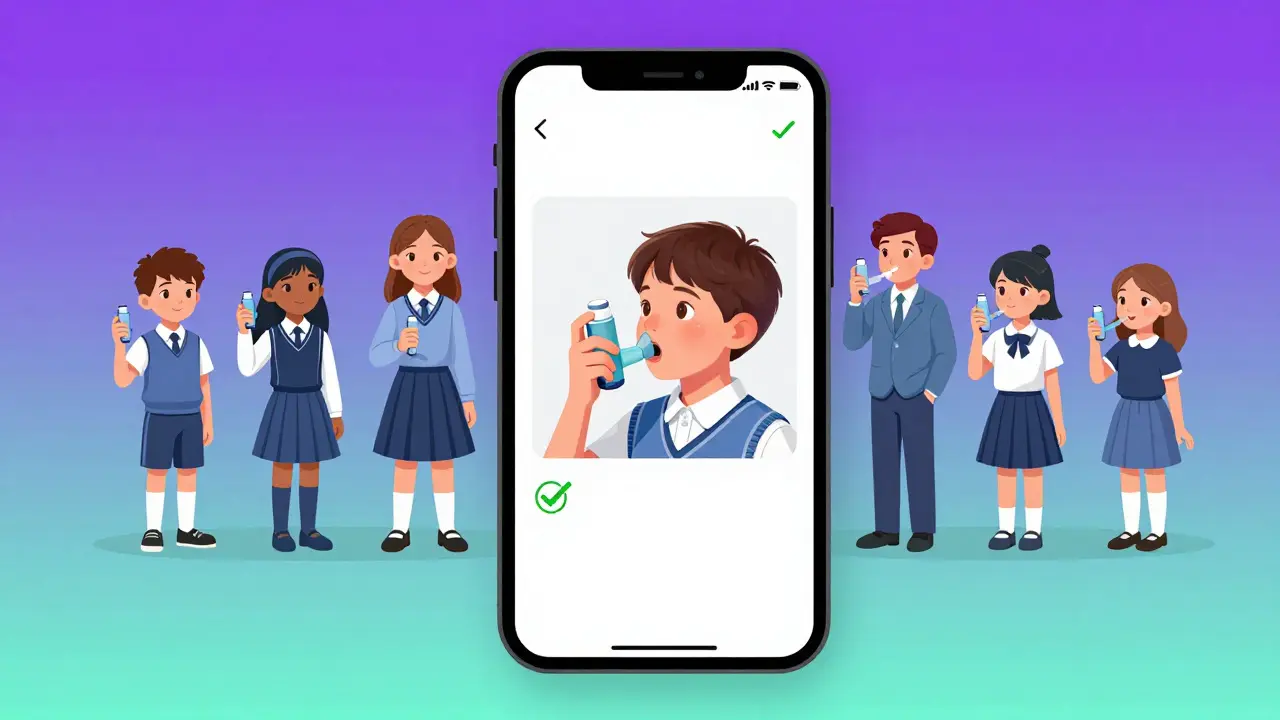
Things are improving - slowly. In January 2024, the American Academy of Pediatrics updated its guidelines to push for spacer training for teachers and school staff. The CDC is now funding programs to get spacers into underserved schools. And researchers are testing smartphone apps that can record a child’s inhaler technique and give real-time feedback.
One NIH-funded study, running through 2025, is testing whether a simple app can help kids and parents check their spacer use. The idea? Take a short video of the child using the inhaler, and the app tells you if the technique was correct. Early results show promise - especially for teens who respond better to tech than to lectures.
But technology won’t fix what education doesn’t. The biggest barrier isn’t the device - it’s the lack of consistent training. A child can have the best spacer in the world, but if no one at school knows how to help them, it’s useless.
What Parents Can Do Right Now
You don’t need to be a medical expert. You just need to be consistent.
- Practice spacer use every day - even when your child is fine. Make it routine, like brushing teeth.
- Ask your child’s doctor for a written asthma care plan. If they don’t give you one, ask for it.
- Send a spare spacer and mask to school. Label everything.
- Meet with the school nurse at the start of each year. Bring the care plan. Show them how to use the spacer.
- Ask your child: “Do you know what to do if you feel short of breath at school?” If they hesitate, it’s time for a refresher.
One parent told me, “I used to think asthma was just about breathing. Now I know it’s about preparation.”
Can a child use an inhaler without a spacer?
Yes, but it’s far less effective. Without a spacer, most of the medicine sticks in the mouth or throat instead of reaching the lungs. This means the child gets less relief and is more likely to need emergency care. Spacers are recommended for all children under 12, and strongly advised for teens.
How often should I clean my child’s spacer?
Once a week. Wash it with warm water and a drop of dish soap. Don’t rinse it out. Let it air-dry completely. Rinsing leaves water behind, which creates static that traps medicine. A dry spacer without rinsing works best.
Do schools have to keep asthma medication on hand?
In 42 U.S. states, yes - schools must allow students to carry or keep rescue inhalers on-site. Many also require a written asthma action plan. But having the medicine doesn’t mean they have trained staff to help. Always confirm who at school is authorized to assist your child.
Why do older kids struggle more with spacer use?
Teens often feel self-conscious about using a spacer at school. They don’t want to stand out. Studies show adolescents are 80% less likely to use their inhaler correctly than younger children. The solution isn’t just better devices - it’s education, peer support, and normalizing the use of spacers as part of daily health.
Is a spacer better than a nebulizer for kids?
For mild to moderate asthma attacks, yes. Studies show spacers deliver more medicine to the lungs, work faster, and cost less. Hospital admissions drop by 58% compared to nebulizers in children under five. Nebulizers are still used in severe cases or when a child can’t use a spacer, but for everyday use, spacers are the gold standard.
What should I do if my child’s school won’t let them use their inhaler?
Request a meeting with the school nurse and principal. Bring a copy of the asthma care plan and reference the NAEPP guidelines. In most states, schools are legally required to allow access to rescue medication. If they refuse, contact your state’s department of education or a local asthma advocacy group for support.





Aditya Gupta
February 2, 2026 AT 00:09Spacers are a game changer. My cousin’s kid used to end up in the ER every month. Got a spacer, washed it right (no rinsing, lol), and zero attacks for 8 months. Schools need to get on this.
Nidhi Rajpara
February 3, 2026 AT 19:22It is imperative that educational institutions adhere strictly to the National Asthma Education and Prevention Program guidelines, as non-compliance may result in severe liability concerns and compromised student welfare.
Chris & Kara Cutler
February 5, 2026 AT 17:08YES YES YES 🙌 My 7yo uses a spacer every single day - even when she’s feeling fine. We practice like brushing teeth 😊 School nurse now has a spare! #AsthmaWarrior
Donna Macaranas
February 6, 2026 AT 07:15I’ve seen this play out in my daughter’s school. The nurse is amazing, but the PE teacher didn’t know how to help. After a quick 15-min demo, everything changed. Small steps matter.
Rachel Liew
February 7, 2026 AT 20:48My son used to hide his spacer in his backpack. He didn’t want to be ‘that kid’. We started talking about it like it’s just part of his routine - like glasses or bandaids. It helped so much.
Lisa Rodriguez
February 8, 2026 AT 11:04Washing spacers without rinsing is such a pro tip I never knew. I was rinsing mine for years and wondering why the medicine didn’t work right. Duh. Static. Makes sense now. Thanks for this.
Bryan Coleman
February 10, 2026 AT 08:37My kid’s spacer cracked last year. I kept using it ‘cause it still looked fine. Then one day, half the puff got stuck inside. Replaced it. No more issues. Replace every 6-12 months. Seriously.
Naresh L
February 10, 2026 AT 18:22It’s interesting how we treat asthma like a medical issue when it’s really a social one. The real problem isn’t the spacer - it’s the shame. Why do we make kids feel abnormal for needing help to breathe?
Sami Sahil
February 12, 2026 AT 07:58My nephew used to skip his inhaler before soccer. Now he has a little sticker chart. 7 days in a row = ice cream. He’s been spacer king for 3 months. Motivation works better than lectures.
franklin hillary
February 13, 2026 AT 00:19Let’s be real - if we spent half as much time training teachers as we do on standardized tests, we wouldn’t have kids dying in gym class because no one knew how to use a spacer. This isn’t science fiction. It’s basic human decency. And yet… we still act like it’s optional. 🤦♂️
Bob Cohen
February 13, 2026 AT 06:29Oh wow, another post about spacers. Next up: ‘Why Water Is Important for Hydration.’
Ishmael brown
February 13, 2026 AT 23:58My kid uses a nebulizer. It’s way more ‘professional.’ Spacers are for people who don’t want to spend 15 minutes on breathing. 🤷♂️
Nancy Nino
February 14, 2026 AT 21:34It is profoundly concerning that the dissemination of medical best practices remains inconsistent across public institutions. One would assume, in a developed nation, that such life-saving protocols would be universally implemented.
June Richards
February 15, 2026 AT 18:41Ugh. Another parent blog. Can we just give kids inhalers and stop making everything a project? My kid’s fine. They’ll survive.
Jaden Green
February 16, 2026 AT 00:53While the author presents a superficially compelling case for spacer utilization, they conspicuously omit any critical examination of the pharmaceutical-industrial complex’s role in promoting spacers over nebulizers - a device historically favored in clinical settings for its perceived efficacy and reliability. The economic incentives behind this shift are rarely interrogated, and the reliance on anecdotal data from JAMA Pediatrics and GINA is troubling, given their institutional affiliations. This is not medicine - it’s marketing dressed as public health advice.
Aditya Gupta
February 17, 2026 AT 09:54^ this. My kid’s school had no plan. I showed up with a spacer, a care plan, and a 10-min demo. Now they have a spacer kit in every classroom. No big deal. Just do the work.
Chris & Kara Cutler
February 17, 2026 AT 16:50My daughter’s school just got a grant for 50 spacers 🎉 They’re putting them in every nurse’s office + PE room. Kids are starting to use them without shame. Progress!
franklin hillary
February 19, 2026 AT 05:21Exactly. The system fails kids because we treat asthma like a ‘special need’ instead of a normal part of life. We don’t make kids hide their glasses. Why are we making them hide their spacer?
Lisa Rodriguez
February 20, 2026 AT 15:46And if the school says ‘we don’t have funding’ - tell them to check the CDC’s new grants. I got mine for free last year. It’s there. They just don’t know how to ask.
Donna Macaranas
February 22, 2026 AT 10:34My son’s teacher now keeps a spacer in her desk. She says she keeps it for emergencies - but honestly? I think she’s just proud she knows how to use it. That’s the win.