
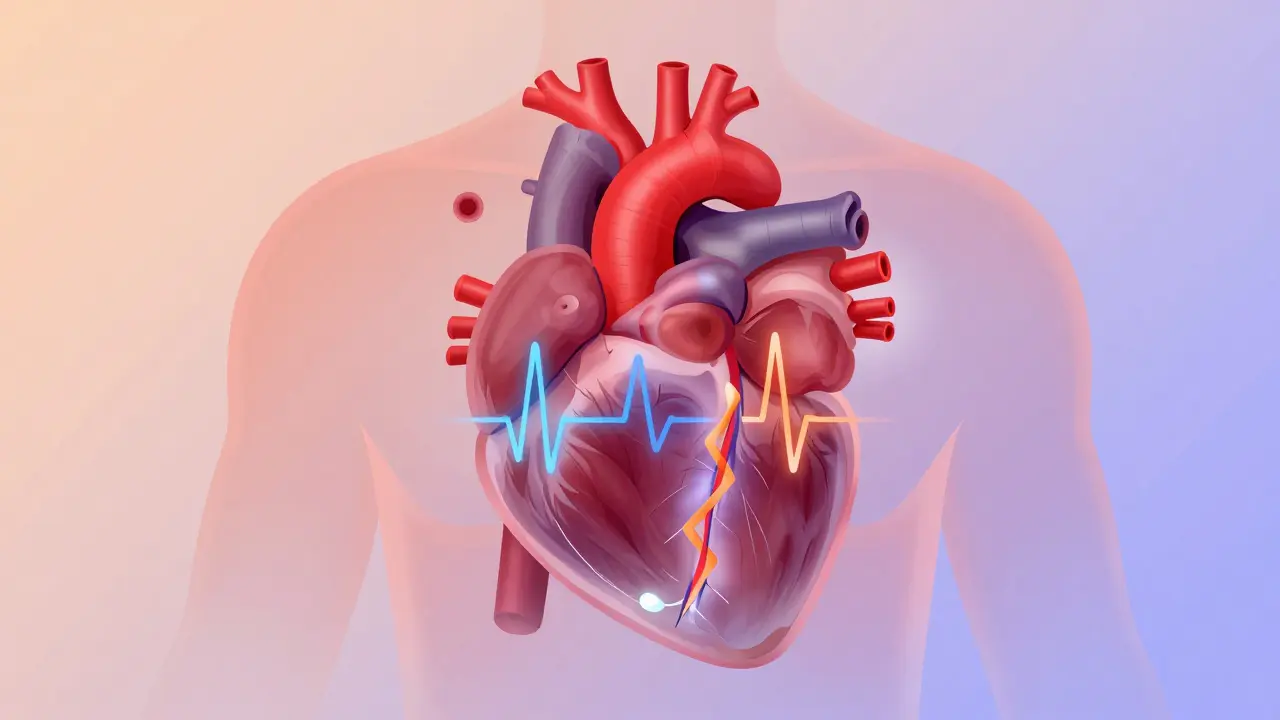
What Are Arrhythmias?
Your heart beats because of electrical signals that tell it when to contract. When those signals get mixed up, your heart might race, flutter, or skip beats. That’s an arrhythmia. Not all arrhythmias are dangerous, but some can lead to serious problems like stroke or heart failure. The three most common types you’ll hear about are atrial fibrillation, bradycardia, and tachycardia. Each one affects your heart differently - and each needs a different approach.
Atrial Fibrillation: When the Upper Chambers Go Wild
Atrial fibrillation, or AFib, is the most common serious heart rhythm problem. Instead of beating in a steady rhythm, the upper chambers of your heart (the atria) quiver or fibrillate. This means blood doesn’t pump out properly, which can cause clots to form. Those clots can travel to your brain and cause a stroke.
The American Heart Association says AFib affects between 2.7 and 6.1 million people in the U.S. alone. The risk goes up with age - about 1 in 10 people over 80 have it. Many people don’t even know they have it until they have a stroke or their doctor notices an irregular pulse during a checkup.
Symptoms can include:
- Heart palpitations - feeling like your heart is fluttering, pounding, or skipping
- Fatigue, even after light activity
- Shortness of breath
- Dizziness or lightheadedness
- Chest discomfort
But here’s the catch: some people feel nothing at all. That’s why checking your pulse regularly matters. If your pulse feels uneven or irregular, don’t ignore it. A simple 12-lead ECG is the gold standard for diagnosis. If your doctor suspects AFib but you’re not having symptoms at the time, they might ask you to wear a portable heart monitor for 24 hours or longer.
Bradycardia: When the Heart Beats Too Slow
Bradycardia means your heart beats slower than 60 beats per minute. For athletes or very fit people, this is normal - their hearts are strong and efficient. But for others, it can be a sign of trouble.
When your heart doesn’t pump enough blood, you might feel dizzy, tired, or faint. You might get out of breath climbing stairs or struggle to keep up during a walk. In severe cases, bradycardia can lead to heart failure or sudden cardiac arrest.
Causes vary. It could be due to:
- Aging - the heart’s natural pacemaker can wear out
- Heart disease or previous heart attack
- Electrolyte imbalances (like low potassium or calcium)
- Medications - beta-blockers or calcium channel blockers can slow the heart
- Underactive thyroid
Diagnosis starts with an ECG. If the slow rhythm isn’t constant, your doctor might use a Holter monitor (a portable ECG you wear for days) or an event recorder you activate when you feel symptoms. Blood tests check for thyroid or electrolyte issues. An echocardiogram might be done to see if the heart’s structure is damaged.
Treatment depends on the cause. If a medication is to blame, your doctor might adjust the dose. If your heart’s natural pacemaker isn’t working, you may need a pacemaker - a small device implanted under your skin that sends electrical pulses to keep your heart beating at a safe rate. Pacemakers today are tiny, reliable, and last 5-15 years depending on usage.
Tachycardia: When the Heart Races
Tachycardia means your heart beats faster than 100 beats per minute at rest. It’s not always a problem - exercise, stress, or caffeine can cause a temporary spike. But when it happens without reason, or lasts too long, it becomes dangerous.
There are different kinds. Supraventricular tachycardia (SVT) starts in the upper chambers. Ventricular tachycardia (VT) starts in the lower chambers and is more serious because it can lead to sudden cardiac arrest. Both can cause:
- Heart palpitations
- Chest pain
- Shortness of breath
- Fainting or near-fainting
- Feeling anxious or shaky
Doctors diagnose tachycardia with an ECG. If episodes are brief, you might need a wearable monitor. Stress tests, echocardiograms, and blood tests help rule out triggers like thyroid problems or heart damage.
Treatment options include:
- Vagal maneuvers - simple techniques like holding your breath and bearing down (like during a bowel movement) can sometimes stop SVT
- Medications - beta-blockers, calcium channel blockers, or antiarrhythmics
- Cardioversion - a controlled electric shock to reset the rhythm
- Cardiac ablation - a procedure that destroys the small area of heart tissue causing the fast rhythm
Ablation has become much more precise. New techniques like pulsed field ablation use electrical pulses instead of heat or cold, reducing damage to nearby tissues. It’s especially useful for people who’ve had failed treatments or are at higher risk from traditional methods.
Why It Matters: Stroke Risk and Long-Term Damage
AFib is the biggest arrhythmia risk for stroke. People with AFib are five times more likely to have one. That’s why doctors often prescribe blood thinners - drugs like apixaban or rivaroxaban - to prevent clots. These aren’t optional for most AFib patients; skipping them can be life-threatening.
Bradycardia and tachycardia, if left untreated, can weaken the heart over time. The heart muscle gets tired from working too hard or too slowly. This can lead to cardiomyopathy - a condition where the heart enlarges and can’t pump effectively.
That’s why early detection matters. If you notice your heart skipping, racing, or feeling unusually slow, don’t wait. Get it checked. A simple 5-minute ECG can reveal a lot.
Lifestyle Changes That Help
No matter the type of arrhythmia, lifestyle plays a huge role. The Cleveland Clinic says managing underlying conditions is key - even before symptoms appear.
- Control high blood pressure - it’s one of the top triggers for AFib
- Lose excess weight - obesity increases AFib risk by 40%
- Limit alcohol - binge drinking can trigger AFib episodes, even in healthy people
- Quit smoking - it damages heart tissue and raises arrhythmia risk
- Manage stress - chronic stress raises adrenaline, which can trigger fast rhythms
- Exercise regularly - but avoid extreme endurance sports if you have untreated arrhythmias
Many people think they need to avoid all caffeine. That’s not true. Most studies show moderate coffee or tea (1-2 cups a day) doesn’t increase arrhythmia risk. But if you notice your heart reacts badly after energy drinks or large amounts of caffeine, cut back.
When to See a Doctor
You don’t need to panic over every skipped beat. Occasional palpitations are common. But call your doctor if you experience:
- Heart palpitations that last more than a few minutes
- Dizziness or fainting
- Chest pain or pressure
- Shortness of breath that doesn’t go away
- A pulse that feels irregular or unusually slow
If you have a family history of heart disease or sudden cardiac death, get checked even if you feel fine. Some arrhythmias run in families.
What’s New in Treatment?
Treatment has improved a lot in the last 10 years. For AFib, doctors now focus on early rhythm control - not just letting the heart stay irregular and managing symptoms. Studies show that restoring normal rhythm early reduces long-term heart damage.
Pulsed field ablation (PFA) is a game-changer. Unlike older methods that use heat or cold, PFA uses electric pulses to target only the faulty heart cells. It’s faster, safer, and has fewer complications. Hospitals in Australia and the U.S. are already using it routinely.
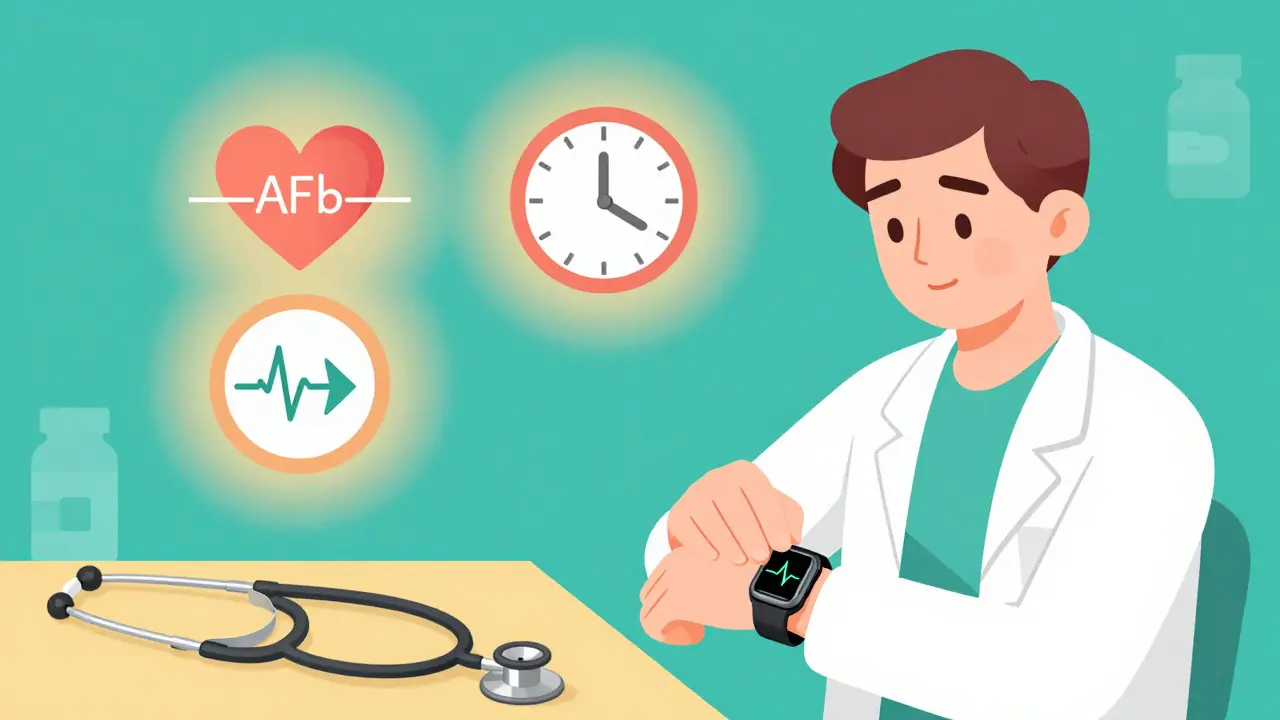
Wearable tech is also helping. Smartwatches with ECG features can now detect AFib. While they’re not a replacement for medical diagnosis, they’re great for spotting patterns. If your watch says you had an irregular pulse, take a screenshot and show it to your doctor.
Can arrhythmias go away on their own?
Sometimes, yes - especially if they’re triggered by temporary factors like stress, caffeine, or illness. A single episode of tachycardia after a big cup of coffee might resolve on its own. But if the arrhythmia keeps coming back, or if it’s atrial fibrillation, it rarely goes away without treatment. Left untreated, most arrhythmias tend to get worse over time.
Is it safe to exercise with an arrhythmia?
In most cases, yes - but only after getting clearance from your doctor. Regular, moderate exercise helps improve heart health and can reduce AFib episodes. But intense workouts, especially endurance sports like marathons, can trigger arrhythmias in some people. Your doctor might recommend a stress test to see how your heart responds to exertion before you start a new routine.
Do I need a pacemaker if I have bradycardia?
Not always. If your slow heart rate doesn’t cause symptoms, you might not need one. But if you’re dizzy, fainting, or tired all the time, a pacemaker is usually the best solution. Modern pacemakers are small, last over 10 years, and adjust your heart rate based on your activity level - so you won’t feel like you’re carrying a device.
Can stress cause arrhythmias?
Absolutely. Stress triggers adrenaline, which can make your heart race or skip beats. People with existing heart conditions are especially vulnerable. Managing stress through sleep, breathing exercises, or therapy can reduce arrhythmia frequency. Some patients see fewer episodes just by cutting back on caffeine and learning to relax.
Are blood thinners really necessary for AFib?
For most people with AFib, yes. Even if you feel fine, your heart isn’t pumping blood properly, which lets clots form. These clots can cause strokes - and strokes from AFib are often more severe. Blood thinners reduce that risk by 60-70%. The benefits far outweigh the small risk of bleeding for most patients. Your doctor will use a scoring system to decide if you need them.
Can I drink alcohol if I have AFib?
It’s risky. Even small amounts can trigger AFib episodes in people who are sensitive. Studies show that drinking just one glass of wine a day increases AFib risk by 16%. For many patients, cutting out alcohol completely leads to fewer episodes and better outcomes. If you’re not ready to quit entirely, limit it to special occasions and never binge drink.
Next Steps: What to Do Now
If you think you might have an arrhythmia, start with your GP. Ask for a pulse check and an ECG. Don’t wait for symptoms to get worse. If you already have a diagnosis, stick to your treatment plan. Take your meds as prescribed. Track your symptoms. Use your smartwatch if you have one. And remember - lifestyle changes aren’t optional. They’re part of your treatment.
Arrhythmias are common, treatable, and often preventable. You don’t have to live with a racing or skipping heart. With the right care, you can get back to feeling normal - and stay healthy for years to come.

Jessie Ann Lambrecht
January 7, 2026 AT 10:27Vince Nairn
January 8, 2026 AT 18:54Ayodeji Williams
January 9, 2026 AT 05:49Kyle King
January 10, 2026 AT 12:35Kamlesh Chauhan
January 12, 2026 AT 09:33Emma Addison Thomas
January 13, 2026 AT 19:49Mina Murray
January 14, 2026 AT 12:11Rachel Steward
January 15, 2026 AT 18:24Christine Joy Chicano
January 17, 2026 AT 03:20Adam Gainski
January 19, 2026 AT 01:00Jonathan Larson
January 21, 2026 AT 00:01Alex Danner
January 22, 2026 AT 17:14LALITA KUDIYA
January 24, 2026 AT 06:34