
Why GLP-1 Agonists Are Changing the Game in Weight Loss
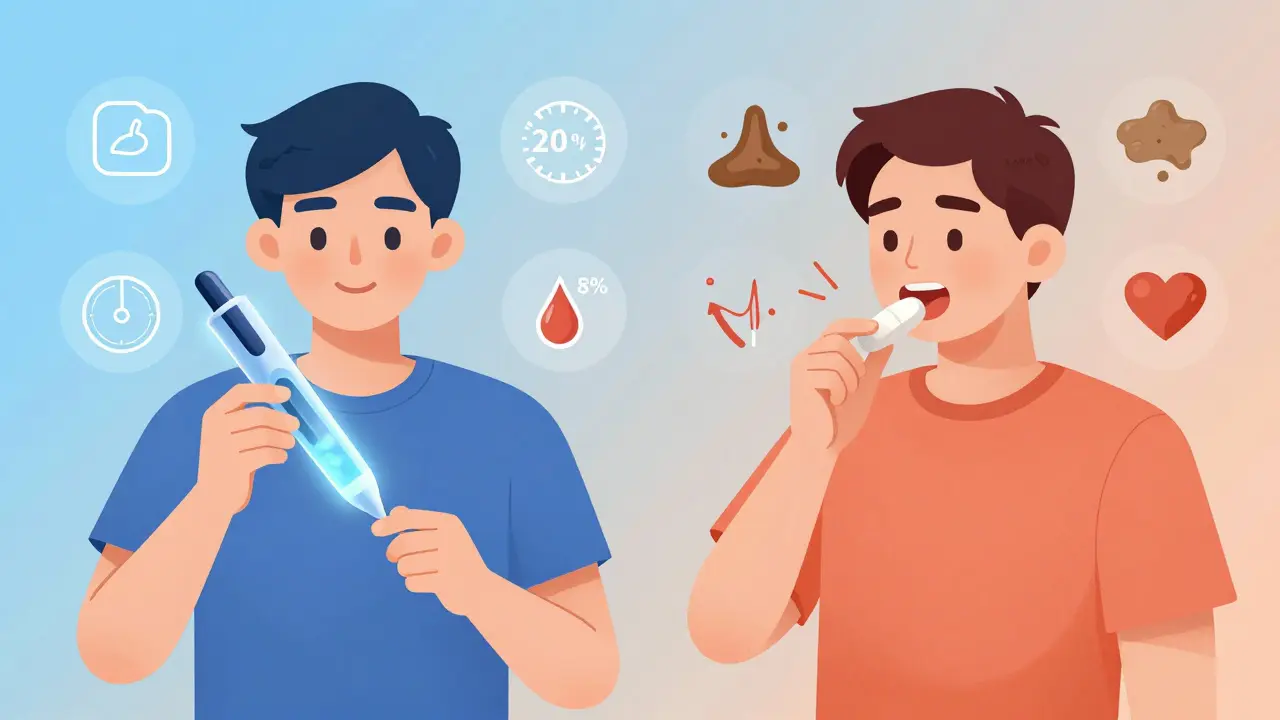
For years, losing weight with medication meant dealing with modest results and frustrating side effects. Drugs like orlistat, phentermine, and Contrave were the go-to options - but most people only lost 5 to 10% of their body weight, if they lost anything at all. Then came GLP-1 agonists: semaglutide (Wegovy), tirzepatide (Zepbound), and liraglutide (Saxenda). These aren’t just new pills. They’re a whole new approach. In clinical trials, people using Wegovy lost an average of 15% of their body weight. With Zepbound, it was over 20%. That’s not a small change - it’s life-changing. And it’s why these drugs are now the most prescribed weight loss medications in the U.S.
How GLP-1 Agonists Actually Work
GLP-1 agonists mimic a hormone your body already makes called glucagon-like peptide-1. This hormone tells your brain you’re full, slows down how fast your stomach empties, and helps your pancreas release insulin when you eat. The result? You eat less, feel satisfied longer, and your blood sugar stays steadier. It’s not just appetite suppression - it’s your body’s natural satiety system being turned up. That’s why these drugs work so well for people with type 2 diabetes too. Semaglutide and tirzepatide were originally developed for diabetes, but their weight loss effects were so dramatic, they got FDA approval just for weight management. Tirzepatide even hits two targets: GLP-1 and GIP, another gut hormone that helps regulate appetite. This dual action is why Zepbound outperforms older GLP-1 drugs like Saxenda.
How Older Weight Loss Drugs Compare
Before GLP-1 agonists, the main options were pills that worked in very different ways. Orlistat (Xenical, Alli) blocks fat absorption - meaning undigested fat just leaves your body. That sounds clean, but it often leads to oily stools, urgency, and embarrassment. Phentermine-topiramate (Qsymia) combines a stimulant with a seizure medication to suppress appetite and make food less rewarding. Naltrexone-bupropion (Contrave) targets brain reward pathways to reduce cravings. And phentermine alone? A short-term stimulant with heart risks. These drugs are still used, but their results are far more modest. In head-to-head studies, Wegovy led to 16% weight loss. Saxenda? Just 6%. That’s more than double. Even the best of the old drugs rarely top 10% weight loss over a year.
Real-World Results vs. Clinical Trials
It’s easy to get excited by trial numbers - 20% weight loss sounds amazing. But real life is messier. A 2024 study from NYU Langone followed over 50,000 people on GLP-1 drugs. After six months, the average weight loss was just 4.7%. After a full year, it was 7%. Why the drop? Many people stop taking the drugs. Side effects like nausea, vomiting, and diarrhea hit 40-50% of users, especially when starting. Others can’t afford the cost. Insurance often won’t cover them unless you have diabetes or a BMI over 40. And even if you get coverage, copays can still be $300-$500 a month. The 15-20% numbers? Those are from tightly controlled trials with weekly check-ins, nutrition coaching, and full support. Outside the lab, most people are on their own.
Cost and Insurance: The Biggest Hurdle
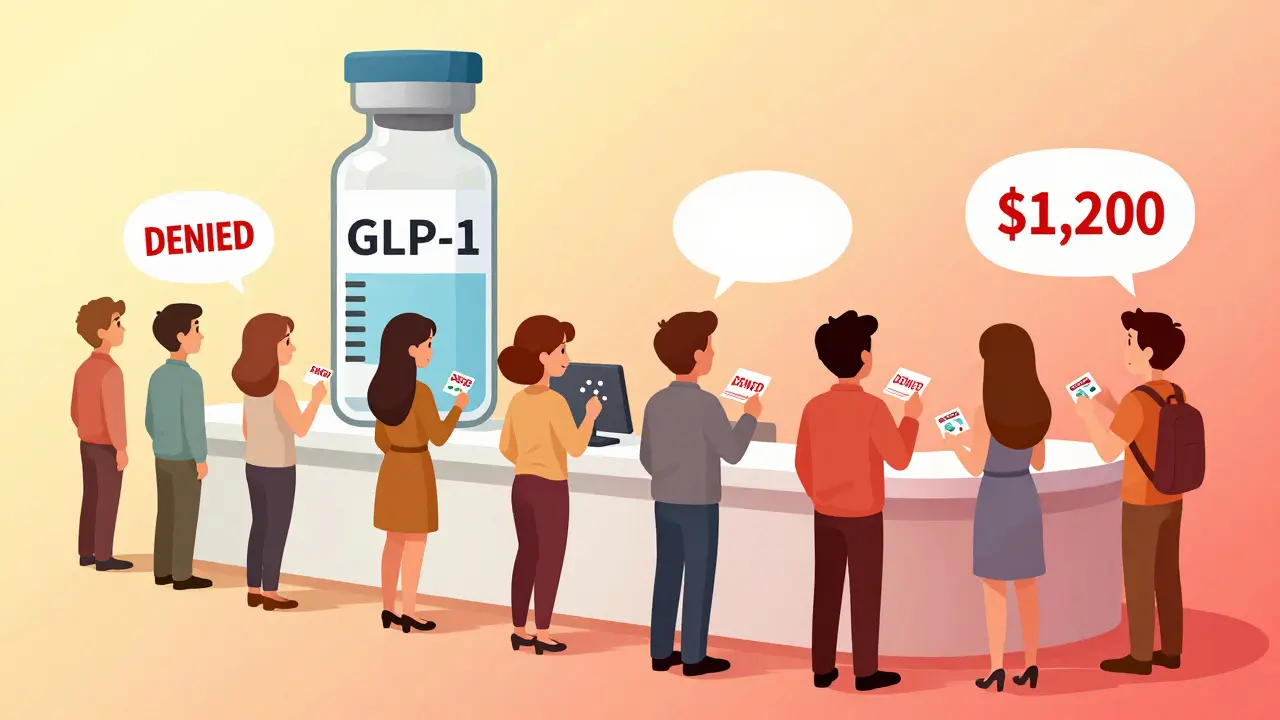
Without insurance, a month of Wegovy or Zepbound costs $1,000 to $1,400. That’s more than most people’s rent. Older drugs? Phentermine can cost as little as $10 a month. Orlistat is $30. Qsymia runs $100-$150. Even with manufacturer coupons, savings are capped at $500-$1,000 a year - not nearly enough. Insurance coverage is a nightmare. Only 28% of commercial plans cover GLP-1 drugs for weight loss without strict rules. Many require proof of diabetes, heart disease, or a BMI over 40. Even then, prior authorizations get denied 45% of the time. Some patients are turning to online pharmacies or buying from overseas, but that’s risky. There’s no guarantee the pills are real, safe, or even the right dose.
Administration: Injections vs. Pills
Most GLP-1 agonists are weekly injections. That’s a big barrier for people who hate needles. Even though the needles are tiny and the injections are simple, many still can’t get past the mental hurdle. Saxenda requires daily shots. The only oral option is Rybelsus (semaglutide tablet), but it’s not as effective as the injection. Meanwhile, all the older drugs are pills taken once a day. No needles. No waiting. No injection anxiety. For someone who just wants to pop a pill and go, that’s a major advantage. But the trade-off is clear: pills give you 5-10% weight loss. Injections can give you 15-20%. The choice isn’t just about convenience - it’s about results.
Side Effects and Tolerance
Everyone talks about the weight loss. Fewer talk about the stomach issues. Nausea is the most common side effect - affecting up to half of users. Vomiting, diarrhea, constipation, and bloating are also common, especially in the first few months. Many people quit because they can’t tolerate it. The solution? Slow dose escalation. Starting at 0.25 mg weekly and increasing every four weeks over 4-5 months reduces side effects dramatically. Some doctors also prescribe anti-nausea meds like ondansetron during the ramp-up. Still, 70% of people stop GLP-1 therapy within a year. For older drugs, side effects are different. Orlistat causes oily leakage. Phentermine can raise heart rate and blood pressure. Contrave may cause headaches or insomnia. But none of them trigger the same level of gastrointestinal distress as GLP-1s.
What Happens When You Stop?
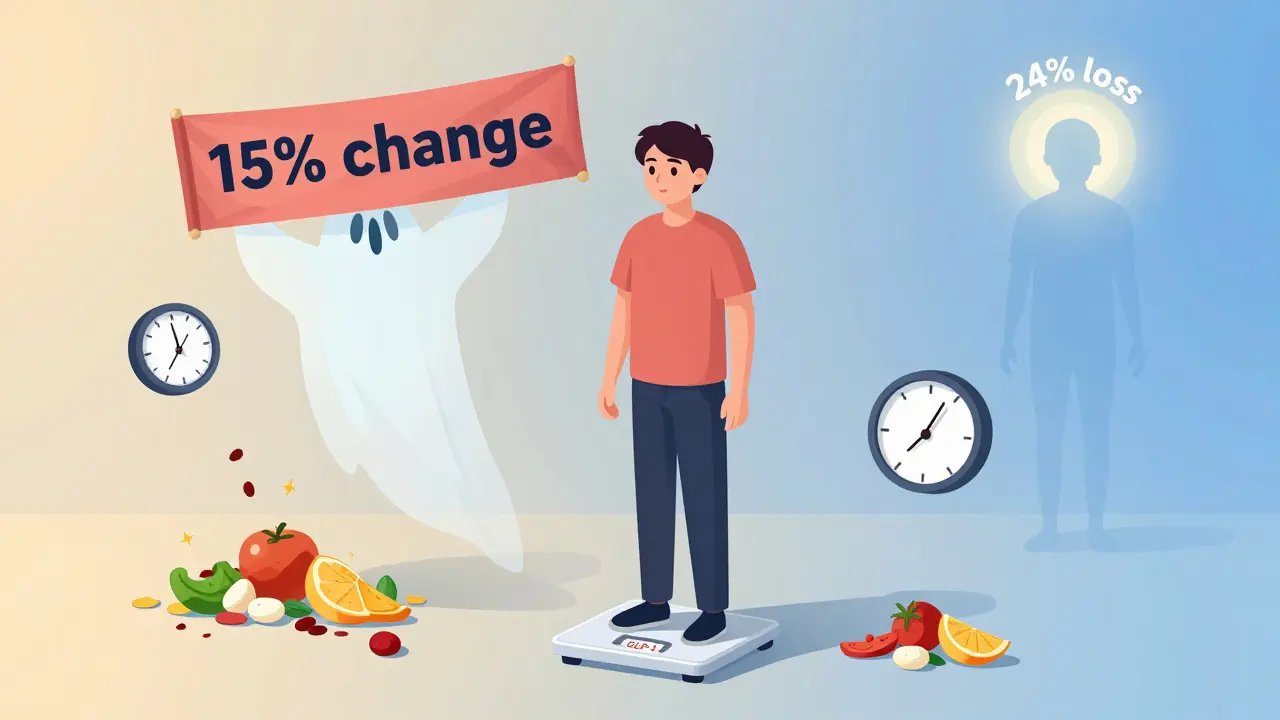
This is the elephant in the room. GLP-1 agonists don’t cure obesity - they manage it. When you stop taking them, most people regain weight. Studies show 50% to 100% of lost weight comes back within a year after stopping. That’s why experts say these drugs should be part of long-term care, not a quick fix. Bariatric surgery, in contrast, leads to more durable weight loss. A 2024 study found surgery patients lost 24% of their body weight after two years - nearly triple what GLP-1 users achieved in the same time. And surgery doesn’t require daily or weekly dosing. Once done, the effect lasts. That’s why many doctors now recommend surgery for people who don’t respond to medication or can’t afford it long-term.
Who Benefits Most?
GLP-1 agonists work best for people who:
- Have a BMI over 30 (or 27 with weight-related health issues)
- Can tolerate mild to moderate nausea
- Are willing to commit to weekly injections
- Have insurance coverage or can afford the out-of-pocket cost
- Want to lose 15% or more of their body weight
They’re especially helpful for people with type 2 diabetes - since they lower blood sugar and reduce heart risk. Older drugs are better suited for people who:
- Can’t afford injections
- Have needle anxiety
- Have kidney or liver issues (some GLP-1s aren’t safe for them)
- Only need to lose 5-10% of their weight
The Future: What’s Next?
The next wave of weight loss drugs is already here. Retatrutide, a triple agonist targeting GLP-1, GIP, and glucagon, showed 24.2% weight loss in early trials. MariTide, a new monoclonal antibody, is in Phase 3 testing. These could push weight loss even higher - maybe toward 25-30%. But cost and access will remain the biggest challenges. Right now, GLP-1 agonists make up 78% of all new weight loss prescriptions. That number is expected to hit 85% by 2027. But if insurance doesn’t catch up, most people won’t be able to use them. The real breakthrough won’t be a better drug - it’ll be making these drugs affordable and accessible.
What to Do If You’re Considering These Medications
Start with your doctor. Don’t ask for a specific drug. Ask: "What are my options for meaningful, sustainable weight loss?" Bring your medical history, current medications, and list of past attempts. If you’re eligible, ask about prior authorization support - many pharmacies have specialists who help with insurance appeals. Look into manufacturer programs: Novo Nordisk’s NOW program and Eli Lilly’s Lilly Cares offer discounts, but you need to apply. Join a support group - Reddit’s r/Wegovy and r/Ozempic have over 25,000 members sharing tips on side effects, dosing, and insurance battles. And remember: these drugs work best with lifestyle changes. No pill replaces movement, sleep, or stress management.

Natali Shevchenko
March 22, 2026 AT 16:56It's wild how we've gone from blaming willpower to realizing obesity is a neurochemical disorder. GLP-1 drugs aren't magic - they're just finally addressing the biology we've ignored for decades. The real tragedy isn't that they work too well, it's that we built a system where only the rich or diabetic get to benefit. We treat weight like a moral failing, but the science says it's a hormonal imbalance. And yet, here we are, arguing about needles instead of fixing insurance pipelines. We're not failing people because they lack discipline - we're failing them because we refuse to treat this like a public health crisis.
Johny Prayogi
March 24, 2026 AT 00:45Nicole James
March 25, 2026 AT 00:54Nishan Basnet
March 25, 2026 AT 05:47The contrast between clinical trial numbers and real-world outcomes is staggering, and it speaks volumes about how medicine is often sold versus how it's practiced. The drugs work - no doubt - but the infrastructure around them is broken. No one talks about the emotional toll of waiting months for prior authorization, or the shame of explaining to your boss why you're vomiting after lunch. These aren't just medications; they're lifelines wrapped in bureaucracy. And yet, the fact that we're even having this conversation - that we're finally treating obesity as a medical condition, not a character flaw - feels like progress. Even if it's slow, uneven, and painfully expensive.
Solomon Kindie
March 27, 2026 AT 02:01Jackie Tucker
March 27, 2026 AT 23:32How delightful that we've elevated a pharmaceutical band-aid to a cultural phenomenon. Truly, nothing says progress like turning a metabolic condition into a luxury subscription service. I mean, I'm thrilled that 20% weight loss is now the new benchmark - as long as you can afford the monthly fee and don't mind being nauseous while your Uber Eats order sits unopened. Bravo, capitalism. You've monetized biology with the finesse of a used car salesman.
Thomas Jensen
March 29, 2026 AT 03:22Did you know the FDA approved these drugs based on studies where participants got free meals, weekly counseling, and gym memberships? Real people don't live like that. I tried Zepbound. First month: 10 lbs down. Second month: I couldn't eat without feeling like I was going to die. Third month: I quit. Now I'm back to where I started. And I'm not even mad. I'm just tired. The system tells you to fix yourself with a $1,200 shot - then blames you when you can't afford it. It's not about willpower. It's about survival.
matthew runcie
March 30, 2026 AT 07:05shannon kozee
March 30, 2026 AT 10:58trudale hampton
March 30, 2026 AT 16:30My mom’s on Wegovy. She’s 67, diabetic, and finally sleeping through the night. She says she doesn’t feel hungry anymore - like her brain stopped screaming for food. I didn’t believe it until I saw her eat a whole pizza and say, ‘That was nice, but I’m done.’ That’s not appetite suppression. That’s peace. If we can make this accessible, we could change millions of lives. Not just their weight - their dignity.