
Birth Control Effectiveness Checker
Check Your Birth Control Safety
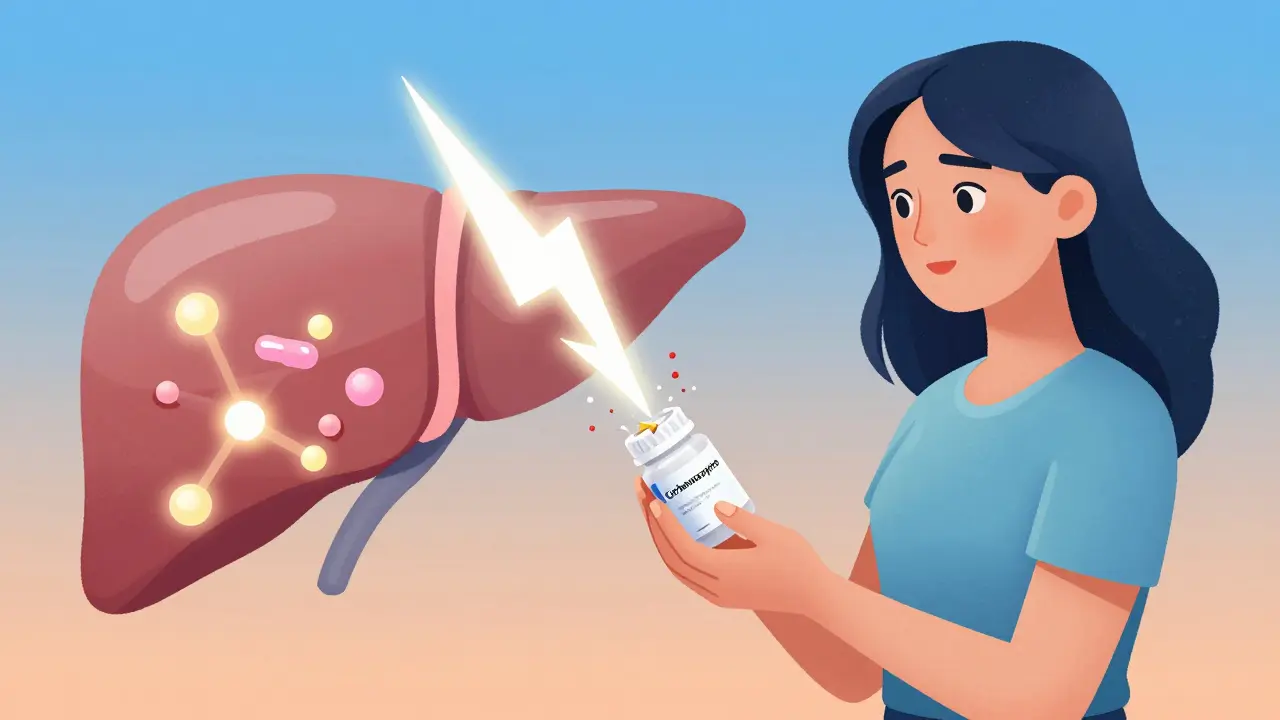
If you're taking medication for seizures and also using birth control pills, patches, or the vaginal ring, there's a serious risk you're not protected against pregnancy-even if you take your pills every day without fail. This isn't a rare edge case. It's a well-documented, clinically significant drug interaction that affects hundreds of thousands of women worldwide. The problem? Certain seizure medications can make your birth control completely ineffective by speeding up how fast your body breaks down the hormones. And most women don’t even know it’s happening.
Which Anticonvulsants Kill Birth Control Effectiveness?
Not all seizure medications do this. But the ones that do are some of the most commonly prescribed. If you're taking carbamazepine (Tegretol), oxcarbazepine (Trileptal), phenytoin (Dilantin), phenobarbital, primidone (Mysoline), felbamate (Felbatol), or topiramate (Topamax) at doses above 200 mg/day, your birth control is likely being metabolized too fast to work. These drugs are called enzyme-inducing antiepileptic drugs (EIAEDs). They turn on liver enzymes-specifically CYP450-that break down estrogen and progestin before they can do their job. Studies show these medications can slash ethinyl estradiol (the estrogen in most pills) by 15% to 60%. Progestin levels drop even more-up to 50%. That’s not a small change. That’s enough to make your birth control useless. In fact, the FDA requires drug labels for carbamazepine to state clearly: "Contraceptives containing estrogen or progestin may be ineffective when used concurrently with Tegretol." Topiramate is especially tricky because the effect gets worse as the dose goes up. At 200 mg/day, estrogen levels drop 23%. At 400 mg/day? They drop 43%. That’s not a typo. That’s science.What About Lamotrigine? It’s the Opposite Problem
Lamotrigine (Lamictal) doesn’t speed up hormone breakdown. Instead, it gets broken down faster by estrogen. Women taking combined oral contraceptives (pills with estrogen and progestin) see their lamotrigine levels drop by about 50%. That’s dangerous. Lamotrigine controls seizures. If your level drops too low, you could have a seizure you didn’t have before. And when you stop taking the pill-like during your sugar pill week-your lamotrigine level spikes back up. That 30-40% rebound can cause dizziness, blurred vision, or worse: a skin rash that could turn into a life-threatening condition called Stevens-Johnson syndrome. So if you’re on lamotrigine, estrogen-containing birth control is risky for both sides: it can cause seizures and serious side effects.Which Birth Control Methods Still Work?
Not all birth control fails here. Some methods bypass the liver entirely or use doses so high that enzyme induction can’t overcome them.- Progestin-only IUDs (Mirena, Kyleena, Liletta): These work locally in the uterus. Less than 0.1% of women using them get pregnant-even with enzyme-inducing anticonvulsants.
- Copper IUD (ParaGard): No hormones at all. It works by creating inflammation that kills sperm. Completely unaffected by any medication.
- Depo-Provera (DMPA): The shot gives you 150 mg of progestin every 12 weeks. That’s so much hormone that even accelerated metabolism can’t clear it fast enough. It remains effective.
What About the Patch, Ring, and Pill?
The patch (Ortho Evra) and the ring (NuvaRing) are just as risky as the pill. They deliver estrogen and progestin through the skin or vagina, but those hormones still go to the liver. Once there, enzyme-inducing drugs like carbamazepine shred them. Even high-dose pills (50 mcg ethinyl estradiol) aren’t reliable enough. The Epilepsy Foundation says even these can fail. And many women don’t even know they’re on a low-dose pill. Most brands today have 20-30 mcg-far too low to overcome enzyme induction.
Emergency Contraception? Don’t Rely on It
If you have unprotected sex while on an enzyme-inducing anticonvulsant, Plan B (levonorgestrel) might not work. Studies show its effectiveness drops by about 50%. Ella (ulipristal acetate) may also be less effective. That means emergency contraception isn’t a backup plan here-it’s a gamble. If you need it, talk to your doctor immediately. You might need a higher dose or a copper IUD inserted as emergency contraception.Why Do So Many Women Get Pregnant Without Knowing?
A 2022 survey by the Epilepsy Foundation found only 35% of women with epilepsy got counseling from their neurologist about birth control. Only 22% heard it from their gynecologist. It’s not that doctors are careless. Many don’t know the full picture. But the data is clear: women on carbamazepine or topiramate are 2-3 times more likely to have an unintended pregnancy than women not on these drugs. Reddit threads are full of stories like this: "I got pregnant on Ortho Tri-Cyclen while taking Tegretol despite perfect use-my neurologist never warned me." Another wrote: "I had two miscarriages before I found out my birth control didn’t work with my meds. No one told me."What Should You Do?
If you’re on one of these seizure meds and using birth control:- Check what kind of anticonvulsant you’re taking. Is it carbamazepine, topiramate, phenytoin, or another enzyme inducer?
- Check your birth control. Are you on a pill, patch, or ring? If yes, you’re at high risk.
- Don’t assume your doctor told you. Ask directly: "Do my seizure meds interfere with my birth control?" If they say "probably not," ask for proof.
- Switch to an IUD or Depo-Provera. These are proven safe. No guesswork.
- If you must stay on hormonal birth control, use condoms every time. Double protection is better than none.

What About Newer Seizure Meds?
Good news: newer anticonvulsants like levetiracetam (Keppra), gabapentin (Neurontin), pregabalin (Lyrica), and valproate (Depakote) don’t interfere with birth control. If you’re on one of these, your pill, patch, or ring should work fine. Even newer drugs like perampanel (Fycompa) and brivaracetam (Briviact) show little to no enzyme induction. They’re becoming preferred choices for women who need both seizure control and reliable contraception.What If You’re Trying to Get Pregnant?
If you’re planning pregnancy, this isn’t just about birth control. It’s about safety. Enzyme-inducing anticonvulsants like carbamazepine and phenytoin increase the risk of major birth defects by 30-40% compared to the general population’s 2-3%. That’s why preconception counseling is critical. Talk to both your neurologist and OB-GYN before stopping birth control. You may need to switch to a safer seizure medication months before trying to conceive. Folic acid (at least 4 mg/day) is also strongly recommended.Bottom Line
This isn’t a "maybe" or a "might." This is a proven, dangerous interaction that’s been known since the 1970s. Women are still getting pregnant because no one told them. If you’re on carbamazepine, topiramate, phenytoin, or another enzyme-inducing anticonvulsant, your birth control pill, patch, or ring is likely not working. Don’t risk it. Switch to an IUD or Depo-Provera. Ask your doctor for help. Your body deserves better than guesswork.Do all seizure medications reduce birth control effectiveness?
No. Only enzyme-inducing anticonvulsants like carbamazepine, oxcarbazepine, phenytoin, phenobarbital, primidone, felbamate, and high-dose topiramate (over 200 mg/day) reduce birth control effectiveness. Medications like levetiracetam (Keppra), gabapentin (Neurontin), pregabalin (Lyrica), and valproate (Depakote) do not interfere with hormonal contraceptives.
Can I still use the pill if I take topiramate?
Using the pill with topiramate is risky. At doses above 200 mg/day, topiramate can reduce estrogen levels by up to 43%, making the pill ineffective. Even high-dose pills (50 mcg ethinyl estradiol) are not reliably effective. The American College of Obstetricians and Gynecologists recommends switching to an IUD or Depo-Provera instead.
Why does lamotrigine interact with birth control differently?
Lamotrigine doesn’t affect hormone levels, but estrogen increases how fast your body breaks down lamotrigine. This can drop lamotrigine levels by 50%, increasing seizure risk. When you stop taking the pill (like during your placebo week), lamotrigine levels spike back up, which can cause side effects like dizziness or a dangerous skin rash. Avoid estrogen-containing birth control if you take lamotrigine.
Is the copper IUD safe if I take seizure meds?
Yes. The copper IUD (ParaGard) works without hormones. It releases copper into the uterus, which prevents sperm from fertilizing an egg. It’s not affected by any medications, including enzyme-inducing anticonvulsants. It’s one of the most reliable contraceptive options for women on seizure meds.
What birth control is safest if I’m on carbamazepine?
The safest options are the copper IUD (ParaGard), the progestin-only IUD (Mirena, Kyleena), or the Depo-Provera shot. These methods are not affected by carbamazepine. Hormonal methods like the pill, patch, or ring are not recommended because carbamazepine reduces their effectiveness by up to 60%.
Should I use condoms with my birth control if I take anticonvulsants?
If you’re on an enzyme-inducing anticonvulsant and still using a hormonal method like the pill, patch, or ring, you should use condoms every time. The risk of pregnancy is high, and condoms are the only backup that works. But the best long-term solution is switching to an IUD or Depo-Provera, which don’t need a backup.
Can emergency contraception work if I’m on seizure meds?
Plan B (levonorgestrel) may be only half as effective if you’re on an enzyme-inducing anticonvulsant. Ella (ulipristal) may also be less effective. Emergency contraception is not reliable here. If you need it, contact your doctor immediately. A copper IUD inserted within 5 days is the most effective emergency option.





Philip Blankenship
February 17, 2026 AT 16:35Man, I had no idea this was even a thing. I knew about drug interactions but this is wild. My cousin’s on Tegretol and was on the pill for years, got pregnant twice and thought it was just bad luck. Turns out her neurologist never mentioned it. This post should be mandatory reading for every woman on seizure meds. Seriously, why isn’t this on every OB-GYN’s website?
Carrie Schluckbier
February 18, 2026 AT 02:17They’re hiding this. Big Pharma doesn’t want you to know. Why else would the FDA just slap a tiny warning on the label and call it a day? They profit off women getting pregnant, then selling them prenatal care, then selling them abortion pills when it goes wrong. This is systemic exploitation wrapped in medical jargon. I’m not surprised.
Prateek Nalwaya
February 18, 2026 AT 21:35Interesting breakdown, but I wonder if we’re over-indexing on the scary stats. I get that enzyme inducers are risky, but isn’t the real issue lack of communication? I’ve seen patients on lamotrigine who’ve been on the pill for 8 years with zero issues. Maybe it’s not black and white? Also, what about women who can’t tolerate IUDs? The one-size-fits-all advice feels a bit paternalistic.
Adam Short
February 19, 2026 AT 12:17So let me get this straight - the NHS doesn’t even train GPs on this? That’s criminal. I’m British and I’ve got mates on Keppra who’ve been told "just take the pill". No one’s checking their liver enzymes. No one’s asking about their contraception. This isn’t a medical oversight - it’s a cultural failure. We’re letting women die because we’re too lazy to update our guidelines.
Agnes Miller
February 20, 2026 AT 00:25i just found out my neuro dr never told me this. i’m on topiramate 300mg and have been on the ring for 3 years. i’m so mad rn. i thought i was being so responsible. now i’m scared i got pregnant and didn’t know. anyone know if there’s a way to test if the hormones were even working??
Geoff Forbes
February 21, 2026 AT 03:55Wow, someone actually did the research. Imagine that. Most of you are just parroting "IUDs are better" like it’s gospel. Have you considered that IUDs have their own risks? Infection, perforation, expulsion? And Depo? That thing wipes your bone density. You’re trading one risk for another. Maybe the real answer is better drug design, not just switching methods. But no, let’s just blame the patient for not knowing.
Jonathan Ruth
February 21, 2026 AT 18:18Topiramate at 400mg drops estrogen 43%? That’s not even a question. Anyone who says otherwise is either lying or unqualified. I’ve seen it in the literature. I’ve seen the labs. The data is clear. Stop the handwaving. This isn’t opinion. This is biochemistry. If you’re on carbamazepine and using a pill you’re playing Russian roulette with your fertility. No one’s coming to save you. You have to act.
Digital Raju Yadav
February 22, 2026 AT 15:53India has 10 million women on seizure meds. Do you think they’re getting IUDs? No. They’re getting cheap pills from roadside pharmacies. No counseling. No follow-up. This isn’t a medical problem - it’s a caste problem. The rich get informed. The poor get pregnant. And the system calls it "natural variation". Wake up. This isn’t about science. It’s about power.
Kancharla Pavan
February 22, 2026 AT 22:48Women these days. Always looking for the easy way out. Instead of just abstaining or getting sterilized, you want to keep your "liberty" and still have sex. Then you cry when you get pregnant. You knew the risks. You chose to ignore them. Now you want the system to fix it? Take responsibility. Stop blaming doctors. Stop blaming Big Pharma. You made the choice. Own it.
PRITAM BIJAPUR
February 22, 2026 AT 23:58Life is a dance between chemistry and choice 🌌💊
Our bodies are ecosystems, not machines. The liver doesn’t hate you - it’s just doing its job. Maybe the real lesson isn’t about IUDs or pills… but about listening. To your body. To your meds. To your gut. Maybe the answer isn’t switching methods… but switching awareness. We’re all just trying to survive in a system that treats us like data points. Let’s not lose our humanity in the process. 🙏❤️
Linda Franchock
February 23, 2026 AT 12:50So wait - you’re telling me I’m supposed to trust a doctor who didn’t even mention this when I asked about my birth control? And now I’m supposed to go back and say "Hey, by the way, I think you might have endangered my fertility"? Yeah right. I’m switching to the copper IUD tomorrow. And I’m bringing this post with me. No more nicey-nice. Time to get loud.
Oliver Calvert
February 24, 2026 AT 07:14For anyone wondering about lamotrigine and the pill - the 50% drop is real. I’m a pharmacist and we’ve had three patients come in with seizures after starting the ring. One almost died. The copper IUD is the gold standard. No ifs, ands, or buts. If you’re on an enzyme inducer and you’re not on a copper IUD, you’re not being safe. You’re being lucky.
guy greenfeld
February 24, 2026 AT 08:51It’s not about the pill. It’s not about the IUD. It’s about the illusion of control. We think if we take our medicine on time, if we follow the rules, if we’re "responsible" - we’re safe. But the system doesn’t care about responsibility. It cares about profit. The fact that this interaction has been known since the 70s and we’re still having this conversation… that’s the tragedy. We’ve been taught to manage risk, not eliminate it. And now, women are paying the price.