
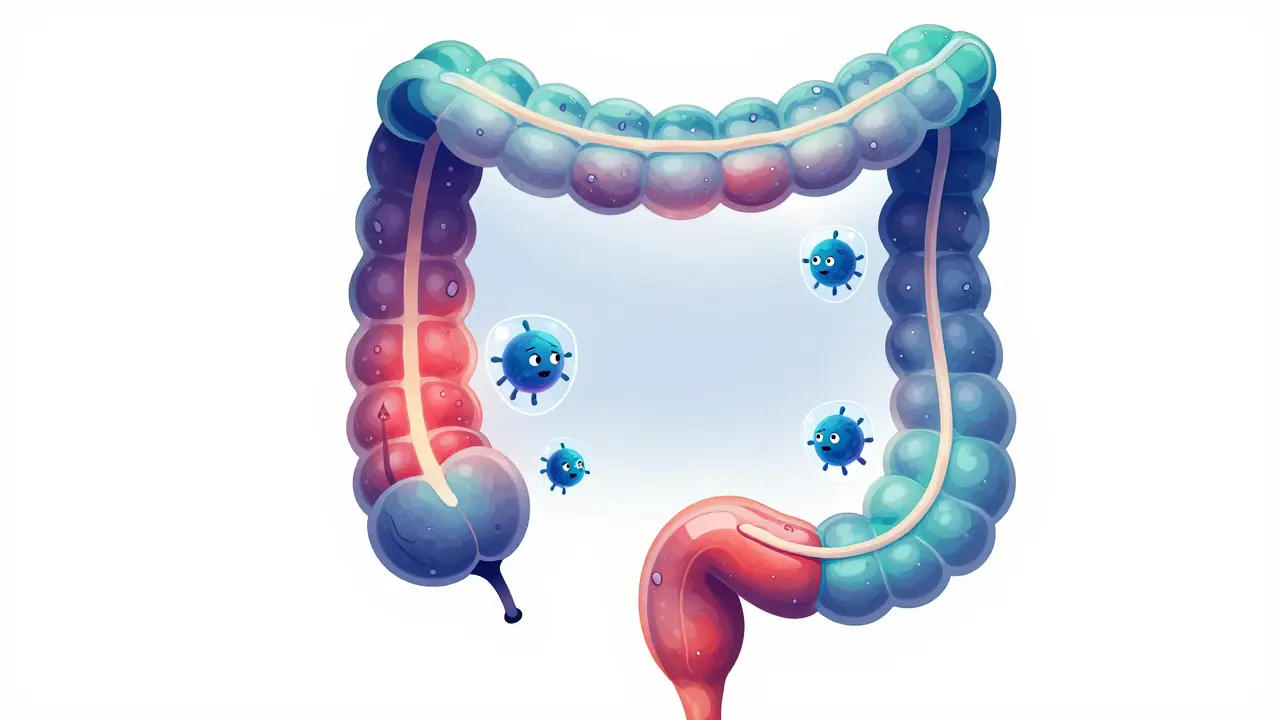
Ulcerative colitis isn’t just occasional stomach upset. It’s a lifelong condition where your colon becomes chronically inflamed, leading to open sores, bloody diarrhea, and constant pain. Unlike a bad meal or stress-induced cramps, this is your immune system attacking your own digestive lining - no matter how well you eat or how calm you try to be. The good news? Most people with ulcerative colitis can control their symptoms and live full, active lives. The key is understanding what’s happening inside your body and using proven strategies to push the disease into long-term remission.
What Exactly Happens in Your Colon With Ulcerative Colitis?
- Your colon and rectum are lined with a thin layer of tissue that normally protects you from bacteria and digested food.
- In ulcerative colitis, your immune system mistakenly sees this lining as a threat and attacks it.
- This attack causes swelling, tiny ulcers, and bleeding - the hallmarks of the disease.
- Unlike Crohn’s disease, which can hit any part of your gut and go deep into the wall, ulcerative colitis only affects the innermost layer of the colon - and it doesn’t skip areas. It starts in the rectum and moves upward in a continuous line.
There are five main types, based on how far the inflammation spreads:
- Ulcerative proctitis: Only the rectum is involved. Symptoms are often milder - mostly rectal bleeding and urgency.
- Proctosigmoiditis: Affects the rectum and the lower part of the colon (sigmoid colon). You’ll likely have bloody diarrhea and cramps on the lower left side.
- Left-sided colitis: Inflammation goes as far as the splenic flexure (near the spleen). Pain on the left side, weight loss, and more frequent bowel movements are common.
- Pancolitis: The entire colon is inflamed. This is the most severe form - you might have more than 10 bloody bowel movements a day, fever, fatigue, and significant weight loss.
- Rectal-sparing colitis: Rare. The rectum stays healthy while the rest of the colon is affected.
One thing is clear: if you have ulcerative colitis, you’re not alone. It’s the most common type of inflammatory bowel disease. And while it can be unpredictable, the pattern of flare-ups and remissions is well understood - and manageable.
What Triggers a Flare-Up? (And What Doesn’t)
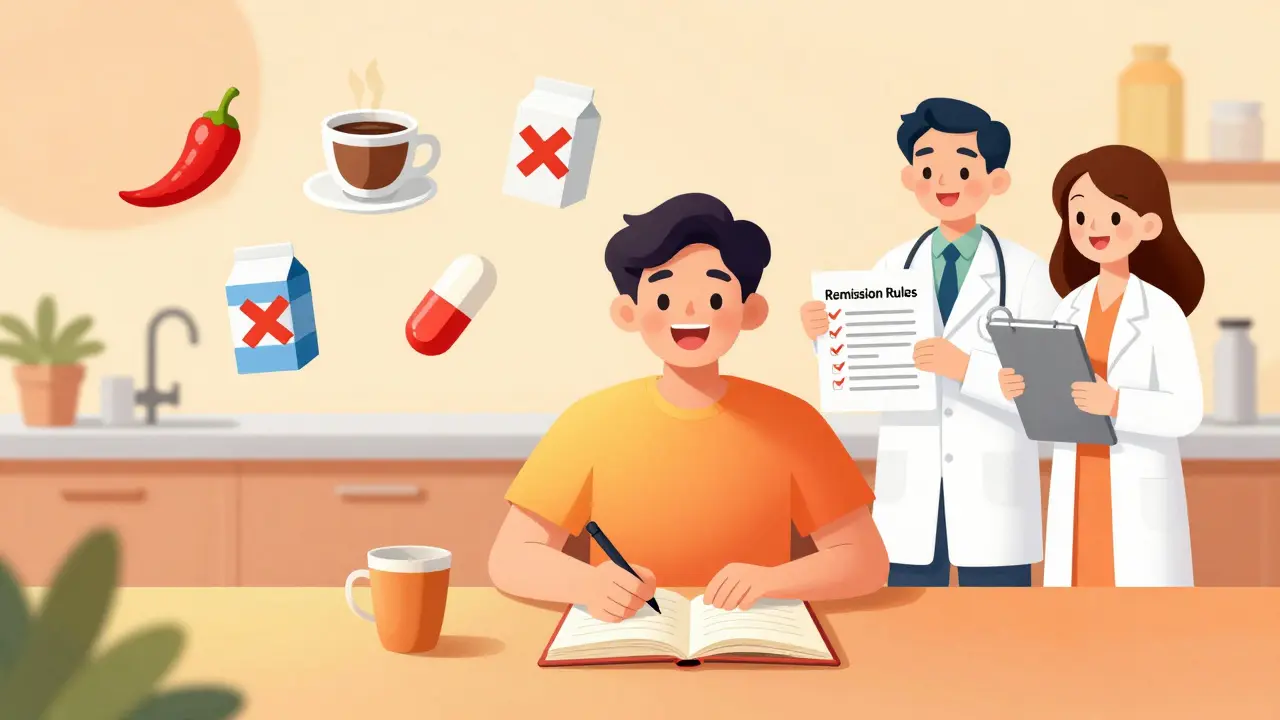
Many people blame stress or certain foods for causing ulcerative colitis. That’s a myth. The disease isn’t caused by what you eat or how anxious you feel. But here’s the catch: those things can absolutely trigger a flare-up.
Think of your colon like a fire that’s been smoldering. Stress, certain foods, infections, or even skipping your meds can throw a match on it. Common triggers include:
- Spicy or fried foods
- Dairy (if you’re lactose intolerant)
- High-fiber foods like raw veggies or nuts during active flare-ups
- Alcohol and caffeine
- Nonsteroidal anti-inflammatory drugs (NSAIDs) like ibuprofen
- Antibiotics that disrupt gut bacteria
- Emotional stress or major life events
Not everyone reacts the same way. One person might tolerate yogurt just fine, while another has a flare after eating popcorn. Keeping a food and symptom journal for a few weeks can help you spot your personal triggers. Don’t eliminate entire food groups without talking to a dietitian - malnutrition is a real risk if you’re too restrictive.
And yes, stress matters. It doesn’t cause ulcerative colitis, but it can make inflammation worse. Managing stress isn’t optional - it’s part of your treatment plan.
Common Symptoms: When to Take It Seriously
The most consistent symptom? Bloody diarrhea. In fact, nearly everyone with active ulcerative colitis has blood in their stool. But that’s not the only sign.
- Urgent need to go - and not being able to hold it
- Tenesmus - that painful feeling you need to poop, even when your bowels are empty
- Abdominal cramps, especially on the left side
- Fatigue and low energy
- Unexplained weight loss
- Fever during moderate to severe flares
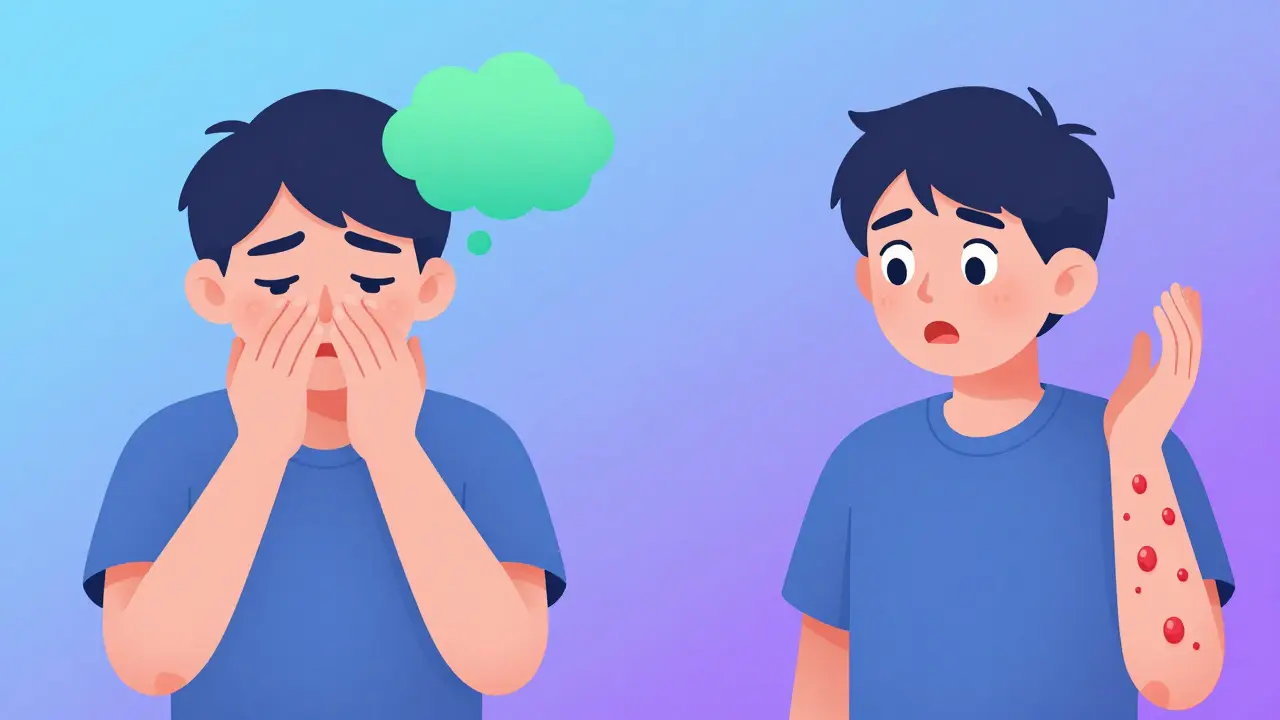
- Joint pain, red or irritated eyes, or skin rashes (these are extraintestinal symptoms and affect up to 40% of people)
If you’re having more than six bloody bowel movements a day, a fever over 100.4°F, or severe abdominal pain, don’t wait. These are signs of a severe flare that may need hospitalization.
Even when you’re feeling okay, regular colonoscopies are critical. The longer you have pancolitis, the higher your risk for colon cancer. Doctors recommend surveillance colonoscopies every 1-2 years after 8-10 years of diagnosis.
How Doctors Treat Ulcerative Colitis - Step by Step
Treatment isn’t one-size-fits-all. It’s a ladder - you start at the bottom and move up only if needed.
Step 1: Aminosalicylates (5-ASAs)
For mild to moderate cases, doctors usually start with medications like mesalamine (Asacol, Lialda), sulfasalazine, or balsalazide. These are anti-inflammatory drugs that target the colon directly. They come as pills, suppositories, or enemas - depending on where the inflammation is.
These drugs are often enough to get you into remission and keep you there. Side effects are usually mild - headache, nausea, or rash.
Step 2: Corticosteroids
For moderate to severe flares, short-term use of prednisone or budesonide may be needed. These are powerful anti-inflammatories that work fast - but they’re not for long-term use. Side effects include weight gain, mood swings, bone loss, and increased infection risk.
They’re a bridge - not a permanent solution.
Step 3: Immunomodulators
If 5-ASAs and steroids don’t cut it, your doctor may add azathioprine, 6-mercaptopurine, or methotrexate. These drugs calm down your immune system over time. They take 3-6 months to work fully, so they’re paired with faster-acting meds during flares.
They require regular blood tests to monitor liver function and white blood cell counts.
Step 4: Biologics and Advanced Therapies
For moderate to severe disease that doesn’t respond to other treatments, biologics are a game-changer. These are injectable or IV drugs that block specific parts of the immune response:
- Anti-TNF agents: infliximab (Remicade), adalimumab (Humira), golimumab (Simponi)
- Integrin receptor antagonists: vedolizumab (Entyvio)
- JAK inhibitors: tofacitinib (Xeljanz)
Many people achieve deep remission - meaning no signs of inflammation on colonoscopy and no symptoms. Some biologics are now approved for long-term use without steroids.
They’re expensive, but insurance often covers them if other treatments fail. Side effects include increased infection risk (like tuberculosis) and rare cases of neurological or liver issues.
Remission Isn’t Just Feeling Better - It’s Healing Your Colon
Many people think remission means no symptoms. But true remission means your colon is healing - no inflammation, no ulcers, no bleeding. That’s why doctors use colonoscopies to check, not just how you feel.
Staying in remission requires three things:
- Consistent medication: Never skip doses, even when you feel fine. Stopping meds is one of the biggest reasons flares return.
- Monitoring: Regular blood tests and colonoscopies catch problems early.
- Lifestyle control: Avoid your known triggers, manage stress, and don’t smoke.
Studies show that people who stick to their treatment plan are far more likely to stay in remission for years - even decades.
Diet and Nutrition: Fueling Your Body Without Fueling Inflammation
You can’t cure ulcerative colitis with diet alone - but you can support your body and reduce flare-ups.
During a flare:
- Go low-fiber: Cooked vegetables, white rice, bananas, and lean proteins are easier to digest.
- Limit dairy if it bothers you.
- Stay hydrated - diarrhea drains fluids fast.
- Small, frequent meals are better than three large ones.
When you’re in remission:
- Gradually reintroduce fiber - it’s good for gut bacteria.
- Focus on omega-3s (fatty fish, flaxseeds) - they have mild anti-inflammatory effects.
- Probiotics may help some people, but not all strains work. Look for VSL#3 or E. coli Nissle 1917 - these have research backing for UC.
- Check vitamin D and iron levels - deficiencies are common.
Working with a registered dietitian who specializes in IBD is one of the best things you can do.
Surgery: When It’s the Right Choice
Not everyone needs it - but for some, it’s life-changing.
Surgery means removing the entire colon and rectum (colectomy). After that, you’ll have either:
- An ileostomy - waste exits through a stoma into a bag.
- An ileoanal pouch (J-pouch) - a new internal reservoir is built from your small intestine, connected to the anus. You still go to the bathroom normally, though more frequently.
Surgery is considered if:
- Medications stop working
- You have severe, life-threatening complications (like toxic megacolon or heavy bleeding)
- Your cancer risk is high due to long-standing pancolitis
Many people who have surgery report improved quality of life - no more daily bloody diarrhea, no more fear of flares. It’s not a cure for ulcerative colitis (because the disease is gone with the colon), but it’s a permanent end to the symptoms.
You Can Live Well With Ulcerative Colitis
This isn’t a death sentence. It’s a chronic condition - like diabetes or high blood pressure - that requires management. The goal isn’t perfection. It’s control.
People with ulcerative colitis work, travel, raise families, and run marathons. The difference? They know their triggers. They take their meds. They get checked regularly. They don’t wait until they’re in crisis to act.
If you’ve just been diagnosed, it’s okay to feel overwhelmed. But remember: medicine has come a long way. Biologics and new therapies are giving people years - even decades - of symptom-free life. You don’t have to let this disease define you.
Can ulcerative colitis be cured?
There’s no medication that permanently cures ulcerative colitis. But removing the colon and rectum (colectomy) eliminates the disease entirely. For most people, long-term remission is possible with the right combination of medication, diet, and lifestyle changes.
Is ulcerative colitis the same as Crohn’s disease?
No. Both are types of inflammatory bowel disease, but they’re different. Ulcerative colitis only affects the inner lining of the colon and rectum in a continuous pattern. Crohn’s disease can affect any part of the digestive tract, from mouth to anus, and involves all layers of the bowel wall with patchy, skipped areas of inflammation.
Do stress and diet cause ulcerative colitis?
No. The exact cause is unknown, but it’s linked to genetics and immune system dysfunction. However, stress and certain foods can trigger flare-ups in people who already have the disease. Avoiding triggers helps manage symptoms but doesn’t prevent the disease itself.
How often do I need a colonoscopy?
If you’ve had ulcerative colitis for 8-10 years, especially if it involves the entire colon (pancolitis), your doctor will recommend a colonoscopy every 1-2 years to screen for precancerous changes. For those with limited disease, like proctitis, the risk is much lower and screening may be less frequent.
Can I still have children if I have ulcerative colitis?
Yes. Most medications used to treat ulcerative colitis are safe during pregnancy. In fact, getting your disease into remission before conceiving improves outcomes for both mother and baby. Always talk to your gastroenterologist and OB-GYN before planning a pregnancy.
What happens if I stop taking my meds when I feel fine?
Stopping medication is the most common reason flares return. Ulcerative colitis doesn’t disappear just because symptoms fade. The inflammation can still be active under the surface. Staying on your treatment plan - even during remission - keeps your colon healing and reduces long-term risks like cancer and hospitalization.
What to Do Next
If you’re newly diagnosed, schedule a follow-up with a gastroenterologist who specializes in IBD. Ask about:
- Your specific type of ulcerative colitis
- Your current disease activity (mild, moderate, or severe)
- Your treatment plan - what meds you’re on and why
- When your next colonoscopy is due
- Whether you should see a dietitian
If you’ve had it for years and are struggling with flares, don’t wait. Talk to your doctor about stepping up your treatment. New biologics and small-molecule drugs are helping people who thought they’d run out of options.
Ulcerative colitis is challenging, but it’s not unbeatable. With the right care, you can live a full, active life - with long stretches of remission and few interruptions.

Bobby Collins
January 2, 2026 AT 23:09they’re hiding the real cause. it’s the fluoridated water and glyphosate in the food supply. the pharma companies don’t want you to know this because cures don’t make money. they sell you drugs that keep you sick forever. check out dr. rick halperin’s research - he’s been silenced by the FDA. i’ve been symptom-free since switching to spring water and organic kale. they’ll call me crazy but i’ve seen the data.
they’re lying to us. it’s not immune dysfunction - it’s toxin overload. they want you dependent on biologics that cost $10k a month. wake up.
Kristen Russell
January 4, 2026 AT 16:00you’re not alone. i’ve been in remission for 5 years. meds + diet + stress management = life-changing. don’t give up.
Bill Medley
January 6, 2026 AT 11:23the clinical evidence supporting pharmacological intervention in ulcerative colitis is robust and well-documented. adherence to prescribed regimens significantly reduces the risk of disease progression and associated complications.
Richard Thomas
January 7, 2026 AT 19:54it’s strange how we treat the body like a machine that breaks and needs fixing. but what if the inflammation isn’t a malfunction - but a message? what if the immune system isn’t attacking the colon out of error, but out of desperation? maybe it’s trying to purge something we’ve fed it - not just food, but fear, silence, disconnection. we treat the symptoms with drugs, but never ask: what is the colon screaming about? maybe remission isn’t about suppressing the body - but listening to it. maybe healing comes when we stop fighting ourselves and start asking why.
i’ve sat with people who’ve had this disease for decades. some healed with biologics. others with fasting. others with therapy. the common thread? they stopped treating their body as an enemy. they started treating it as a companion. that shift - that’s the real medicine.
Paul Ong
January 8, 2026 AT 11:25just take your meds and stop stressing about food
life’s too short to be scared of everything
i went from 12 bowel movements a day to zero
it’s not magic it’s discipline
you got this
Andy Heinlein
January 8, 2026 AT 14:47man i was diagnosed 3 years ago and thought my life was over
turns out i can still hike, play guitar, and eat tacos (well… occasional tacos)
the key? not letting it own me
and yes i take my meds like a boss
if you’re new to this - you’re gonna be okay. seriously. i’m proof.
Phoebe McKenzie
January 8, 2026 AT 22:14you people are naive. this isn’t about diet or stress - it’s about the government’s secret bio-weapons program. they’ve been releasing inflammatory agents into the water since the 90s. you think they care if you live or die? they make billions off your suffering. they don’t want you cured - they want you on lifelong biologics. if you’re not taking turmeric and drinking distilled water, you’re part of the problem.
and yes, i’ve been off all meds for 2 years. no flares. no drugs. no regrets. wake up.
gerard najera
January 9, 2026 AT 19:59the colon is not a battlefield. it’s a garden. nurture it, don’t bomb it.
Stephen Gikuma
January 10, 2026 AT 00:47why are we letting foreign pharma companies control our health? this country used to make its own medicine. now we’re dependent on imported biologics from europe and asia. it’s weak. we need to bring drug manufacturing back home and stop letting corporations profit off our pain.
and no, i don’t trust the FDA. they’re bought and paid for.
Layla Anna
January 11, 2026 AT 02:18i’m from india and my mom had this too 😭
she switched to dal and rice for months and it helped so much
we also did yoga and pranayama - no meds for 2 years
just wanted to say you’re not alone 💛
and yes i cry every time i see someone talk about this
you’re strong
you’ve got this 💪❤️
Heather Josey
January 11, 2026 AT 22:50the most critical factor in achieving sustained remission is consistent adherence to medical therapy. discontinuation of maintenance medications, even in the absence of symptoms, is associated with a statistically significant increase in relapse rates. i encourage all patients to engage in regular follow-up and to consult with their care team before making any therapeutic changes.
Donna Peplinskie
January 12, 2026 AT 22:12oh my goodness, this is so important - thank you for sharing this in such a clear, compassionate way. i’ve been living with this for 17 years, and the part about colonoscopies? yes, yes, yes. i was scared to go for years… but once i did, i realized how much i’d been ignoring. i’m so glad you mentioned dietitians too - mine changed my life. and for anyone feeling overwhelmed? breathe. you’re doing better than you think. you’re not broken. you’re adapting. and that’s brave.
Olukayode Oguntulu
January 14, 2026 AT 16:04the ontological rupture of the mucosal barrier, precipitated by a dysregulated innate immune response to commensal microbiota, is the primary pathophysiological axis in ulcerative colitis. conventional pharmacological interventions, while palliative, fail to address the epistemic hegemony of reductionist biomedicine. the true liberation lies not in biologics or corticosteroids, but in the phenomenological re-embodiment of the self - a reclamation of the gut as a site of existential resonance, not merely inflammation. one must transcend the Cartesian dichotomy of body and mind to achieve true remission. have you read Foucault on the medical gaze? no? then you’re still imprisoned in the apparatus.
jaspreet sandhu
January 15, 2026 AT 21:23you all talk about meds and diet like it’s some new thing. in my village in punjab, people have been treating this for centuries with turmeric, amla, and fasting. no pills. no injections. just food and discipline. now you come with your fancy biologics and think you’re smart. but the real truth? you’re just buying expensive placebo. the body heals when you stop poisoning it. you think a pill fixes your soul? no. it just makes you forget you’re still sick. i’ve seen 50 people with this disease. only three stayed healthy. they didn’t take drugs. they changed their life. and you? you’re still scrolling on your phone while your colon rots.