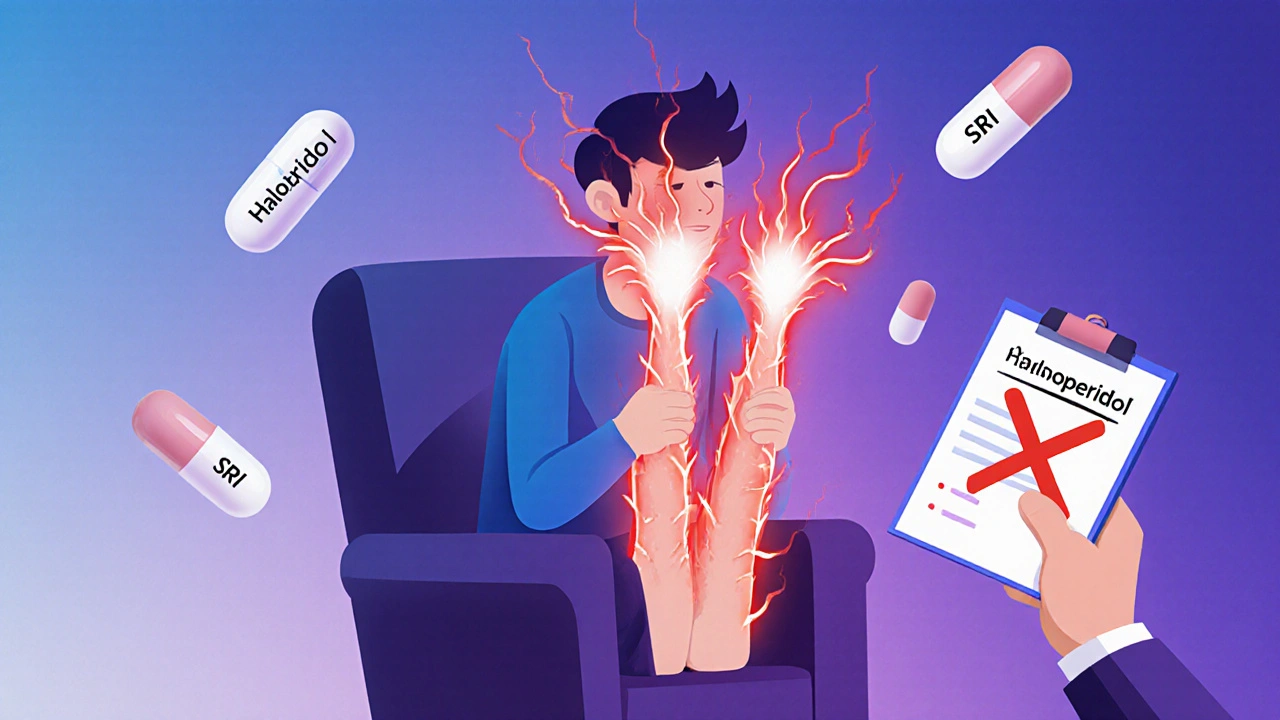
Medication-Induced Akathisia: Causes, Signs, and What to Do
When a drug makes you feel like you can’t sit still—like your bones are buzzing and your legs are itching to move—you might be dealing with medication-induced akathisia, a movement disorder triggered by certain prescription drugs, especially antipsychotics and antidepressants. Also known as drug-induced restlessness, it’s not just being fidgety. It’s a deep, painful urge to move that can make sleeping, sitting, or even standing unbearable. Many people think it’s anxiety or ADHD, but it’s a physical reaction to how the drug affects dopamine in your brain.
This isn’t rare. Up to 25% of people taking antipsychotics like risperidone or haloperidol develop it, and even SSRIs like sertraline can cause it. antipsychotic side effects, including akathisia, are often underreported because patients don’t recognize the symptoms as drug-related. Doctors might increase the dose thinking the patient’s anxiety is worsening, when the real problem is the medication itself. akathisia treatment, often involves lowering the dose, switching drugs, or adding a beta-blocker like propranolol—not more psychiatric meds.
Left unchecked, akathisia can lead to suicidal thoughts, aggression, or worsening mental health. It’s not just uncomfortable—it’s dangerous. If you or someone you know started a new medication and suddenly can’t sit still, pace constantly, or feel like they’re going to jump out of their skin, this could be it. The key is catching it early. Track when symptoms started, what drug was added, and how bad they get over days or weeks.
You’ll find real cases here—people who thought they were going crazy, only to learn their meds were the cause. We cover which drugs are most likely to trigger this, how to talk to your doctor without sounding paranoid, and what alternatives exist that won’t leave you feeling like you’re trapped in your own body. No fluff. No jargon. Just what works.